

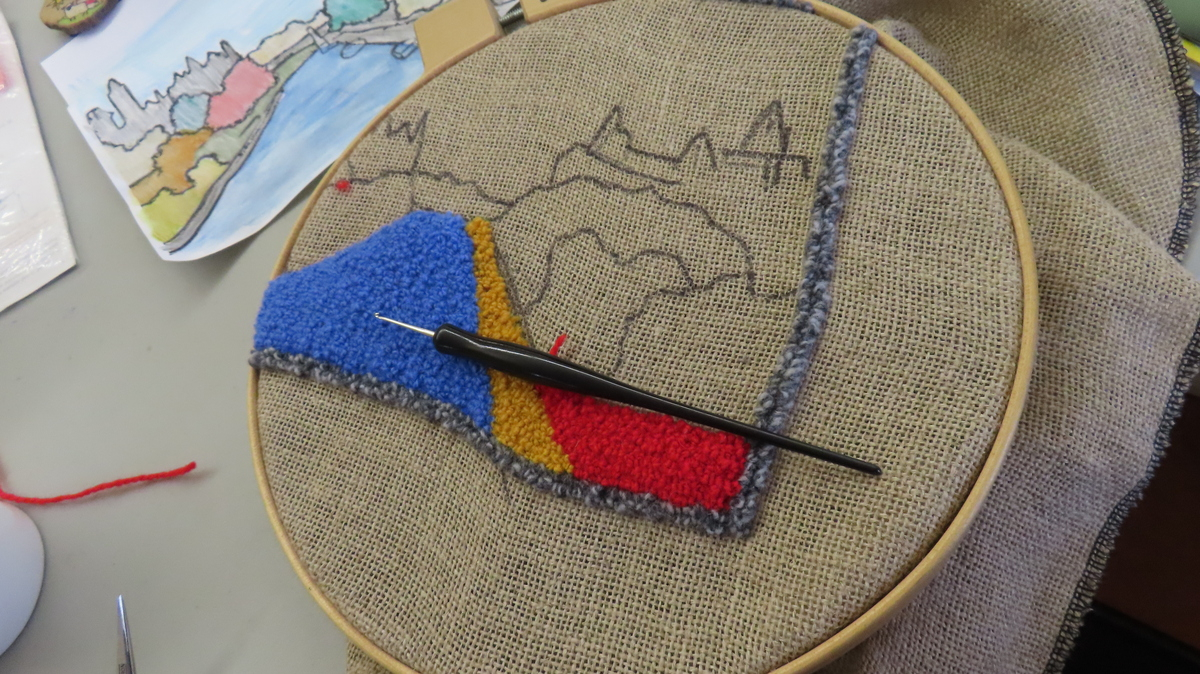
What a spectacular and creative way to help chronicle two centuries of Ottawa history!
We were thrilled when the enthusiastic members of the Ottawa Olde Forge Rug Hooking group approached the Historical Society of Ottawa in the fall of 2025, eager to join in answering the call and doing their part for the HSO 2026 Bytown200 Bicentennial Storytelling Challenge.
The history of rug-hooking, dating back to the same era as the birth of Bytown and the start of the Rideau Canal, was launched by creative crafters making use of scrap materials leftover in weaving mills in the UK and eventually here in North America.
The Bytown200-themed projects being artfully crafted by Ottawa Old Forge Rug Hooking members were displayed at City Hall on Heritage Day, February 17, 2026, and are photographed and shared here on the HSO Bytown200 web page.
Below find samples of a few of their works – ranging from concept to completion.
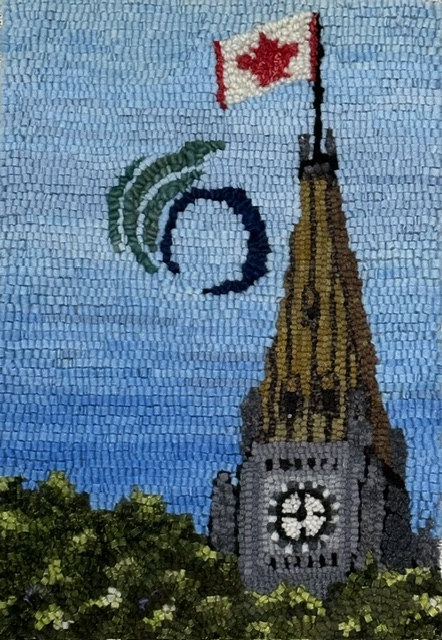
Pauline Mantha: The Peace Tower
Alongside the Peace Tower is Pauline's rendition of the City of Ottawa's stylized "O" with its streamers subtly suggestive of both the maple leaf and the Parliament Buildings, and symbolizing unity and harmony.
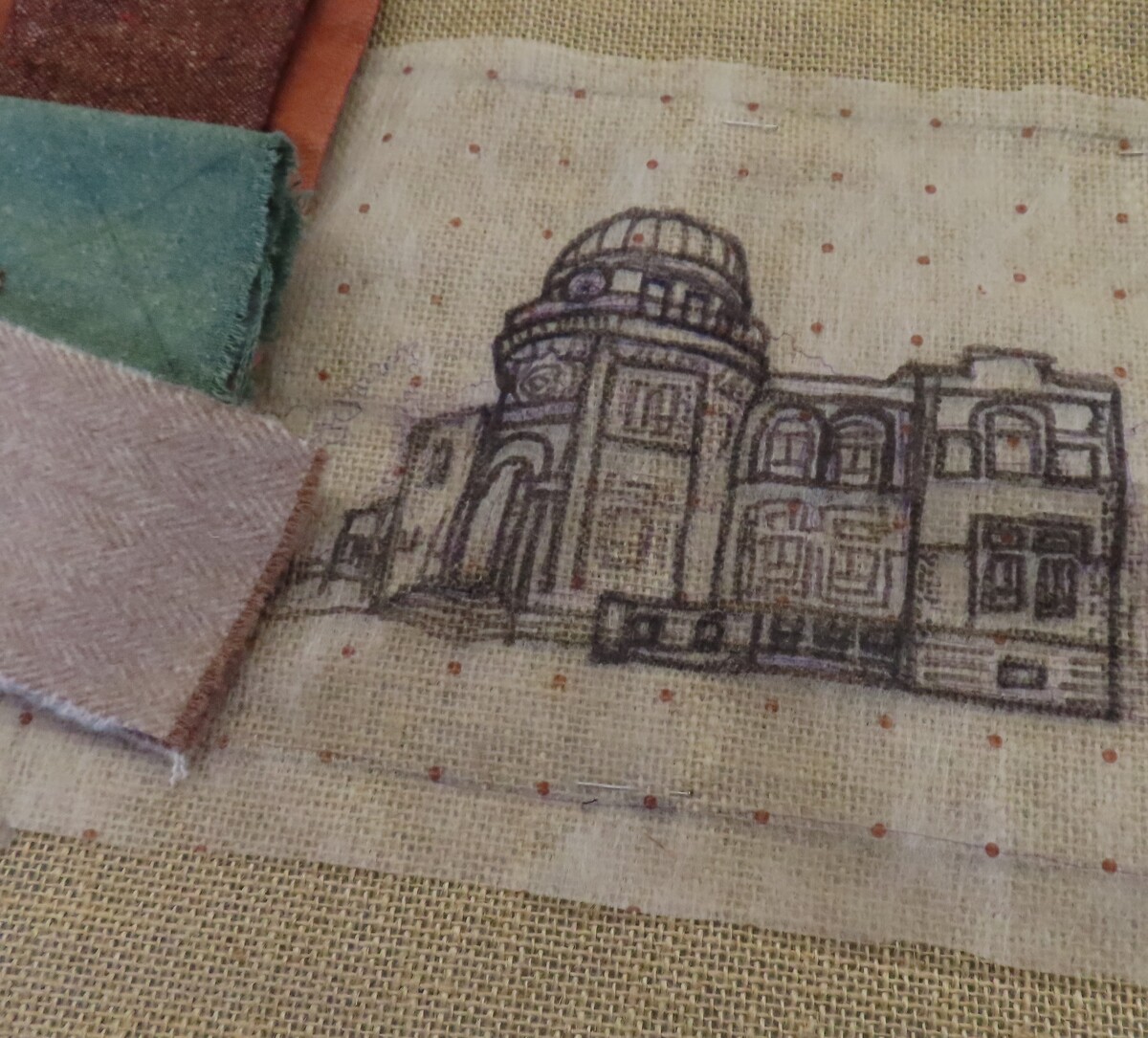
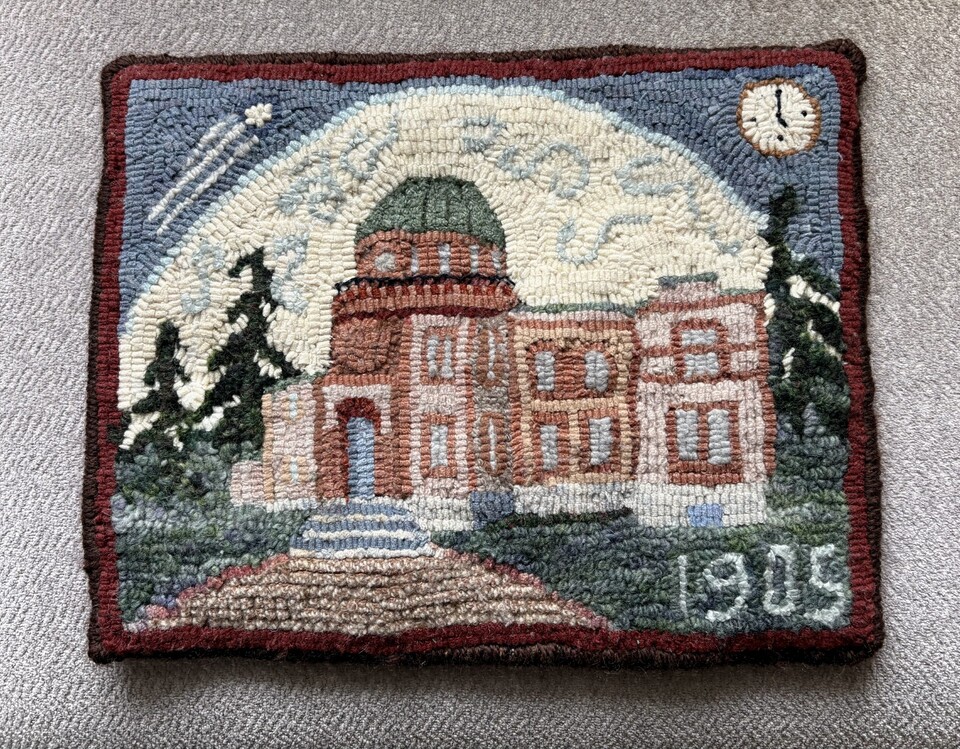 The Dominion Observatory by Pat Bonn.
The Dominion Observatory
The Dominion Observatory was built on the Experimental Farm in 1905, in answer to the increased requirements of the Geographic Survey of Canada mapping and topographic surveys.
The 35 cm telescope’s larger size improved:
- temporal star readings : resulting in one national high precision clock (needed for railway schedules) . It was called the Dominion Observatory Time.
- spacial star observations: allowing more precise longitude, latitude and elevation readings (needed for establishing accurate provincial and international borders).
Additional instruments measuring seismic (earthquakes), gravimetric and magnetic geophysical data were also housed in the same location.
In 1992, the Dominion Observatory was recognized as a Federal Heritage Building for its architectural (Romanesque and Revival style) and historic value.
Pat Bonn worked 29 years for Agriculture Canada as a Research Technician.
Read more about the Dominion Observatory in James Powell's story Today in Ottawa's History - The Dominion Observatory.
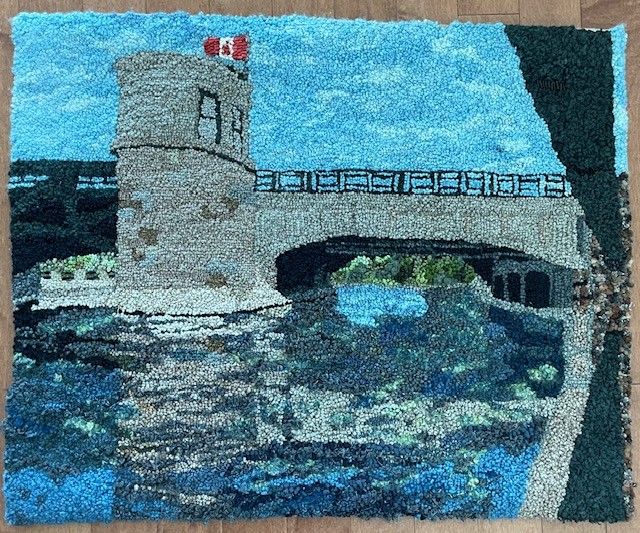 Pretoria Bridge by Lara Wellman
Lara Wellman : Pretoria Bridge
Aside from the Parliament Buildings, few landmarks are as iconic to Ottawa as the Rideau Canal. Built in 1915, Pretoria Bridge connects the Glebe with what was once known as Ottawa East. Now designated as a heritage structure, it stands as a cherished landmark that will continue to be enjoyed by Ottawans for generations to come.
Designed and hooked by Lara Wellman in 2024. Wellman was inspired to create this piece as a symbol representing her city.
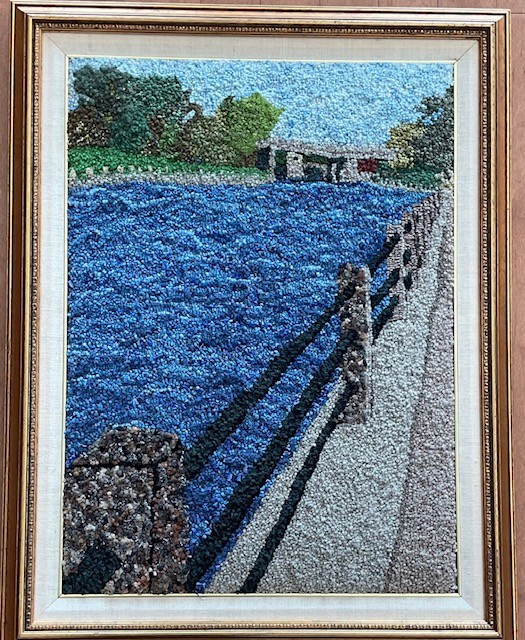 View of the Rideau Canal by Lara Wellman
Lara Wellman : View of the Rideau Canal
Aside from the Parliament Buildings, few landmarks are as iconic to Ottawa as the Rideau Canal. This view of the canal is looking towards the Golden Triangle. The Bridge is for the Queensway to cross the canal.
Designed and hooked by Lara Wellman in 2023. Wellman was inspired to create this piece as a symbol representing her city.
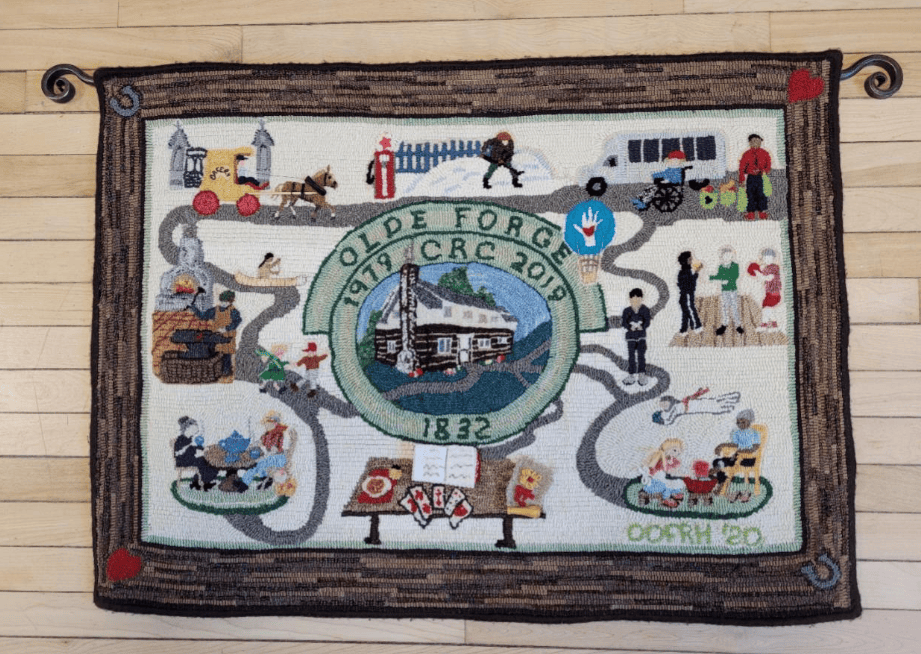 Olde Forge Community Resource Centre by members of the Ottawa Olde Forge Rug Hooking group.
Olde Forge Community Resource Centre 40th Anniversary Commemorative Rug
The Olde Forge is an historic building in Ottawa’s west end, found just west of the junction of Carling Avenue and Richmond Road. Members of the Ottawa Olde Forge Rug Hooking Group made this rug to commemorate the 40th anniversary of the current residents of the Olde Forge, the Olde Forge Community Resource Centre. From its first role as a blacksmith’s shop and family home in 1832 to, decades later, a restaurant/tearoom, taxi service, gas station, tourist centre and, since 1980, a community resource centre, the building at the centre of the rug provided a wealth of inspiration for the rug’s design.
The original owner and builder of the Olde Forge, George Winthrop, is said to have arrived in Bytown from Montreal by canoe in 1832, much like Colonel By six years earlier and just as First Nations peoples had travelled since time immemorial. He built the log building and forge and ran a thriving business for many decades. The growing town of the era would have had a high demand for horseshoeing, wagon repairs, gates and many other implements made of iron. Fittingly, in 1992, it was designated a heritage property under the Ontario Heritage Act.
The rug hooking group took their name from the building where they first held regular meetings. It took an estimated 250+ hours of effort by 24 volunteers to plan and complete the rug in 2020. Nora Lee organized its design and construction, and Pat Bonn did most of the design. The story of the making of this rug was published in Rug Hooking Magazine in 2024.
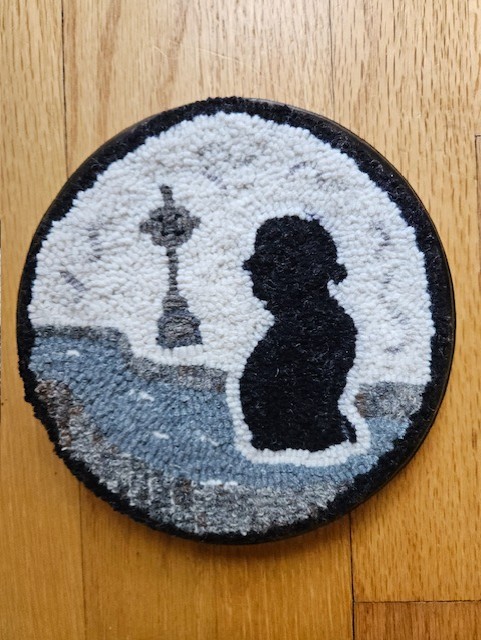 Colonel By and the Memorial Cross overlooking the Rideau Canal by Nora Lee
Nora Lee: Colonel By and the Memorial Cross overlooking the Rideau Canal
Colonel John By of the Royal Engineers supervised the construction of the Rideau Canal. The construction was done by thousands of Irish, Scottish and French-Canadian labourers during the years 1826 to 1832. Conditions were harsh and both accidents and disease, notably malaria, killed about a 1000 workers and their families. The Rideau Canal Memorial Cross was unveiled in 2004. It can be found in Colonel By Valley, next to the canal below Major's Hill Park.
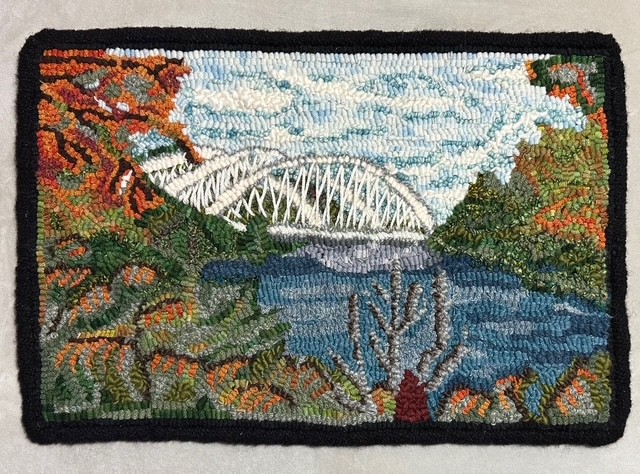 Vimy Memorial Bridge by Carol Pugsley
The Vimy Memorial Bridge—formerly known as the Strandherd–Armstrong Bridge—is a major modern crossing in Ottawa, completed in 2014. Spanning the Rideau River, it links Strandherd Drive in Barrhaven with Earl Armstrong Road in Riverside South, significantly improving east–west connectivity in the city’s south end. In recognition of its design and engineering excellence, the bridge received the prestigious Gustav Lindenthal Medal in 2015. Its name, proposed by two Royal Canadian Legion branches in Ottawa, commemorates the Battle of Vimy Ridge and reflects the city’s tradition of honoring Canada’s military history through its public landmarks.
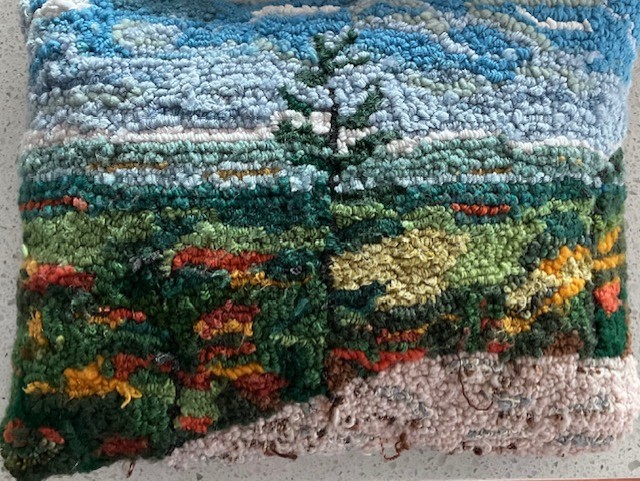 Tawadina Lookout, Gatineau Park by Marion Agnew
Tawadina Lookout is a scenic viewpoint in Gatineau Park, Québec, perched along the Eardley Escarpment and reached by hiking trails such as the Wolf Trail. The lookout offers sweeping views over the Gatineau Hills and the Ottawa River Valley, making it a popular destination for hikers seeking both natural beauty and elevation. Surrounded by forest and exposed rock, Tawadina Lookout exemplifies the rugged landscape of the park and rewards a steady climb with one of its more expansive inland vistas.
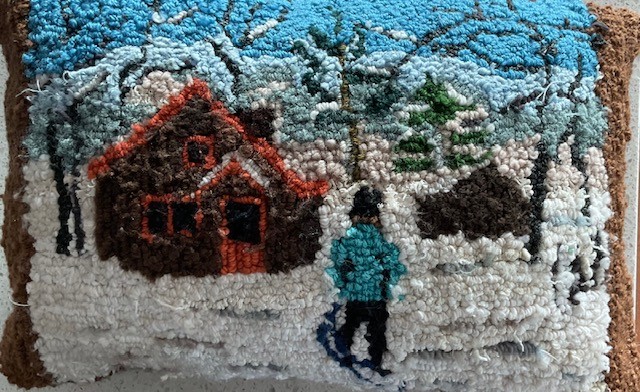 Huron cabin in winter, Gatineau Park by Marion Agnew
Huron Cabin: The Huron-Wendat played an important role in the early history of the Bytown area long before its founding in 1826. For centuries, they used the Ottawa River and its tributaries as major travel and trade routes, establishing camps and portages that later guided European movement through the region. Their knowledge of the land, waterways, and seasonal cycles shaped early exploration and settlement patterns and influenced relations between Indigenous peoples and newcomers. When Bytown emerged during the construction of the Rideau Canal, it did so on Indigenous land long known, used, and understood by the Huron-Wendat and other Algonquin-speaking peoples, whose presence formed an essential part of the area’s deeper historical foundation.
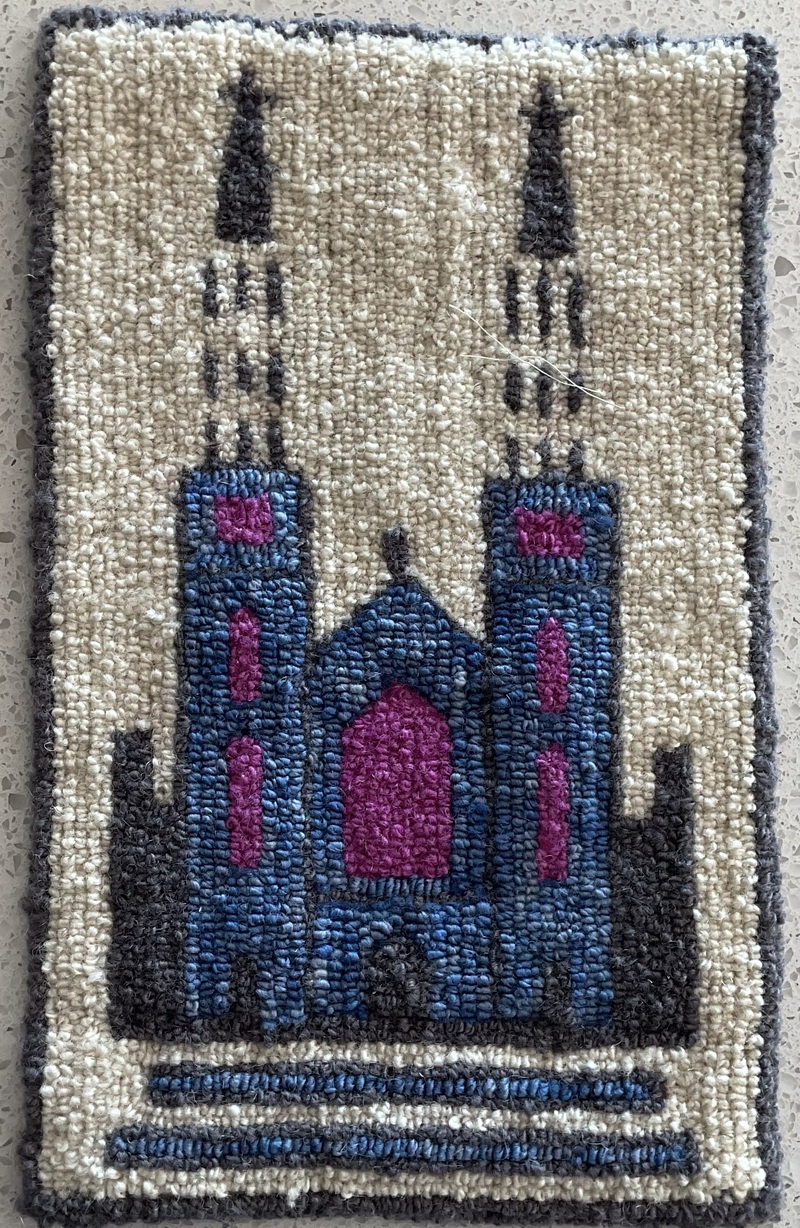 Notre-Dame Cathedral, Sussex Drive by Andre PInard
Notre-Dame Cathedral, Sussex Drive
Adapted logo with permission
Hooked by André Pinard
7 x 11 inches
Notre-Dame Cathedral Basilica of Ottawa is one of the city’s oldest and most important religious landmarks. Founded in 1841 as a small wooden church serving the Catholic community of Bytown, it evolved as the settlement grew during the construction of the Rideau Canal. The present stone cathedral, begun in 1846 under Bishop Joseph-Eugène-Bruno Guigues, was built in the Gothic Revival style using local stone and later enhanced by its distinctive twin tin spires. Its richly decorated interior reflects the artistic and cultural influence of French and Irish Catholic communities. Designated a minor basilica in 1879 by Pope Leo XIII, Notre-Dame remains a key symbol linking Ottawa’s early history to the modern capital.
The basilica holds deep family significance for André, as generations of his family were married, baptized, and received their first communion there. Parish registers show that Émélia Pinard, born in Bytown on June 25, 1829, daughter of Louis Pinard and Catherine Alexandre, was baptized the same day. Although no church building yet existed and the parish had not been formally established, missionary clergy were already keeping records, marking the Pinard family’s early connection to Notre-Dame.
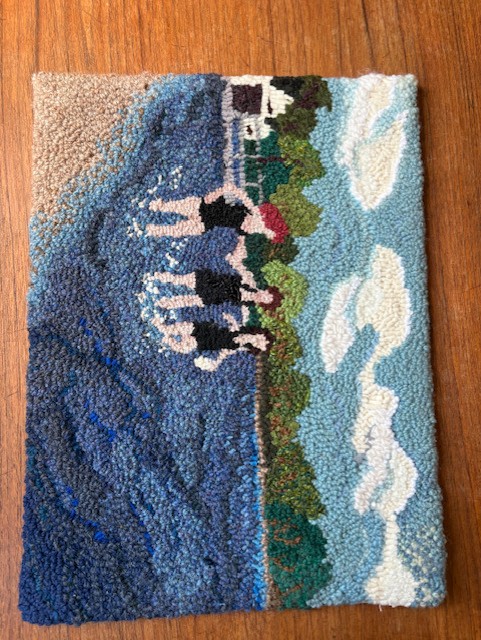 Girls on the Beach by Julie de Loë
Hog's Back Falls: Girls on the Beach
Rug hooked by Julie de Loë – Completed January 2026
Materials used: burlap backing, wool cloth and 100% wool
Description: Pictured are Claire Johnson, Mary Maingot and Frances Clark swimming at Hog’s Back Park/Mooney’s Bay, April 30, 1954. To the far left, the white building and boat house where Paul’s Boat Lines found its beginnings.
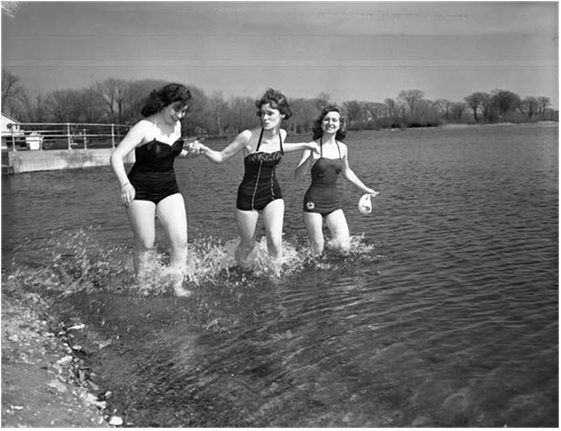 City of Ottawa Archives MG393-NP-31052-001 CA004093
Photo used with permission
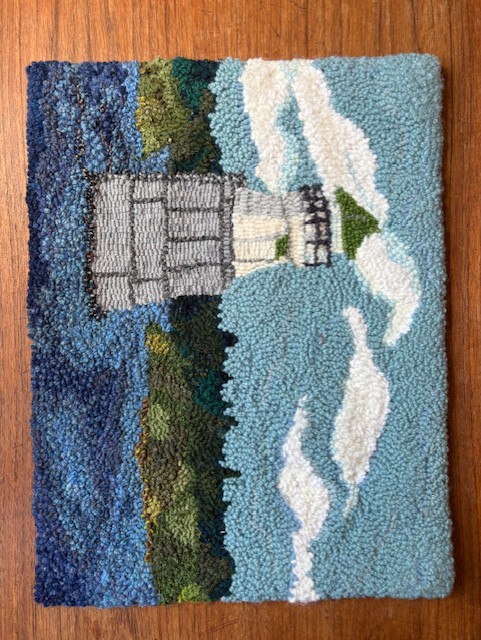 Green Shoal Lighthouse by Julie de Loë
Green Shoal Lighthouse
Rug hooked by Julie de Loë – Completed: January 2026
Materials used: Burlap Backing, wool cloth and 100% wool
Inspired by: Original photograph by Lou Bouchard Copyright 1964; Article and Drawing by Andrew King, Ottawa Rewind 2015/03/05.
Green Shoal is located in the middle of Ottawa River, about twelve kilometres downstream from Ottawa. It sits just north or the gap between Upper Duck Island and Lower Duck Island. Green Shoal Lighthouse was active into the early 1970s. The Green Shoal Lighthouse inspired the naming of the Beacon Hill neigbourhood as it was visible from the North part of this community.
Originally built in 1860, it received a new pier in 1900 and an updated light. It’s base is 20 feet in diameter and it rose to 23 feet above summer level of the river. The wooden tower stood 21 feet high and had a fixed white light. The light was 38 feet above the summer level of the river.
Today, only the steel-clad foundation remains standing in Ottawa River.
Keepers: George Barthgate (1860 – 1861), David Thomas (1861 – 1865), Mrs. D. Thomas (1865), Alfred Laberge (1866 – 1902), Albert Laberge (1902 – 1920), D. Mitchell (1920 – at least 1923).”
References: Annual Report of the Department of Marine, various years.
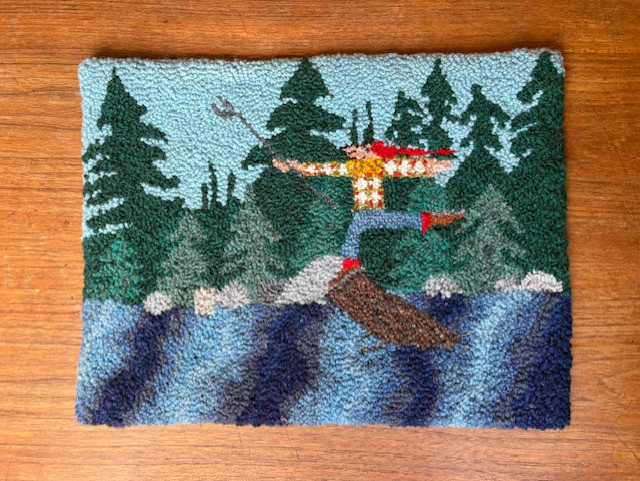 Log Driver's Waltz by Jule de Loë
Log Driver’s Waltz
Rug hooked by: Julie de Loë - Completed: Jnuary 2026
Materials used: burlap backing, wool cloth and 100% wool
Description: The Log Driver’s Waltz is a known Canadian folk song, written by Wade Hemsworth. The song was recorded by many artists Kate & Anna McGarrigle, Mountain City Four, Captain Tractor and The Hidden Cameras to name a few. The lyrics were translated in French by Philippe Tatartcheff.
In 1979 the National Film Board released this animated film as part of its Canada Vignette series. One of the most-requested in the collection of the National Film Board of Canada, it celebrates log drivers and the lumber industry.
This rug was inspired by the film and used with kind permission from the National Film Board of Canada.
 From the NFB film
Tin House
This is my last rug for the Ottawa Bicentenial project. Hooked in the Chéticamp style, it has 144 loops per square inch. The rug depicts the Tin House originally built in the 1860’s.
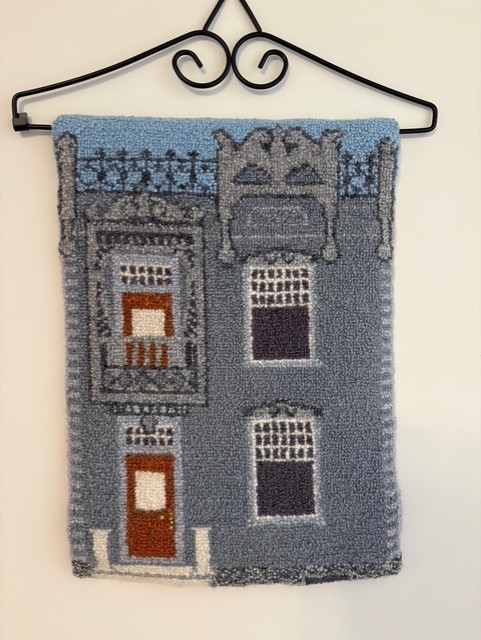 Tin House by Julie de Loë
In 1900, Honoré Foisy, a second generation tin smith who lived in the house on Guigues Street covered the house in tin to showcase his skills and advertise his business. In 1960, the house underneath the tin fell into disrepair and was torn down. Stored for 10 years in less than ideal condition, the tin facade was rescued and restored by Art Price creating a bas-relief. This art installation can be found today in Tin House Court, in Ottawa’s Sussex Courtyards.
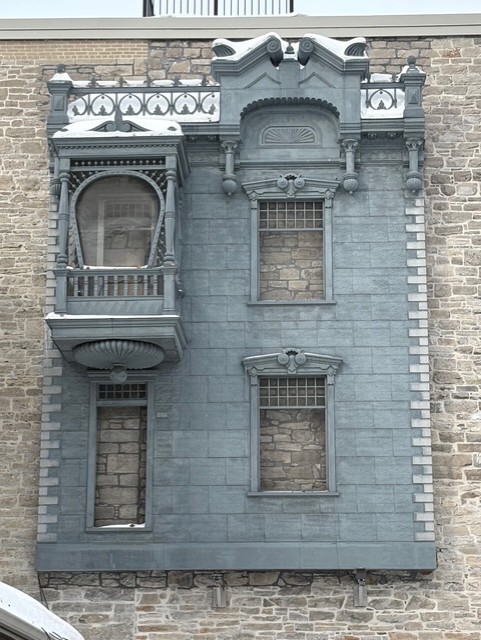 Tin House courtyard
This rug is based on the original photo taken on Guigues Street before demolition.
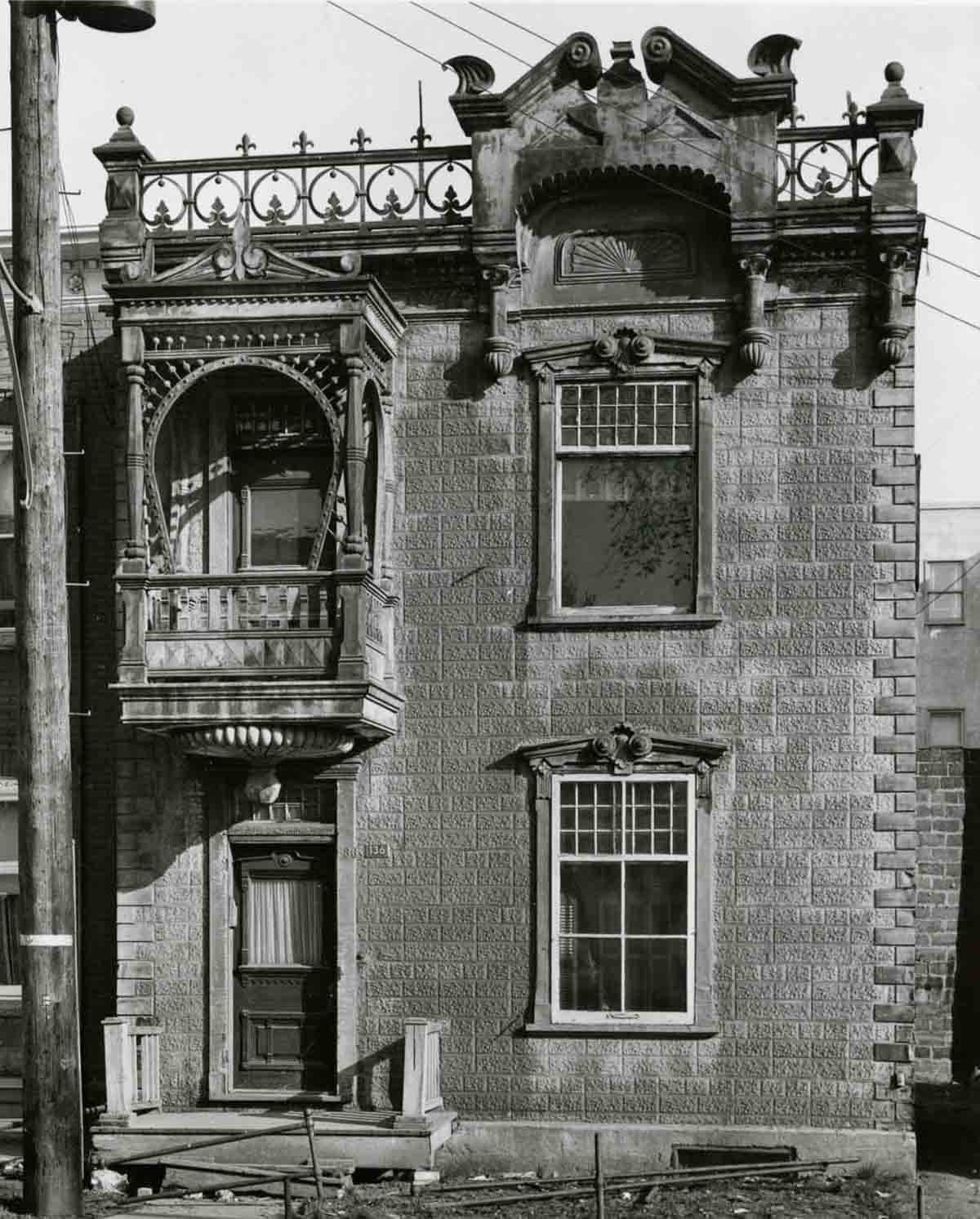 Tin House © Government of Canada. Reproduced with the permission of Library and Archives Canada (2026). Source: Library and Archives Canada/National Capital Commission collection/e999916344-u
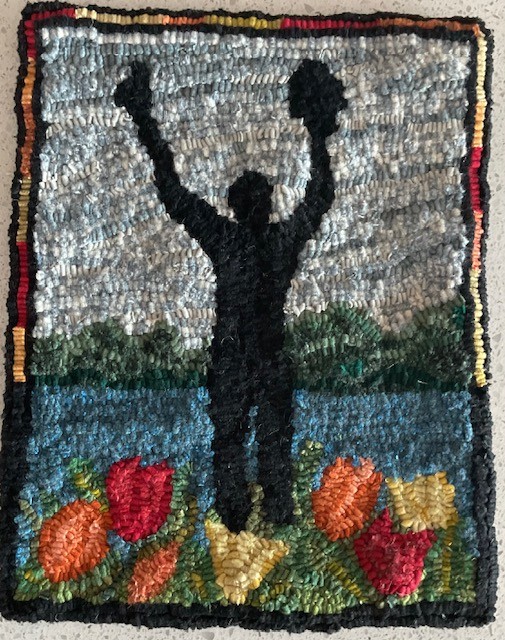
Man with Two Hats by Christine Tibelius
Man with Two Hats Designed and hooked by Christine Tibelius 2026
The statue is at Dow’s Lake in Ottawa in Commissioners Park, which is beside the lake. The statue is officially called The Man With Two Hats. It’s a bronze public sculpture about 4.6 m tall, showing a stylized human figure holding a hat in each hand. It was created by Dutch artist Henk Visch. The statue in Ottawa was unveiled on May 11, 2002 by Princess Margriet of the Netherlands.
The statue commemorates the role Canadian soldiers played in freeing the Netherlands from German occupation during the Second World War. Canada’s involvement meant a lot to the Dutch people, and as a sign of gratitude the Netherlands gifted this sculpture to Canada. There’s an identical statue in Apeldoorn, Netherlands (at the National Canadian Liberation Monument), and the two are symbolic “twins,” connecting the two countries across continents. The outstretched arms holding two hats can represent joy and celebration of freedom, the strong friendship between Canada and the Netherlands, and the shared history of liberation at the end of World War II.
Princess Margriet was actually born at the Ottawa Civic Hospital during the war — her mother stayed in Canada because the Dutch royal family was in exile — and that personal connection adds meaning to why the monument is in Ottawa.
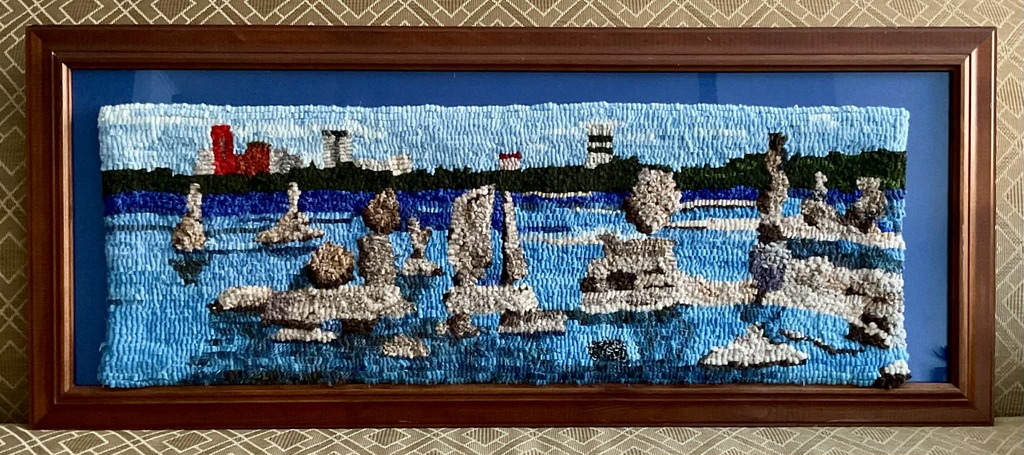 Joanne Dickert’s project depicting John Ceprano’s rock sculptures along the Ottawa River.
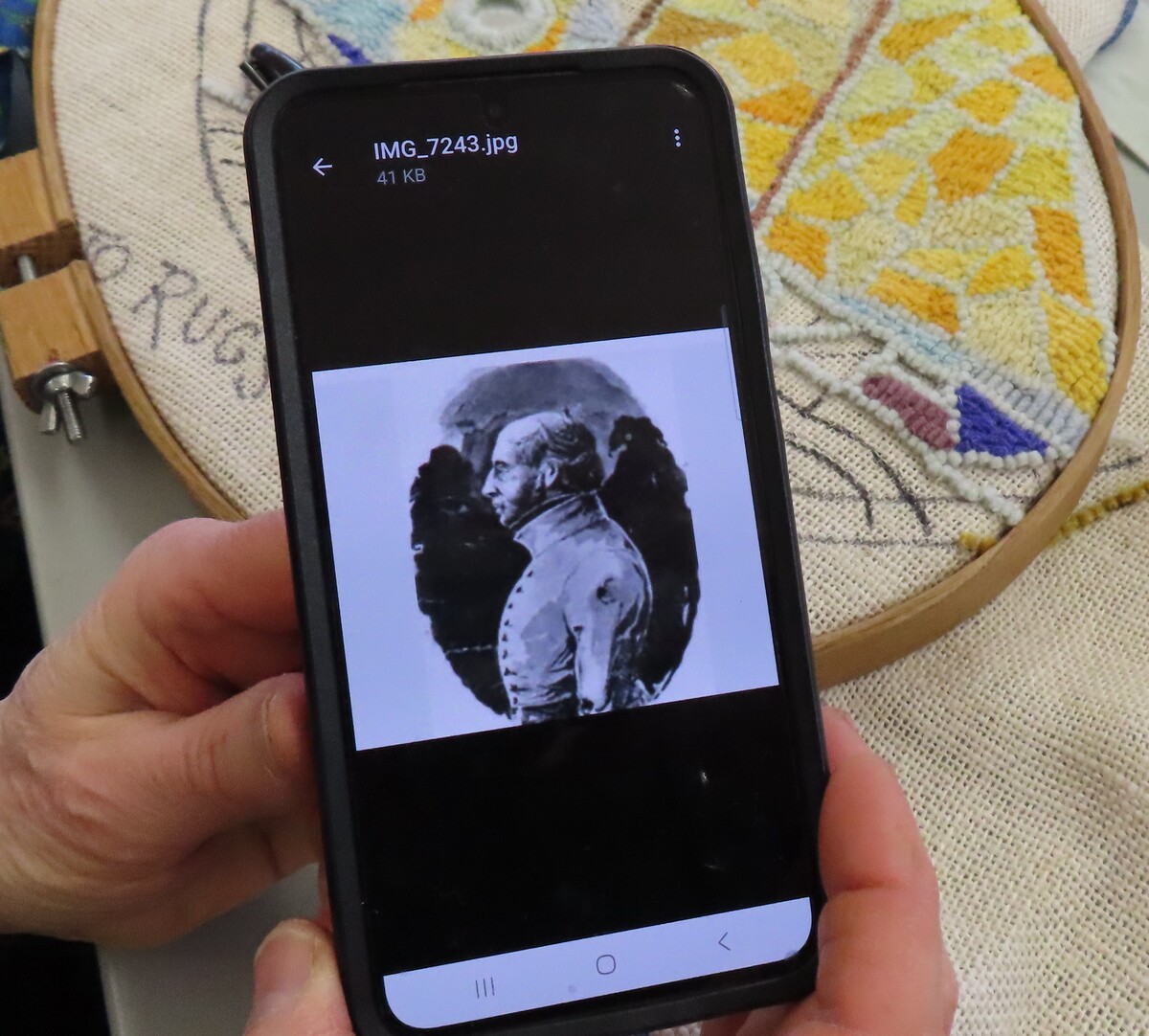
 Colonel By hooked rug by Jane Smith
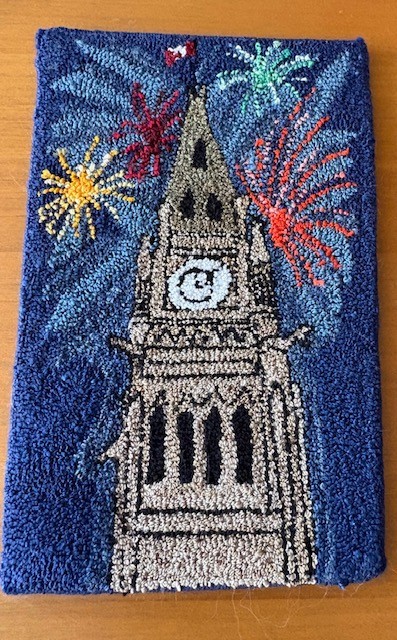 Parliament Hill Peace Tower by Elaine Armstrong.
Visit the OOFRH website to learn more about their organization: ottawarughooking.com