

Working to preserve Ottawa's past
for future generations.
The Story of Us - The Women's Canadian Historical Society of Ottawa Established 1898
Media
The HSO Blog has been live for a year! We launched this platform as an extension of our objective to preserve and increase public knowledge of the history of Ottawa, including its people and places. Our vision was to create a space where the history of the Ottawa area could be shared through an engaging blog platform.
Thank you to all who have contributed and shared their interest in the blog!
Be sure to catch up on past posts and other great HSO publications found under the publications section of our website.
As always, if you are interested in writing for the blog, please get in contact with us by emailing This email address is being protected from spambots. You need JavaScript enabled to view it.. We are always excited to see what fascinating stories make their way to us and can’t wait to see what this year brings!
On the morning of December 2nd, 2024, eight members of the Historical Society of Ottawa attended the final presentation of the HIS4135 Canadian Digital History Course at the University of Ottawa, The class had taken on the project of digitizing several of the scrapbooks created by our founders, the Women’s Canadian Historical Society of Ottawa, (WCHSO), during the first half of the 20th Century. The students would then conduct some analysis of the contents of the scrapbooks. Their professor, Sarah Templier, explained that this project had been intended for a few years previous, but the pandemic shutdown access to the City of Ottawa Archives and so to the scrapbooks. She went on to explain that scrapbooks were selected, in part, on their completeness. Scrapbooks that contained a lot of loose articles just stuck between the pages were not used as they would have required a lot more work to assemble them prior to digitization. There were other scrapbooks, created by individuals and donated to the WCHSO, but these were not investigated, the research being restricted to what the WCHSO, as an organization, selected. Five full scrapbooks were however digitized and are now available online for the first time.
The class was divided into teams of three students, each focussed on a different theme, and not all working with the same digitized scrapbooks. The themes investigated were: Arts and Culture, Prominent People, Women in Sport, Women in the Public Sphere and Military History. There were some general observations common to most groups despite their specific research areas. Many commented that it was interesting to see what each scrapbooker felt was worth preserving. Equally interesting was what was “missing” from the scrapbook. They could not determine if those items we would deem today as “missing” were not collected because they were not covered by the local newspapers at that time, were not considered to be of sufficient significance or not of interest to that particular scrapbooker. It was also noted that although the scrapbooks were generally in date order, there were also cases where it seemed that articles had been placed onto pages where they would fit so as not to waste the space. Many of the scrapbookers dated their items, but the exact source was seldom preserved.. There seems to have been little collected on what we would now call marginalized communities or immigrant communities. The identification of women proved a constant frustration as, in that period, married women were identified as “Mrs. Someone”, with the resulting loss of connection to their former families and accomplishments. All groups displayed their project web pages and discussed how they had integrated additional research, such as photos, videos or sound recordings to enhance the experience of the viewer, and how they had incorporated maps, word clouds and juxta positioning of findings to produce the same effect.
The Arts and Culture team noted that, despite the lack of government funding, there was a lot of activity in and interest in the cultural landscape of Ottawa. There was also a more diverse population represented in the scrapbooks, including frequent references to Jewish theatre. A map of cultural venues was displayed. Also of interest were a number of famous individuals in the field, especially Yousuf Karsh, who were featured.
The Prominent People team discovered that while some people who garner significant mention in the scrapbooks are still well known today, such as Thomas D’Arcy McGee, others are virtually unknown to the digital world. They also found that the scrapbooker held the power to preserve an individual through their collection. As such, relatives and friends of the scrapbooker achieved a higher level of prominence than we might now attribute to them.
The Women in Sport team noted that there were certain sports that society deemed appropriate for women and that it was understood that women should participate in these sports in an appropriate manner. Thus while words such as “strong” and “powerful” would be used to describe male athletes, words such as “graceful” and “elegant” would be used to describe female athletes. The team also revealed the disparity of opportunity afforded to men and women interested in sport. The achievements of Barbara Ann Scott were well covered in the scrapbooks.
The Women in the Public Sphere team looked into where women achieved positions of leadership in the community and how this was reflected in the scrapbooks. Much of this happened in volunteer organizations and Women’s Clubs, such as our own WCHSO. Religious organizations, such as the Catholic Women’s League offered other options. The team highlighted the work of women in the Canadian Red Cross, contrasting their limited role during the First World War, doing fundraising and knitting in Canada, to their more evolved role during the Second World War, which saw women serving in large numbers overseas. The team also noted that the rise of women was not always well received.
The Military History team focussed on three time periods. Scrapbook 2 was primarily focussed on the period immediately following the First World War. The WCHSO scrapbookers collected stories related to demobilization and returning soldiers. Special interest in the 38th Battalion was noted. A few years of the interwar period, 1934/35 and 1937 were remarkable for the almost total lack of information related to the Canadian military, apart from the annual Armistice Day commemoration. This accurately reflected the state of military affairs in Canada at the time. Scrapbook 5 covered the period of 1940/41 and was dominated by the military build-up in Canada and a growing spirit of patriotism and support for the Crown.
The culmination of their project work, along with the five scanned scrapbooks, is now available to the public and can be viewed at: Scrapbooking Ottawa History or to enter into your browser: https://sites.google.com/view/scrapbookingottawahistory/home
The Historical Society of Ottawa would like to thank and congratulate the students for the work they have undertaken on our behalf to make this material more accessible to researchers. One student did caution that although the .pdf versions of the scrapbooks are searchable using Optical Character Recognition (OCR) software tools, these tools are not 100% reliable and may miss occurrences of the text string being searched for.
As a gesture of our appreciation, we will be giving Sarah Templier and each of her students: Gina Aiello, Anthony "Tony" Butticci, Daniel Cantin, Asia Csabi, Kristine Feria, Chenxuan Fu, Émilie Hollingsworth, Malcolm La Prairie, Caleb Ka Yu Lee, Noah Louden, Brennan Macey, Anthony Martimbeault, Emma Penwell, Isabelle Schneider and Ethan Stitt, a one year complimentary membership to the Historical Society of Ottawa. We hope to see you all at our events for many years to come.
Our final Museum Club outing for 2024 took place on the morning of Wednesday, November 20, and was a private tour of the National Research Council of Canada’s facility at 100 Sussex Drive. Thirteen of our members were greeted by Steven LeClair, Chief Archivist of the NRC. We were surprised to learn that apart from Library and Archives Canada, the NRC is the only federal agency that is permitted to operate an archive. All others must send their documents and artifacts to the LAC, but due to the need for rapid access to information by researchers, the NRC operates its own archive and so can respond to researchers in a day or so.
Steven gathered us in the original Council Chambers of the NRC and told us some of its early history, being founded in 1916 as the “Honorary Advisory Council for Scientific and Industrial Research”. It was a volunteer body whose membership changed along with the problems under investigation. By 1924, Henry Marshall Tory had been hired and made Chair, becoming the first President in 1928.
Steven explained that under Tory’s leadership the property occupied by the Edwards Mill on Sussex Drive was purchased and the former buildings were converted into labs. These included a wind-tunnel and a water channel. Known as the John Street Labs, the buildings proved unsuitable and a purpose-built facility was opened in 1932 at 100 Sussex Drive.
Affectionately known as the “Temple of Science” and officially known simply as building “S 77”, it is a magnificent brick and stone structure done in Neo-Classical style. Steven pointed out, as he led us on a tour of the building, the repeated use of sets of 8 Doric columns and of the Rose, Thistle, Leek, and Fleur-de-lys carvings, which were considered to represent Canada’s “founding races”, the English, Scottish, Welsh, and French. He also showed us a ceiling on which the conservation work included the use of human saliva to kill bacteria that had grown on it. The building still has many working labs which were, of course, off-limits on the tour.
We learnt from Steven, that their second President, General Andrew McNaughton, was also a civil engineer He officially held the post from 1935 to 1944, though from 1939 he had been recalled to military service and most of the day-to-day operation was led by C. J. MacKenzie, who would succeed McNaughton as President. Under McNaughton and MacKenzie the NRC was refocused to support the Allied efforts prior to and during the Second World War. The research was wide ranging and productive generating improvements in such diverse areas as powdered milk and eggs and preserving bacon to help feed the people of England, developments in explosives, anti-submarine warfare and RADAR. Following the war, it fell to MacKenzie and later E. W. R. Steacie, who held the post of President from 1952 to 1962, to transition the NRC back to its peacetime pursuits.
Throughout the tour, Steven took the opportunity to highlight some of the inventions or refinements developed at the NRC. These include the first atomic reaction in Canada, which took place at 100 Sussex Drive and later the development of the ZEEP nuclear reactor. The NRC developed Canadian Oil Light Acid, (CANOLA), originally based on rapeseed oil. NRC scientists were involved in the development of 4 track recording, the synthesizer, practical electric wheelchairs, building materials, the pacemaker, pressure molding, satellite antennas, the Canadarm and many, many other innovations. Many of these advancements were achieved through the enlightened policy of a number of the Presidents to allow their scientists to spend part of their time pursuing their own personal areas of interest and investigation.
After a brief walk-through of the original NRC library and stacks, we concluded our fantastic two hour tour in the office of Gerhard Hertzberg, which is preserved in his honour. Hertzberg, one of Canada’s most prominent scientists in the fields of Physics and Physical Chemistry, won the Nobel Prize for Chemistry in 1971. He served with the NRC from 1948 until his death in 1999 at age 94.
Addendum from Steven Leclair
Here is the link to the NRC Digital Repository for the NRC Archive’s photos, the AVRO Arrow collection, and a few others: NRC Digital Repository - Canada.ca
FYI – for non-water marked photos people can request directly to me using the title or item identifier. There are no costs and everything posted is available to download.
This email address is being protected from spambots. You need JavaScript enabled to view it.
Some of my historical posts: Under the microscope: The John Street Labs
Given that our 1st English language presentation of our 2024 / 2025 series fell on September 11, it was most appropriate that our guest that night, Peter McBride, spoke about the contrast between fire fighting in Bytown and early Ottawa, as compared to fire fighting in Ottawa today. Peter is the President of the Bytown Fire Brigade, with whom we were proud to partner for this evening’s presentation. Chief McBride is a 32 year veteran of the Ottawa Fire Department, a registered safety professional, and a passionate advocate of Fire Literacy.
Peter started us at the very beginning of mechanized fire fighting in Bytown by showing us “The Dominion”, the first hand-pumper in Bytown. It was stationed on Barrack Hill with the Royal Engineers, but, pulled by soldiers, made frequent dashes into the town to help fight fires. Its hand-pump, which required a team of 16 men, could force a stream of water up to 3 storeys in height. Miraculously, it survived and is now in the collection of the Bytown Fire Brigade, who, after much restoration, bring it to special events and demonstrate its operation.
Peter explained that in these early days, “fire fighting”, was more a matter of attempting to save as much of the contents of the structures than the successful extinguishing of a fire. There was no water system, so no hydrants. The water was carried to the scene in water carts, or, if it was lucky enough to be beside a pond or river, water could be sucked into the hand-pumper. Most of the work was still done by bucket brigade.
Fire fighting at this time was not a service, it was a business. Peter told us that the money needed to purchase equipment was put up by local businesses or raised from subscriptions. There were no dedicated buildings for the storage of the equipment. He showed us a plaque, or fire mark, that would be displayed on a building to indicate that it had paid for some degree of protection or assistance. Towns were unplanned, thus there were no regulations on the types of buildings or activities that could be located together or regulations regarding the distances between buildings. In a town built primarily of wood, fires spread quickly.
In 1838, Uppertown, the most prosperous area, bought its own hand-pumper, “The Mutual”, likely with financial support from the insurance company. Later it and the fire brigade that used it were renamed as “The Chaudière”. They were a very proficient brigade and won many firefighting championships. Their banner survived, but in a highly deteriorated condition. The Bytown Fire Brigade has recently digitally remastered the banner. The story of this can be read here: Bytown Fire Brigade celebrates a banner year
In 1847, the first Hook and Ladder Company, another hand-pulled apparatus, was paired with “The Alliance”, the hand-pumper in Lowertown. Peter explained that the rivalry and distrust that existed between Uppertown and Lowertown in all things also infected the fire brigades, causing Council, in 1851 to establish a Fire Committee and in 1853 to authorize the building of dedicated engine houses and the purchase of additional engines. In 1867, John Langford was made Ottawa’s first Fire Chief, though firefighting was still performed by the privately run brigades. He was well respected, having come through the Chaudière, as was his Deputy from Lowertown.
In 1870, J. R. Booth purchased the first steam-powered pumper in the city, but this was far from the biggest fire related story of that year. Peter told us of the Great Fire of the Ottawa Valley, started by some railway workers clearing brush between Almonte and Pakenham. Driven by gale-force winds it reached Ottawa two days later. The Council called on all its citizens to fight the blaze and it was only by blowing up of the dam near Dows Lake, that flooded the Preston Street area, and a drop in the winds, that saved the rest of the city. In 1873 another fire on Daly Street destroyed an entire block. Change was needed.
Peter described the changes in fire protection that took place in 1874. The most important of these was the formation of the Ottawa Fire Department, now celebrating its 150th anniversary. This meant paid fire fighters and the phasing out of the volunteer brigades, which disappeared by 1887. The first hose companies were also formed in Ottawa at this time. Along with this, there was the introduction of a water works system and hydrants, though these were temperamental and unreliable. Fire call boxes were also installed to provide a rapid reporting of fires.
Peter explained that, as a lumber town, Ottawa faced extraordinary risks. These erupted in 1900 with the Great Fire that started in Hull and spread to Ottawa fueled by the tremendous piles of stacked lumber. The Historical Society has a pamphlet that provides more information on this fire 009. The Great Fire of Ottawa. By 1903, much of Ottawa had been rebuilt, as had the lumber piles of J.R. Booth. Fire broke out again, consuming much of the same area of Ottawa as it had just three years earlier. More on this now almost forgotten fire can be read in this fine article When the Great fire of 1903 ravaged through Preston. Despite two devastating fires, the lumber barons continued to stack timber within the city, seeming to have an unusual amount of influence over the decisions makers at Council.
Peter recounted a story that demonstrated the cooperative nature of fire fighters in different communities. In 1915 there was a fire in the Village of Russell and a call went out for help. Ottawa’s Silsby steamer was loaded onto a train and taken to save the village. The story has since been retold in a children’s book Silsby Saves the Day.
Peter concluded his look into the past with a reference to the 1916 fire that claimed the Centre Block of the parliament Buildings, and switched his attention to a brief review of the Ottawa Fire Service as it exists today.
The Historical Society of Ottawa has a pamphlet available online that also tells part of this story. 038. The Early Days of Fire Fighting in Ottawa
Peter described the challenges faced at amalgamation in 2001, when multiple fire departments, each with different staffing, training, equipment and expertise had to be merged into a single force. Managing this process was extremely complex and took some time. The Ottawa of today is a very complex city with multiple levels of governments, foreign embassies, heritage buildings and about 1.25 million inhabitants. It is also geographically one of the largest cities in Canada featuring everything from high-rise apartment towers to barns and silos. Naturally then the fire service of today is also large and highly complex.
Peter explained that although the public still think of fire fighters as the people who actually put out the fires, from the 45 current stations, there is now a lot more involved. The department now has divisions dedicated to the training of the crews in the newest techniques and on the newest equipment; to educate and inform the public in our multi-media world as to fire hazards; to enhance the safety of the fire fighters; a sophisticated communications structure to direct resources to and within emergencies; and to perform evidence-based research into the effects of new materials on the risk and spread of fires and how best to deal with these in the different built environments in which the fire service must operate both today and in the future. Apart from this, the fire fighters now respond to all kinds of emergencies, as diverse as medical responses to tornadoes and other climate-driven emergencies.
Peter concluded his presentation with an invitation to anyone who has stories, photos, or memorabilia related to fire fighting in Canada, and especially in our area to please get in touch with the Bytown Fire Brigade. They would love to talk with you.
Peter’s full presentation can be viewed at: The History of FireFighting, Early Bytown to modern Ottawa
The Main Branch of the Ottawa Public Library welcomed us back on Saturday, September 28, a beautiful fall afternoon, for our first in-person English language Speaker Session of the 2024 / 2025 series. We were pleased to partner with the Workers History Museum for this presentation and honoured to have their President, David Dean, on hand to introduce our guest speaker. Brian McDougall describes himself as a “socialist historian”, one who asks different questions and so draws different conclusions than main-stream historians. David Dean described Brian as a former civil servant, educator, author and activist with a dedication to public history. Brian related the stories of two early strikes and how they are now remembered. His audience of 40 was enthralled.
Brian began by giving us some background on the match industry at the turn of the 20th century. Prior to the general electrification of the world, matches were a critical product and the E. B. Eddy factory in Hull was at one time the largest match making factory in the British Commonwealth. The work, which involved men cutting the matches and women making the packaging and packing the matches into the boxes, was not only low paying, as was all industrial work at that time, it was also highly dangerous. Prior to the First World War, matches were made using white phosphorous, a highly flammable and poisonous chemical which resulted in a condition called phosphorus necrosis of the jaw, (aka Phossy Jaw), in which the vapours from the white phosphorous destroyed the bones of the jaw. Fire was another ever-present danger.
The ‘Match Girls’ (les Allumettières) were young, poorly educated, French, Catholic women, forced into the work force by the low wages paid to all members of the working class. Their living conditions were appalling, characterized by large families inadequately housed, with poor sanitation, bad nutrition and rampant disease. Working women held the dual responsibilities of contributing to the family income while also caring for all of its members.
Brian told us, perhaps surprising many, that the women match makers at E.B. Eddy were unionized: l'Union ouvrière féminine de Hull. The women, however, were not permitted to negotiate for themselves, this being done “on their behalf” by male union leaders and the Oblate Fathers, the church being central to all aspects of life in that community. The negotiators believed in a strategy of progress through cooperation and conciliation with the English ownership rather than a strategy of confrontation.
A heavy demand for matches, led the company, in October 1919, to demand that the women work double shifts. The women refused and were locked out. After some discussions with the male leadership, the company offered a shorter work week and an increase in wages, but demanded the right to change work hours as they wished and included a “yellow-dog” clause in the proposed settlement that would ban the women from union membership. The women refused. Shortly thereafter an agreement was reached in which the women would work double shifts for a period of 4 months, would receive a 50% pay increase (little in real terms) and would retain their union membership. This was accepted and work resumed.
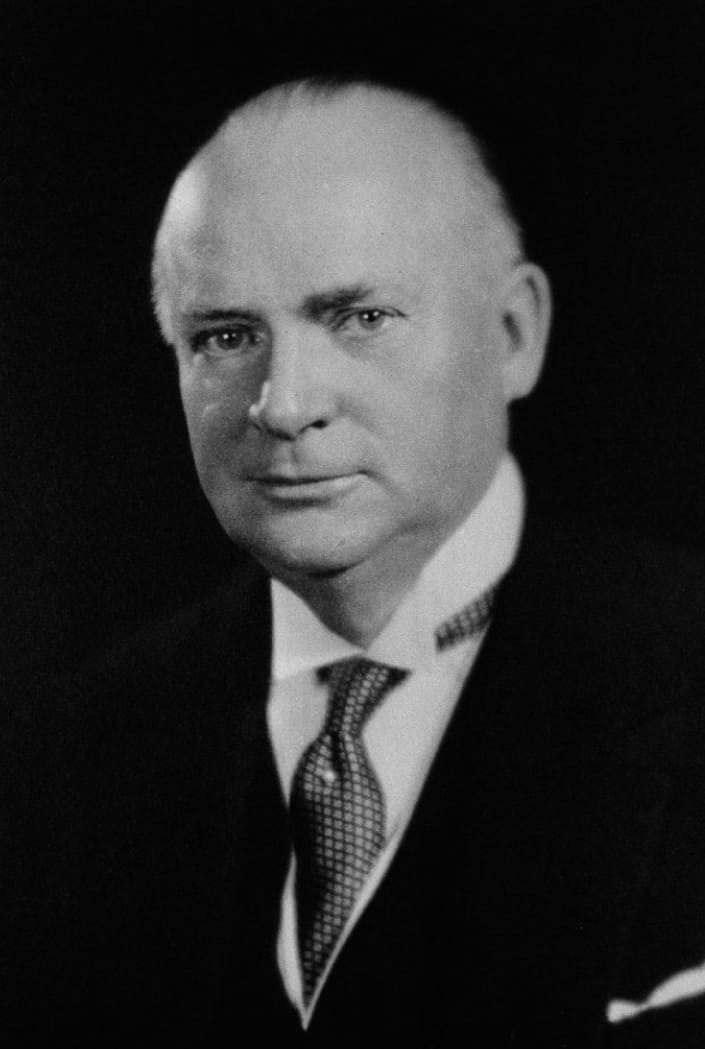 Richard Bedford Bennett, LAC 1930.Brian explained that labour issues came to a head again in September 1924, this time driven by a drop in prices for matches. By now the company had left the control of the Eddy family, with future Prime Minister R. B. Bennett being the principle owner, who held that he was not bound to agreements signed by the previous owner. The company demanded a 50% pay cut and to seize the hiring process from the women supervisors, with the intention to hire non-French Catholics and so break the union. In response, union president, Donalda Charron led the women out on strike. The women picketed, fundraised, held 9 public meetings to explain their position, and so received both financial support and donations of food from the local communities. This included printed support from the French language newspaper Le Droit.
After two months the male negotiators and the company reached a settlement in which the women would return to work at their same hours and rate of pay. The union would remain in place. No improvements in working conditions were achieved. Donalda Charron was not rehired and the women supervisors lost control of the hiring process. The women supervisors were later fired and the union was lost.
The two strikes of 1919 and 1924 were the first by solely women workers in the Province of Quebec and in this area. The match works was sold in 1927 and finally closed in 1933.
Brian went on to tell us of an earlier, larger and more radical strike, which is now less remembered. In the late 19th and early 20th centuries, the lumber industry was the backbone of the local economy. While the lumber barons lived in luxury, Brian explained that their workers did not. Long hours, (11 or 12 hour days, 6 days a week), for poor pay in a hazard-filled work place, where it was commonplace for workers to be maimed or killed, was the norm. As there was no work in the winter, there was no pay. Thus the winters were especially hard on the families already suffering from inadequate housing, poor diet, lack of sanitation and multiple diseases.
In 1891 there was a drop in demand for lumber and a corresponding drop in price. In response, in September, the mill owners, acting collectively, cut worker wages by 50 cents a week, almost a 20% pay cut and refused to honour an earlier promise to reduce the work day to 10 hours. The mill workers were not unionized, though an American-based union, the Knights of Labour, did have some membership in Canada, including 6 members at the Perley & Pattee Lumber Company. On the 14th of September the workers there demanded the reinstatement of their full wages, the mill owner, George Pattee, refused, insisting that he was only following what was being done at all the other mills in the area. The workers walked off the job, an illegal strike as 6 months notice was required. As such, the Knights of Labour did not support the action, preferring arbitration to confrontation. Representatives of the workers soon went to all the other mills and lumber yards, where these workers too put down their tools and joined the strike.
Brian pointed out that the mill owners were powerful. E. B. Eddy, who was also the Mayor of Hull, arranged, on the 16th, to have two companies of the Governor General’s Foot Guards and two companies of the 43rd Battalion called out, armed with live ammunition, to protect the mills. The troops were sent home the next day when workers representatives, among them Napoléon Fateux and J. W. Patterson, convinced Eddy that no damage would be done and established worker teams to safeguard the mills. The owners also tried to break the strike through the use of scab labour, but the strikers blockaded the roads, dissuading the scab workers from reporting.
Brian explained that the call for the 10 hour work day had a broad appeal across the working poor. The 2,500 mill workers were eventually joined by an additional 1,500 workers from other industries, a large block of the workforce at that time. Significantly, however, the more professional workers who had already achieved a reduced work week were generally not supportive. Support for the strikers, in terms of donations of funding and food, and even the creation of striker’s stores to help the families followed, but as time went on the momentum began to fade and the approach of winter caused cracks to develop on both sides of the dispute.
By mid-October, Brian explained, most workers had returned to their jobs, the mill owners having made no concessions. Approximately 1,000 experienced mill workers had left the area during the strike, 600 of those to Michigan. This delayed the return of the industry to full capacity. Shortly after the return to work the mill owners reversed the 50 cent pay cut and several years later a 10 hour work day was implemented.
The Historical Society of Ottawa has another article on the 1891 strike that can be read at: Strike! En Grève! Plus, you can read about more labour strife at the E.B. Eddy plant in the story: The Eddy Lock-out.
Brian pointed out that although both labour actions were ultimately unsuccessful, as a society we now only remember and honour the actions by the women match workers. This can be seen through the naming of a Gatineau library branch for Donalda Charron, the renaming of Boulevard de l’Outaouais, in the Hull section of Gatineau, as Boulevard des Allumettières and by an event organized by the Public Service Alliance of Canada (PSAC) in October 2014 as part of Women’s History Month. There has been no such recognition of the much larger strike of 1891. Perhaps it has simply been forgotten, though Brian speculates that it has more likely been intentionally ignored. No government or organized labour union of today would benefit from honouring a broad-based labour revolt that was led by workers themselves and not by professional leadership.
Provide your name and email address below, to receive updates for Student Corner.
Once you subscribe, you will receive a confirmation link in your email, click to confirm.
You may unsubscribe at any time by clicking the "unsubscribe" link in email updates
Quick Links
About
Supporting Partners