

Working to preserve Ottawa's past
for future generations.
Time Travelling with Michael McBane – “Bytown 1847”
Enjoy this episode of the HSO/Rogers TV series Time Travelling with Michael McBane.
Media
Time Travelling with Peter Atkinson, “Gord Atkinson: Ottawa’s Oldest Teenager”
Enjoy this episode of the HSO/Rogers TV series Time Travelling with Peter Atkinson.
Media
Time Travelling with Rick Henderson – “Philemon Wright and his town”
Enjoy this episode of the HSO/Rogers TV series Time Travelling with Rick Henderson.
Media
Time Travelling with Kevin Ballantyne – “Glimpses of ‘Forgotten Ottawa’”
Enjoy this episode of the HSO/Rogers TV series Time Travelling with Kevin Ballantyne.
Media
Time Travelling with Paul Weber – “Go Exploring”
Enjoy this episode of the HSO/Rogers TV series Time Travelling with Paul Weber.
Media
On the afternoon of April 26th, 2025, members of the Historical Society of Ottawa, along with many members of the general public, gathered at the Main Branch of the Ottawa Public Library for the presentation of the 2024 / 2025 François Bregha Storyteller awards. Following the ceremony, the large crowd, numbering some 75, settled in to listen to one of the recipients, Denise Chong, speak to us about many of the aspects of being a non-fiction writer.
Denise Chong, an Order of Canada recipient, is the highly acclaimed author of five non-fiction books. These are: “The Concubine's Children” (1994); “The Girl in the Picture: The Kim Phuc Story” (1999); “Egg on Mao: The Story of an Ordinary Man Who Defaced an Icon and Unmasked a Dictatorship” (2009); “Lives of the Family: Stories of Fate and Circumstance” (2013) and “Out of Darkness: Rumana Monzur's Journey through Betrayal, Tyranny and Abuse” (2024). Prior to her career as a writer and historian, Denise studied economics at the University of British Columbia, later receiving her M.A. from the University of Toronto in 1978. She moved to Ottawa to work as an economist in the federal government and in 1981 became a senior economic advisor to Prime Minister Pierre Trudeau until his retirement in 1984.
Denise began her presentation with a brief summary of part of The Concubine's Children, which is the story of her own family. She explained that her grandfather, Chan Sam, came to Canada in 1913 to find work and send money home to his wife, Huangbo, who remained in China. Life in Vancouver was lonely, so in 1924, Chan Sam sent to China for a concubine, a second wife, May-ying, who was 17. They had two daughters together, Ping and Nan, before returning to China. Discovering that she was pregnant again, May-ying sought information from a blind soothsayer and was told that she would have a son this time. Believing that it would be better for their son to be born in Canada, Chan Sam and May-ying left their two daughters in China with Huangbo returning to Vancouver in 1930. Shortly thereafter, a third daughter, Hing, was born to the couple. This was a great disappointment for May-ying. Hing went on to have five children of her own, one of these being Denise.
Denise explained that her interest in her own history had been sparked by a couple of old photos. Her desire to understand the story behind the photos lead to her research, her trip to China, and eventually to the book. A similar thirst was initiated when she was offered an opportunity to do a quick biography of Kim Phuc. She knew, however, that the only way she could write one was to really dig into the full story. Research in countries like China, Vietnam, and Bangladesh is fraught with danger as such governments are not anxious to have challenging stores told ad have the inclination and means to suppress investigation. Denise told us of some of the tricks she has used, such as memorizing the map of a village so she would not look like a tourist or recording her covert research notes in the form of a travel journal and by conducting interviews while walking along public pathways.
Memory, Denise reminded us, is the pond from which the non-fiction writer must try to catch much of their information. Memory can be a flawed source, fragmentary, sometime manipulated, and sometimes contradictory. Different people may have different, but equally valid, memories of the same event and the writer must try to sift out what really took place. Denise pointed out that the act of asking promotes a rethinking of events and that for the most important questions, the initial time asking often yields the least contaminated responses.
Denise spoke to us of how the non-fiction writer uses the story of an individual or a single incident to tell a larger story. As such, the story of one family can represent the history of a community or of a collective experience, the story of one girl can tell the broader story of the horror of war, one man’s act of defiance can reveal an entire culture of oppression and an attack on one woman can expose not only systemic domestic violence but courage and triumph as well.
There are strong parallels in the writing of fiction and non-fiction, Denise explained, the only real difference being that the non-fiction writer does not create their characters and events. Their obligation remains to create a compelling narrative. One of the ways this is done is by inhabiting the characters, walking where they walked, seeing what they saw, feeling what they felt and doing, as much as is possible, what they did. She gave us the example of filling eggs with honey and throwing these against the second storey of her own house so she would have the feel of the egg in her hand and the sense of force and motion of hurling eggs, so she could accurately reflect this in her book “Egg on Mao: The Story of an Ordinary Man Who Defaced an Icon and Unmasked a Dictatorship”.
As Denise concluded her session, she let the audience know the final piece in becoming a successful non-fiction writer. Apart from all the research, work and skill that goes into a book, luck plays a large part. Her publisher had only intended to print a couple of hundred copies of The Concubine's Children, believing that these would sell in and around Vancouver. Instead it became an international best seller, and is now even being adapted for TV in China. The great success of her first book meant that other opportunities were presented to her and her initial success gave her the power to tell those stories in the way she felt they should be told.
Opened in 1872, the Ottawa Ladies’ College (OLC) was originally located on the southwest corner of Albert and Bay Streets before moving to its First Avenue location in 1914. Established as the expressed desire of many “earnest Protestant gentlemen” (including timber baron Henry Bronson) who represented the citizens of Ottawa and residents of Canada in their petition to form a school. The basis of this petition was to have a “first-class education put within the reach of the young women of the City of Ottawa and vicinity.” [2]
While private educational institutions, like convent schools and the Young Ladies’ Academy (founded in 1861) provided education to young women in Ottawa before the OLC was founded, what set the OLC apart was the designation as a college which provided education at the primary, secondary and collegiate levels. [3]
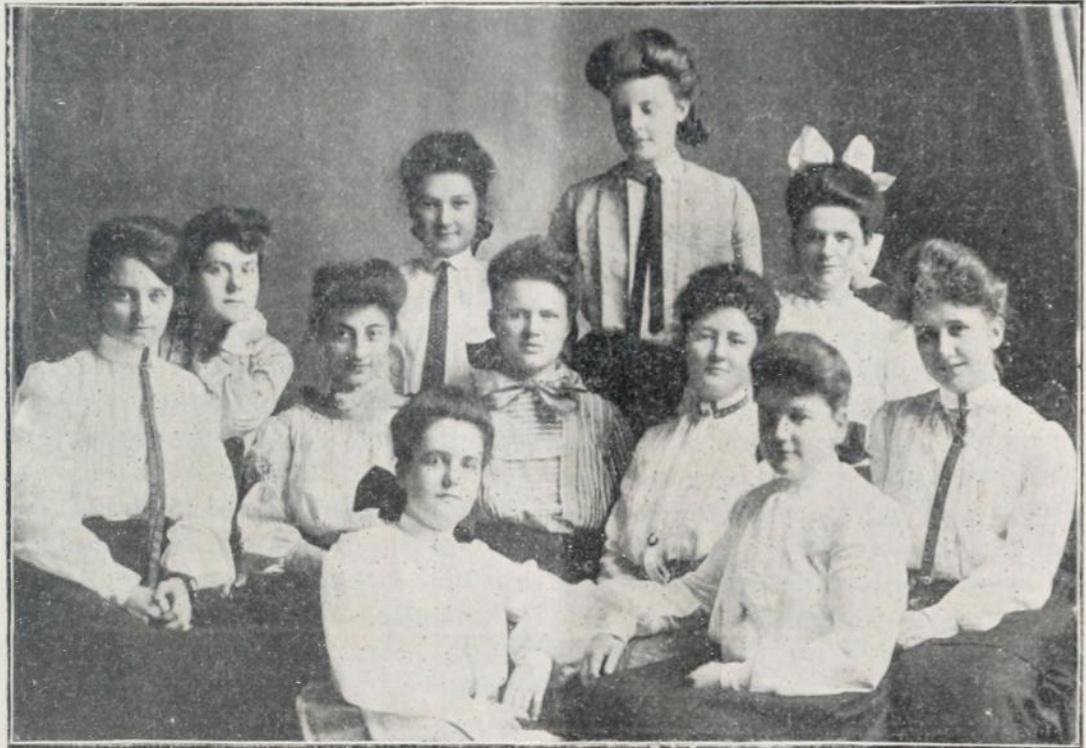 [Fig.2] The editors of the O.L.C. Echoes (student journal) April 1905 issue - University of Toronto Robarts Library Internet Archive Collection.
A primary aim of ladies’ colleges was to “assist in the moulding of character [and]. . . to afford refining influences.” [4] As the 1879 edition of the OLC school calendar states, this type of education offered a “good English education, together with the with the usual polite accomplishments for young women, under sound Evangelical, though non-sectarian influences.” [5] Ladies’ Colleges emphasized training in languages, classical studies, domestic science, fine arts and music. While at the same time, bookkeeping and stenography, mathematics and science were also included in the curriculum, particularly at the upper levels.
Though emphasis continued to be placed on education to further gendered social responsibilities, print media related to the promotion of the school reflects the OLC’s acknowledgment of the widening number of spheres in which women actively participated. As a 1921 article from the Ottawa Citizen articulates, the program of education adopted by the college was well-rounded, with the “aim of developing strong, intelligent, cultured and useful womanhood,” stating that “the commercial department provides a thorough business education; while in household arts, instruction is given in the most capable and efficient methods of keeping a home.” [6]
In addition to educational endeavours, the school boasted active social life for its students. Student organizations included the May Court Club (founded in 1898 by Lady Aberdeen), the Literary and Dramatic Club and the Athletic Association. Following their time at the college, alumnae maintained social connections through groups such as the Literacy Circle of the Alumnae Association.
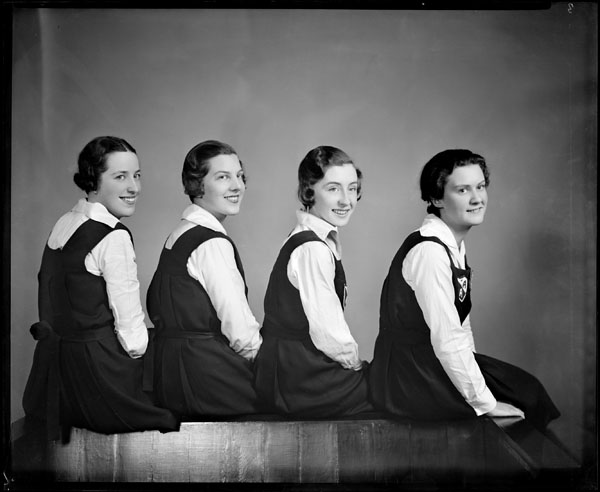 [Fig.3] Ottawa Ladies College Athletic Association (April 13, 1934) - Yousuf Karsh, Yousuf Karsh fonds, Library and Archives Canada, Accession 1987-054, e010678972.
In 1942, the college decided to close following the takeover of the building by the Women’s Army Corps. Reflecting upon the legacy of the school, Chairman Colin Frasier Elliott told The Ottawa Journal that, graduates of the school have “gone out with a clearer recognition of their own reasonability as members of the community and the intensified desire to render service.” [7] In July 1942, in recognition of the “renowned institution,” the Women’s Canadian Historical Society of Ottawa displayed more than 125 photographs at the Bytown Museum which spanned the OLC’s seventy-year history. At the time of this exhibit, Mrs. James R. Dickson (who was an Alumnae of the college) was president of the Historical Society. [8]
In 1947, the building on First Avenue became the campus of the new Carleton College, which later evolved into Carleton University.
[1]. The college became sponsored by the Presbyterian church in 1879 and then was transferred to the French Board of Evangelization of the Presbyterian church in 1889. This transfer resulted in the name change to Coligny College to emphasize opportunities for French Protestant girls, however by 1897 had once again remained, this time to the Presbyterian Ladies’ College. By 1902, the name was reverted to its original name, Ottawa Ladies’ College, due to the board wanting to emphasis the college as non-denominational. Robin Sutton Harris, Constance Allen, Mary Lewis, An Annotated List of the Legislative Acts Concerning Higher Education in Ontario (Toronto: Innis College, University of Toronto, 1966), 57; Presbyterian Ladies’ College”The Ottawa Journal,August 3, 1897, 8, https://www.newspapers.com/image/43908436/; “Notice to Amend the Act Incorporation for Presbyterian Ladies’ College,” The Ottawa Journal,January 4, 1902, 2, https://www.newspapers.com/image/46099395 .
[2]. Province of Ontario, Statutes of the Province of Ontario 1869 (Toronto: Queen's Printer, 1870), 175, https://archive.org/details/statutesofprovin1869onta/mode/2up; Ottawa Ladies’ College, Catalogue of the Ottawa Ladies' College (Ottawa: Ottawa Ladies College, 1873), 3, https://www.canadiana.ca/view/oocihm.8_01621_1.
[3]. “Young Ladies' Academy,” Advertisement, City of Ottawa Directory for 1870-1871 (Ottawa: Hunter, Rose & Co., 1870), https://archive.org/details/opl-1870-71-OttawaCityDirectory/page/n243/mode/2up?q.
[4]. T. M. Macintyre, “Our Ladies’ Colleges in Relation to Our Educational System,” The Canada Educational Monthly and School Magazine (Feb 1885): 45, https://www.canadiana.ca/view/oocihm.8_04023_62.
[5]. Ottawa Ladies’ College, Ottawa Ladies' College, Ottawa: 1878/79 (Ottawa: A.S.Woodburn, 1979), 2, https://www.canadiana.ca/view/oocihm.8_01375_1.
[6]. “Has Wholesome and Refining Influence,” The Ottawa Citizen,August 12, 1921,14, https://www.newspapers.com/image/456386432/.
[7]. “Take Over Ottawa Ladies’ College for Canadian Women’s Army,”The Ottawa Journal,July 9, 1942, 5, https://www.newspapers.com/image/48213820.
[8]. “Ottawa Ladies' College Exhibit at Museum,”The Ottawa Citizen,July 31, 1942, 10, https://www.newspapers.com/image/456507722/.
The French version of the series “Time Travelling” will being airing on May 14, 2025 on Rogers TV 23.
Timeslots will be as follows:
- Dominique Lajoie “Château Laurier: Si les murs pouvaient parler” – May 14, 2025
- Rick Henderson “Philemon Wright et son village” – May 21, 2025
Wednesday 9:00pm (mercredi 21h) *original timeslot*
Thursday 12:30pm (jeudi 12h30)
Thursday 8:30pm (jeudi 20h30)
Friday 4:00pm (vendredi 16h)
Monday 11:00am (lundi 11h)
Both shows will be available on the TV Rogers YouTube site at a later date.
We filled the virtual bleachers on the evening of Wednesday, April 9th, 2025 as we watched Steve Rennie start for the Historical Society of Ottawa. Steve is a baseball writer and researcher who lives in Ottawa. A former journalist, he is the president of the Ottawa-Gatineau and Eastern Ontario chapter of the Society for American Baseball Research (SABR). In the spring of 2024, he presented on Ottawa’s early baseball history at the Frederick Ivor-Campbell 19th Century Base Ball Conference in Cooperstown, New York. He has a particular interest in 19th century baseball in Canada and enjoys unearthing long-forgotten games and teams. He is a contributor and co-editor of “From Bytown to the Big Leagues: 150 Years of America’s Pastime in Canada’s Capital: Ottawa Baseball from 1865 to 2025” available online and his upcoming work will cover early baseball history in the far north and during the Klondike Gold Rush.
Steve began his session with a brief introduction to the origins of the sport. Although it has been widely claimed that Abner Doubleday invented baseball in 1839 in Cooperstown, New York, this myth has been debunked by baseball historians, the Doubleday family not living in Cooperstown at that time. The game had clearly existed earlier. It had made its way to Canada by 1838, the first recorded game being played in Beachville, Ontario. The Knickerbocker Base Ball Club of New York formalized a set of rules in the 1840s that were widely adopted and form the basis of today’s rules. Steve highlighted some of the differences, pitching being underhand, the batter being able to accept as many pitches as he liked as long as he didn’t swing and an out being recorded if the ball was caught on the first bounce. He pointed out that early on there were no gloves, catcher’s masks, or other protective equipment.
By the 1850s, Steve explained, Base Ball had become very popular, especially in the New York metropolitan area and was spreading following the rail lines. International play began as early as 1860 when a game was played by a team from Buffalo against a team from Hamilton, while another was played a few weeks later by teams from Ogdensburg and Prescott. Steve showed us that the Prescott team was identified in the newspaper as Greenville, but he suspects that it could have actually been Grenville, as in Leeds and Grenville. In 1869, the Cincinnati Red Stockings became the first fully professional Base Ball team, leading in 1871 to the establishment of the National Association of Professional Base Ball Players.
Steve told us that the first game he has so far been able to find in the Ottawa area took place in Metcalfe on September 13, 1865. An interesting aspect of the write-up of this event is that there was no description of the play, indicating that the readers must have been familiar with the game and that it must have been played locally for some time.
In 1867 Ottawa’s first Base Ball Club was formed, the New Dominion Club of Ottawa, likely taking its name from Confederation. They established a Club House at the Ottawa Skating and Curling Club on Albert Street and played in a field behind it. Shortly after their formation they travelled to Ogdensburg for a game, which they lost 141 – 20. Scores of this type were not uncommon in the early days due to the differences in pitching, rules and the relative experience of the players. The next year saw increasing interest in the game, the New Dominion Club often splitting into two teams to play themselves. They also played a team of mechanics, a 4 game set against a local cricket club, in which 2 games were Base Ball and 2 were cricket. There were 2 more games against the team from Ogdensburg, losing both but doing well in the first of thee two matches. There was a strong social element in the sport at this time, the games being followed by dinners, drinks and songs. In 1869, or just after, their club house and the field on which they played was subdivided into lots and sold, bringing an end to the New Dominion Club of Ottawa.
In 1871 a new club was formed, the Ottawa Base Ball Club, which included a number of members of the earlier New Dominion Club. Steve explained that they were responsible for creating the first Ball Park in Ottawa, actually in Stewarton, a separate village. The park was in the Gladstone/Cartier area to the canal and was needed to host a game on August 27, 1872 against the Boston Red Stockings, the most famous team in the world at that time. The Red Stockings returned to play a second game in 1873, Ottawa losing both games.
Steve gave us a bit of information about two of the early stars that are associated with Ottawa. George Latham, an American born player, played for the Ottawa Base Ball Club against the Red Stockings in the 1873 game. He joined the Red Stockings briefly in 1875 before moving on to play for a number of other teams. Jack Humphries was born in North Gower and was the first locally born player to go to play in the Major Leagues, serving as a backup catcher for a couple of teams.
Although Base Ball was very popular in Ottawa during the 1880s and 1890s, all the teams were amateur. Teams based around professions, government departments, or other local towns competed against each other. In the summer of 1898, Steve explained, the Ottawa Citizen started a campaign to bring professional Base Ball to Ottawa. The timing was good as the Rochester team of the Eastern League was in financial difficulty and so in mid-July it relocated to Ottawa. Met with initial excitement, the attraction faded as the team struggled to a losing season, and continued to lose money, an estimated $4,000 in just its 6-week stay in Ottawa. The team, known as the Senators, as was the team in Washington, folded at the end of the season. It was some years before Ottawa had another professional Base Ball team. July 19, 1898: Jimmy ‘Gussie’ Gannon leads Ottawa to its first home victory in professional baseball – Society for American Baseball Research
You can view Steve’s full presentation at: Ottawa’s Early Baseball History - The Historical Society of Ottawa
Steve also produced a pamphlet for us which has even more information and can be found on our website at: 127. Forgotten Gems: Ottawa’s Early Baseball History (1865–1900)
Quick Links
About
Supporting Partners