

Working to preserve Ottawa's past
for future generations.
Phil Jenkins Lectures Series: The Arts in Ottawa - A Looking & Listening History
Ben WeissSorry, this event is full!
Phil Jenkins, renowned historian, author, columnist, lecturer, musician, and songwriter will explore the musical and visual arts and architectural movement throughout our city's past.
This will be a three part series, Saturday afternoons starting 1pm, at the Sunnyside Branch of the Ottawa Public Library on September 16, September 23, and October 7, 2023.
To register, visit the Ottawa Public Library website.
On Saturday June 3, 2023, members of the Historical Society of Ottawa accompanied the Gatineau Valley Historical Society on a bus trip to the Kitigan Zibi Pow Wow. Departing from Chelsea, Quebec, the bus trip stopped at the Centre Wakefield La Pêche for more pick-ups and proceeded to make its way through the vast Quebec wilderness along the Gatineau River.
Upon our arrival at the Pow Wow, we were delighted to see a very large turn out. Vehicles parked along the roads and in yards and parking lots. It was a great way for us to get in the mindset for the day ahead. As we stepped off the bus at the entrance to the Pow Wow, we were met with the sounds of people chatting and laughing, jingle dresses jingle-jangling, the smell of the rows of food vendors and, importantly a welcoming feeling.
The Kitigan Zibi Pow Wow started in 1986 as a social gathering, becoming an official Pow Wow only three years later in 1989 and after 37 years it was no surprise that this celebration has been practised, rehearsed and perfected over time.
Food vendors were the first thing we saw before continuing on into the larger dancing area, and more vendors. I can not continue without saying something about the food at Kitigan Zibi. Incredible options ranging from beans and bannock, to “Indian tacos”, to wild game, and some of the freshest, sweetest lemonade one could ask for on such a beautiful day. It is safe to say that a generous amount of time was dedicated to sampling the food from these vendors with only positive reviews.
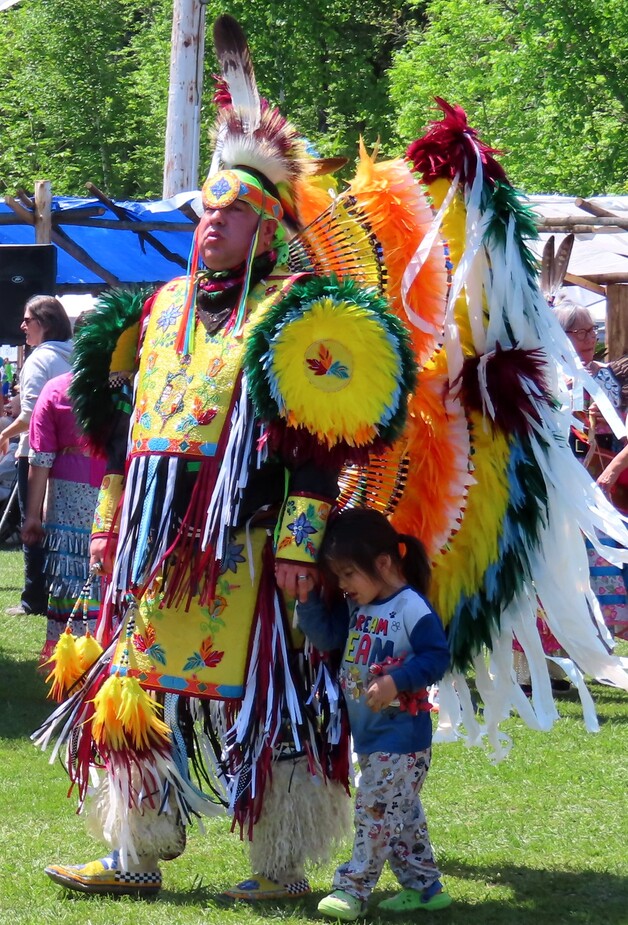 Photo by Ben Weiss.After making our way through the food area we were welcomed to an area with two circular sections. The outer section was dedicated to vendors selling t-shirts and hats, jewellery and crafts. The inner section was dedicated to spectators watching the various dances. The grass had been worn down clockwise as dancers expressed themselves to the sounds of the music coming from the branch-covered structure in the centre. One could feel the emotion in the sounds that flowed through the air and the energy that vibrated through the ground with every step and jump from the dancers. This continued for an indeterminable amount of time, as I was completely entranced, and followed by moving speeches from members of the Kitigan Zibi Reserve talking about the tragedy of the ever-growing number of missing and murdered Indigenous women, girls and two-spirit people. ‘Powerful’ and ‘moving’ are two words that best describe the tone of these speeches. The hurt that the speakers felt was felt by everyone listening, and the intended message was heard loud and clear. Minister of Crown-Indigenous Relations, Mark Miller was in attendance and the presence of him and his staff helped drive home the message that was being broadcast. If you or someone you know has been affected by the issue of murdered and missing Indigenous women, girls and two-spirit people, a hotline exists for those who need immediate emotional support and can be reached at 1-844-413-6649.
Later, HSO met with members of the Gatineau Valley Historical Society and their president Gilbert Whiteduck who was able to answer our many questions about the history of Pow Wows and their significance within Indigenous culture. We are thankful for the opportunity to start building a relationship with our sister society and look forward to working together in the future.
We finished our time at Kitigan Zibi watching the Grass Dances and the Jingle-Dress Dances, which were both incredible. The Grass Dances were performed by dancers in fantastic regalia with passion and reverence, and the Jingle-Dress Dancers performed harmoniously with the beat of the songs.
After a long day of fantastic food and dance it was time to head home. The bus – half silent with sleeping patrons, half noisy with excited recounts of the day – was a vessel of positive energy after our experience at the Kitigan Zibi Pow Wow. It was truly a rewarding experience and an incredibly significant piece of the history of Ottawa and the Gatineau Valley.
We would also like to thank long-time HSO member Evelyn Burke for joining us on this trip and hope she had a great experience.
Additional Info
- Year 1912
- Date July 1
The Secret Murder of Country Constable John Morrison
Ivan Tanner and Gerard Boyer of the Cumberland Township Historical Society highlight stories from Cumberland Township including the murder of County Constable John Morrison.
Media
The May Court Club of Ottawa Celebrates 125 Years & The Bytown Museum Opens for the 2023 Season
David KentOur final in-person speaker session of the year, hosted by the Main Branch of the Ottawa Public Library on May 10th 2023, featured presentations from two organizations with whom we have some past connections.
Grant Vogl has been with the Bytown Museum since 2010 and is now the Senior Manager, Collections and Exhibitions. He spoke to us about the changes that have taken place at the museum over the last couple of years and their upcoming season.
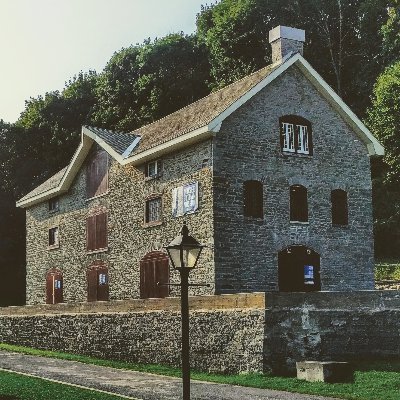 Bytown Museum Grant explained that, like most organizations, the pandemic disrupted the plans of the Bytown Museum. Closed for their 2020 and 2021 seasons, they opened for a shortened 7 week season in 2022 and were pleased to welcome some 12,000 visitors to the museum. They are very excited to be opening this Friday, May 12, 2023 for a full season. Though mostly out of the public view, much was done behind those closed doors. Grant described the work undertaken by the museum toward Reconciliation. Working with the Algonquin communities of Kigitan Zibi and Pikwakanagan, the museum reviewed their exhibits to ensure that Indigenous perspectives are included. It is important to the museum that visitors with an Indigenous heritage see themselves, their symbols, their culture and their language represented in the displays. As such, the museum has a new mural created by Indigenous artists and has 31 new tri-lingual information panels carrying English, French, and Algonquin language explanations.
Grant also gave us a “sneak peak” into their 2023 season. The Community Gallery hosts an exhibit by artists Gary Blundell and Victoria Ward entitled “Sourcing the Canal”. The exhibit highlights the natural and human landscapes that have been created by resource development whose resources would very likely have travelled through the Ottawa River and the canal. The temporary gallery features an exhibit entitled “City in Flames: Ten Fires that (Re)shaped Ottawa “. Grant explained that Ottawa’s history and landscape have been shaped and re-shaped by fire. Prominent buildings, industrial areas, landmark businesses, homes, and indeed entire neighbourhoods have all fallen victim to flames. These destructive fires not only devastated, but also renewed, allowing for architectural growth, the evolution of the cityscape, new iconic tourism locales, the passing of new laws, and more.
The Bytown Museum and the Historical Society of Ottawa share a common ancestry, both starting by the Women’s Canadian Historical Society of Ottawa. Grant reminded us that the Bytown Museum still recognises this shared heritage by offering free admission to Historical Society of Ottawa members.
To learn more about the Bytown Museum and their 2023 season, please visit their website: bytownmuseum.ca.
We were then pleased to be joined by Donna Shields-Poë, the President of the May Court Club of Ottawa, who introduced their Past President, Nancy Pyper. Nancy is one of those who has spent her life volunteering at whatever was needed, where ever she was, having been almost everywhere across the country as a military wife. She joined the May Court Club of Ottawa in 2013 and soon found herself drafted into leadership roles with them. She started her talk by giving us some background on their founder.
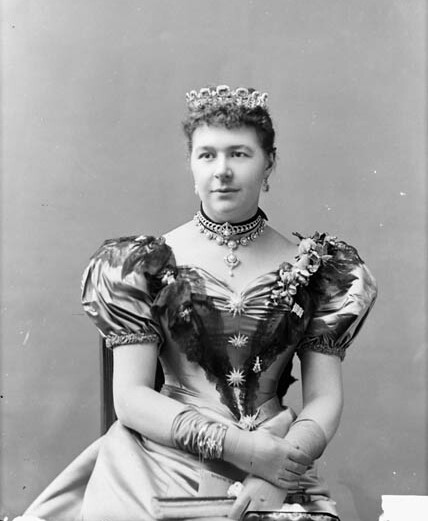 Lady Aberdeen (née Ishbel Marjorbanks) - Topley Studio / Library and Archives Canada / PA-025771Ishbel Maria Hamilton-Gordon, Marchioness of Aberdeen and Temair, GBE, was a truly remarkable person. She had been a social activist in England and Scotland promoting education, health care and women’s suffrage. So when Lady Aberdeen, who also became the Patron to the WCHSO, came to Canada in 1893 as the wife of the Governor-General and discovered that there was no social safety net or supports for women, founded the National Council of Women of Canada, the Victorian Order of Nurses and on April 30, 1898, held an elaborate garden party at Rideau Hall to which she invited young women of prominent families and challenged them to use their time and skills to provide service to those less fortunate. Thus a May Queen was crowned, her Court established, becoming the May Court Club of Ottawa, the oldest women’s service club in Canada. The May Court Club of Ottawa is one of nine now operating in Ontario.
Lady Aberdeen’s call to the young ladies of leisure to do good works was taken up then and has been equally well responded to by subsequent generations of Ottawa women. Nancy shared that there has been a transition, as the world has changed, from single women, an initial requirement for membership, to (still only) women who are now mainly retired. This has in no way dampened their enthusiasm or commitment, their most senior member, now with 66 years of service to our community, at age 93, still does her weekly shift in the Bargain Box nearly-new store. Their motto, “Enriching the lives of others as well as our own”, is clearly heartfelt and heeded.
Nancy explained that the Club has always focused their services on women, children, and the disabled and told us some of what they have done in their century and a quarter of service to the families of Ottawa. These include support to the Victorian Order of Nurses, help in and funding for hospitals, creation of an early lending library for hospital patients (now at the Civic Campus but still closed due to Covid), help to the Red Cross, operation of one of the first (1905) Tuberculosis clinics and the creation, expansion, and operation of a Convalescence Home. Doing things “The May Court way” has allowed the Club to continue to support the families in our city and the many new Canadians who now make their homes with us.
Knitting has always been a major activity of the May Court Club. Nancy told us that this continues today with items being made for sale at artisan festivals, or items such as tuques for preemies or hats for cancer patients made and given as needed. She said that during the two World Wars the Club knitted thousands of pairs of socks for our soldiers, sailors and airmen, as well as cutting fabric and doing much other work for the war effort.
Nancy explained that some confusion exists in the mind of the public between “The May Court Club of Ottawa” and “The Hospice at May Court”. When the Club closed their Convalescents Home, in 1997 after 80 years of operation, they looked for another use for their building. The outcome was a partnership between the Club and All Saints, (now Hospice Care Ottawa); the Club provides the building, looks after maintenance etc. and makes an annual donation of $100,000, but does not actually operate the Hospice. Club members do, however, volunteer their time providing some administrative and other support services.
Traditionally, with the exception of the two World Wars, the Club funded their activities through balls, galas, vaudeville shows and other social events, which were attended by Ottawa’s leading citizens. Times change and now the Bargain Box, which has been open on Laurier Avenue East for 50 years, is the major source of their funds. It survived all the closures and restrictions of the pandemic and is well supported by the local community, especially the students at the University of Ottawa, who appreciate the quality and love the prices.
Like HSO, the May Court Club of Ottawa is celebrating their 125th anniversary this spring. To mark the occasion the Club has just announced a donation of $125,000 to the Crossroads Children’s Mental Health Centre. A wonderful gift from an organization that has certainly more than net the challenge laid down to them by Lady Aberdeen all those years ago.
To learn more about the May Court Club of Ottawa, please visit their Facebook page at maycourtclubottawa or their website at maycourt.org.
On April 26, 2023, Jim Burant led us on a brisk virtual walk through the history of art in the Ottawa area. Jim was an Adjunct Professor of Art History at Carleton University as well as the Director of the Ontario Region of the National Archival Appraisal Board of Canada. He is a member of the Algonquins of Pikwakanagan, the co-curator of three major exhibitions of Ottawa art at the Ottawa Art Gallery and author of the recently published digital book, Ottawa Art & Artists: An Illustrated History, for the Art Canada Institute, with whom we were pleased to partner for this presentation. His book is the first in a series planned by the Art Canada Institute which will focus on art from a particular community in Canada. Jim pointed out that this will partially fill a gap in our understanding of art in Canada, as the two major references, Painting in Canada: A History by John Russell Harper and A Concise History of Canadian Painting by Dennis Reid, primarily reflect the work done in Montreal, Toronto, and Vancouver, making no mention of Ottawa.
Jim started us in the distant past, showing us the rock art of Mazinaw Rock in Bon Echo Provincial Park and the 77 pictographs of Oiseau Rock, many of which have been defaced by graffiti. This damage to sacred sites demonstrates a shocking disrespect for the culture and history of our Indigenous peoples. Jim explained that Indigenous artists have a long tradition of creating artifacts of cultural interest and worth. They worked with a variety of forms and materials, including baskets, copper and silver, ceramics and clothing, such as moccasins. Jim showed us a jacket made for him by his grandmother in 1969, which he still proudly possesses.
The arrival of European colonists resulted in the production of thousands of pieces of settler art that document their history. By showing us different works of similar subjects produced by different artists, Jim pointed out the importance of understanding the who, what, when, where, and why of a work’s creation, as they may have a very different take-away depending on the artist’s intent. These early works tell us a lot about Ottawa’s past as a lumbering and small industrial centre, an aspect of our city that has now vanished.
Jim explained that the selection of Ottawa as the capital in 1857 changed the nature of its art. There was an influx of artists into the city seeking patronage and employment or to teach at such organizations as the University of Ottawa and the Ottawa School of Art. There was, however, a dichotomy created between Ottawa as the nation’s capital and Ottawa as a local community. This was reflected in the fact that local politicians were content to abandon the promotion and collection of art to federal authorities. Thus, it was not until 1988 that the Ottawa Art Gallery was founded. Jim showed us a number of works by artists of the late 1800s, with a special emphasis on the work of Franklin Brownell, who Jim remarked to be his favourite.
The first half of the 20th Century brought massive changes to Ottawa. Spurred by two World Wars, there was a tremendous growth in the public service and public institutions leading to more opportunities for employment for artists and for them to display their works. Many artists found war work creating pamphlets, posters, maps and manuals. The National Film Board employed many notable artists at this time. Jim also pointed out that many well-known artists including Florence McGillivray, Fred Varley and Pegi Nicol MacLeod, who are not generally associated with Ottawa, did spend parts of their careers working here.
The second half of the 20th Century saw further developments to support the growing art community within Ottawa. These included the creation of art schools, such as the Algonquin College Art School and the Visual Arts Department of the University of Ottawa. Artists continued gathering as groups to work and exhibit together and to lobby for the creation of a municipal art gallery. Artist controlled exhibition venues such as the SAW Gallery opened, as did commercial galleries, such as the Blue Barn and the Robertson Gallery, which was among the first to exhibit Inuit art. As well at this time, art collectors, such as O. J. Firestone became prominent.
Jim also discussed the development of photography within Ottawa, starting with William Topley who ran his own studio in Ottawa from the mid-1870s to 1923. Topley is likely best known for his thousands of portraits, but he was also an innovator and a founder of the Ottawa Camera Club. Later, Yousuf Karsh came to Ottawa in 1932 and opened his studio somewhat later. He became involved in the local photographic community and the Ottawa Little Theatre. His best known work, a portrait of Winston Churchill taken in December 1941 was used on the cover of Life magazine and made him world famous. He continued to work in Ottawa into the 1990s.
In the past few decades there has been increasing interest in the works of Indigenous artists, such as Barry Ace, Rosalie Favell, Ron Noganosh, and Annie Pootoogook. As Canada has become increasingly multi-cultural and inclusive, there has been a corresponding increase in interest in works of artists from diverse cultural backgrounds.
In his closing, Jim reminded us that art challenges our notion of ourselves and allows us to see alternative points of view as we all attempt to negotiate our place in today’s Canada.
You can obtain a free download of Jim’s fantastic book on the Art Canada Institute website.
You can also see a full recording of his presentation on the video section of the HSO website.
Quick Links
About
Supporting Partners