


Working to preserve Ottawa's past
for future generations.
Since September 2020, the Historical Society of Ottawa has presented a virtual speakers series using Zoom. A full recording of those presentations is available on the HSO YouTube channel and shown here as well.
The Historical Society of Ottawa does not necessarily subscribe to views expressed in these videos, nor take any responsibility for their content.

Richard Collins
Jim Hurcomb: Rockin' on the Rideau
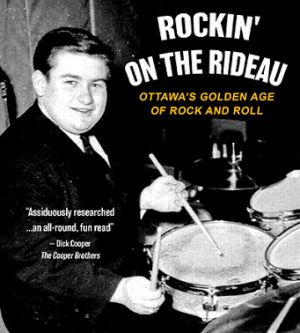
You can say that the Historical Society of Ottawa’s guest speaker for September 15, 2021 is certainly an accomplished speaker. From 1973 to 1980, Jim Hurcomb was a familiar voice on CKCU-FM, Radio Carleton. From 1980 to 2000, Jim hosted a number of programs on CHEZ-106, including the morning show, and the afternoon variety show, In the City. From 2000-2008, Jim worked at CFRA Radio.
In all these years of jockeying everything from vinyl records to MP3s, Jim has gathered a wide collection of memories of the music scene in Ottawa. Did you know that Elvis Presley performed live only three times in Canada, and that one of these stops was at the old Auditorium on O’Connor Street?
Although Jim talked briefly about the big stars who visited Ottawa, the main theme of Jim’s presentation was Ottawa’s hometown bands. Most were short lived groups whose hits played only on the local stations. One of these, The Staccatos had a song, titled Signs that did not do well. Then the band took on a new name, The Five Man Electrical Band. They re-released Signs and this time around it went to the top of the Canadian and US charts.
Paul Anka is perhaps Ottawa’s most famous songwriter. His songs were hits in the US and Europe, but Anka was not well respected in his home town. As Jim noted, the movement in music in Ottawa was towards a hard-driving rock sound, while Anka was writing popular, but otherwise conventional love songs that didn’t have the kind of edge Ottawa’s music fans were craving.
Jim’s presentation was only able to scratch the surface of Ottawa’s music scene, but you can read more about Ottawa’s early rock and roll history in his new book, Rockin’ on the Rideau, available at amazon.ca or at local bookstores. You can also catch Jim on LIVE 88.5, Sunday nights at 9 pm for his show, The Sound of the Underground.
You can watch the full presentation on our YouTube channel.
Project 70,000: The Indochinese Refugee Movement to Canada
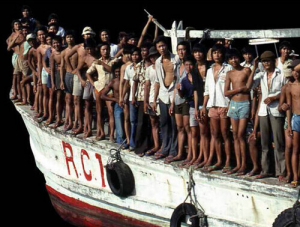
Our last presentation before the summer 2021 break took us halfway around the world but the story resonated here in Ottawa in 1979. After seeing stories on the news about the plight of refugees fleeing Cambodia and Laos and Vietnam, Ottawa mayor Marion Dewar anxiously arranged a public meeting at Lansdowne Park to gauge the interest within the city for sponsoring refugees in desperate need. Dewar expected about 500 people to show up, but when she arrived to open the meeting she discovered that 3,000 had arrived to do their part to provide new homes for refugees fleeing war-torn countries.
It is at this point in our story where two of the evening’s three guest speakers enters the picture.
Michael Molloy was the director of refugee policy in Canada from 1976 to 1978 and Senior Coordinator for the Indochinese Refugee Task Force. Canada had never before experienced a refugee crisis of such magnitude, so Mike and his colleagues had no playbook to go by to process refugees and get them safely to Canada.
The second speaker for the evening was Robert Shalka. He was in Thailand and had hoped initially to settle refugees there but realized that Canada was going to have to do its part to find homes for those forced to flee Cambodia and Laos. Robert spoke about processing centres in Singapore, Bangkok and other places in Asia and of the challenges of interviewing refugees, reconnecting separated families, finding resettlement lands in Thailand, or arranging transportation to Canada for refugees, as well as the process in Canada of organizing sponsors.
In 2017, Mike and Bob and two other foreign service offers, members of the Canadian Immigration Historical Society, collected their stories into a book, Running on Empty, which you can order through the McGill-Queen’s University Press website, at mqup.ca.
Last to speak was Rivaux Lay, who was in Thailand during the crisis, a Cambodian refugee himself, contributing as a social worker, translator and teacher’s aide at the refugee camps. You need to hear Rivaux’s story in his own words to fully appreciate what he went through in those horrific years, finally came to Canada, after helping so many others before him.
You can view the June 2021 presentation online via the HSO channel on YouTube.
James Powell: The Assassination of D’Arcy McGee
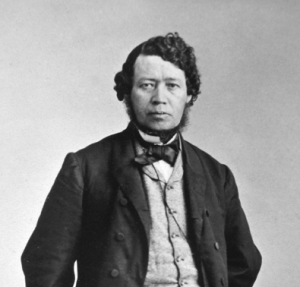
Our guest speaker for May 12, 2021 was James Powell, who is a long-time member of the Ottawa Historical Society, and a director on the HSO board.
For his presentation James spoke about one of the most tragic heroes in Canada’s history. Thomas D’Arcy McGee was murdered near his Sparks Street apartment on a chilly April evening in 1868. James talked about McGee’s early life in Ireland and his brief stay in the United States. While in the US he visited Canada, and it was here that McGee felt Ireland’s poor could find opportunities unavailable at home. Feeling that union of the French and English cultures would cultivate equality for all people, he promoted a greater Canada, thus becoming a Father of Confederation in the two years prior to his murder. It’s sad to think that a man who saw so much promise in Canada would be one of the few in this country’s history to be the target of a political assassination.
James also told the story of the man put on trial for McGee’s murder, and gave us an account of the suspicion surrounding Patrick Whalen’s conviction and execution.
You can watch the full presentation on McGee via our YouTube channel.
Dorothy Phillips: Victor and Evie
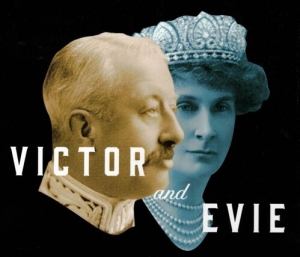
Our meeting on April 28, 2021, was as much a romance story as it was a history lesson. HSO member Dorothy Phillips has researched the life of the Duke of Devonshire, Victor Cavendish and his wife, Lady Evelyn Petty-Fitzmaurice, which the duke affectionately called “Evie”. In 2017, Dorothy assembled her extensive research into a book, Victor and Evie: British Aristocrats in Wartime Rideau Hall.
Unlike many of Canada’s governors general who accepted their posting as just a stepping stone to better political opportunities in the UK, or to a future diplomatic assignment in a warmer part of British Empire, Victor Cavendish loved the time they spent in Ottawa. The couple contributed much to the city’s life. Evie was well known as a gracious host, holding twice-weekly dinners for government officials, and Saturday afternoon skating parties for the common folk. Victor and Evie spent their summers at a cottage at Blue Sea Lake, about 100 km north of Ottawa. Their eldest daughter Maud was the first child of a governor general to be married in Ottawa.
Evie was already familiar with Rideau Hall when her husband became governor general in 1916. She had lived in the same Governors’ Mansion as a teenager when her father, The Marquess of Lansdowne was Canada’s head of state.
Watch the video presentation from our April 2021 meeting via this link.
Phil Jenkins: Arrested Development
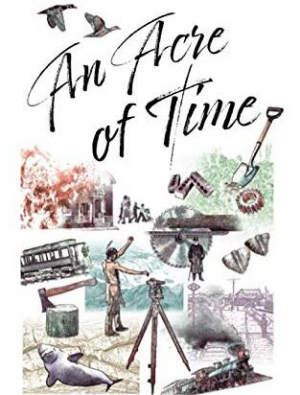
In recent years we’ve enjoyed many presentations by Phil, where he has brought a joyful presence to Ottawa’s past, in story and song, but Phil has a special passion for the old neighbourhood of LeBreton Flats, and it’s hard to tell the story of this community without diving into the troubled waters of this troubled land. Vacant since the late 1960s, there’s a generation of Ottawa residents unaware that a close-knit community once thrived here before it was removed as part of something called “urban renewal”.
Phil has many stories to tell of LeBreton, and he has gathered them together in his iconic book titled An Acre of Time.
LeBreton Flats may not have been some people's idea of a paradise but Phil shares many endearing stories from that lost community, lamenting the missed opportunities to save the neighbourhood, and to warn us of the possible mistakes that could be made in the LeBreton’s future.
Also very enjoyable is Phil's latest book, As I Walked About which you will find on his website, at philjenkins.ca.
Watch the video from Phil Jenkin's HSO presentation on April 14, 2021, via this link.
Charlotte Gray: Murdered Midas
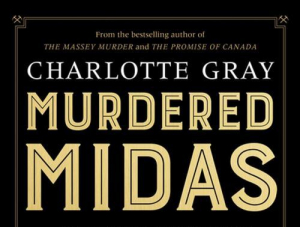
Our March 31st guest speaker shares an interest history’s darker side. Author of nine award-winning books on Canadian history, Charlotte Gray published Murdered Midas: A Millionaire, His Gold Mine, and a Strange Death on an Island Paradise in 2019 to tell the story of the rise to wealth, and the unsolved murder of Sir Harry Oakes.
Harry’s life was not a rags-to-riches story (his father was a lawyer, and Sir Harry studied to be a doctor) but his life became one of adventure (with a bit luck here and there) that lead to his becoming one of the world’s wealthiest men. Harry made some famous and influential friends along the way, but it’s possible that one of these might have been responsible for his brutal death.
Charlotte traveled to such diverse places as the silver mines of Kirkland Lake and the elegant mansions of the Bahamas, in search of details on the life and death of the mining magnate who was considered a generous philanthropist and gentleman to some, and a crude and arrogant monster to others. Which of these is the true version of Sir Harry? You’ll have to watch the video of Charlotte’s presentation to find out how she feels about this Murdered Midas.
Andrew King: What’s Ottawa Hiding?
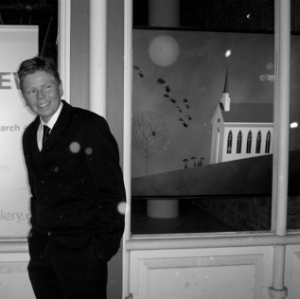
The Historical Society of Ottawa went underground for our March 10th presentation, following author Andrew King on a journey to some of the hidden secrets of Ottawa’s past.
In 2019, Andrew wrote Ottawa Rewind: A Book of Curios and Mysteries. This was a collection of stories Andrew had written individually for local publications, about lesser-known people, places and events in Ottawa’s past. He followed this book up recently with Ottawa Rewind 2: More Curios and Mysteries, which takes a more “in-depth” look at the city beneath our feet.
One of Andrew’s earliest investigations lead to historic Pooley’s Bridge in search of a cave. Years earlier some girls had found the cave by accident, entered and followed the dark path about 150 feet before turning back in a panic after hearing what seemed to be the sound of mournful organ music.
Other secret passages are not so hard to find. One of the more curious of these is in plain sight, near the steps that lead from the Rideau Canal locks up to Parliament Hill.
Andrew not only searched for the location of the city’s many hidden tunnels, passageways and “subterranean secrets”, he mapped them out in 3D to help us better visualize where these mysterious place are; in case you’re interested in following Andrew’s path of research. Or, if you’d rather play it safe, watch the video of Andrew’s presentation and let him tell you his stories.
Jo-Anne McCutcheon: Researching Ottawa’s Past
We’ve all been obligated to face many new challenges this year, and it was with some concern that the Historical Society of Ottawa chose to make a transition to on-line meetings so that we can continue to reach out to our members and the community during this difficult time. We weren’t certain how well the transition would go. Perhaps people might pass on HSO presentations if they were to be presented via computer. However, for our second online lecture we gathered 86 participants. That compares favourably to some of our most well-attended live meetings.
Our October guest speaker is no stranger to on-line communication. As a part-time teacher at the University of Ottawa, Jo-Anne McCutcheon has been working with her students through Zoom since COVID restrictions began.
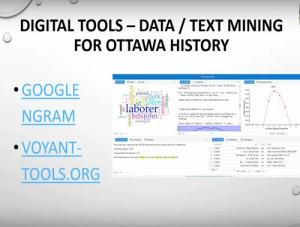
Jo-Anne talked about the many resources available to students, historians, genealogist and researchers online. Her presentation, which you can watch anytime at the HSO website, shows how to link to newspapers (current and historical), photo galleries, documents, academic papers, and records of meetings of Parliament. Jo-Anne’s presentation walks you through the process of creating your own files for storing information and even adding and sharing your own content.
You may be surprised to find out just how much is out there to help you do research or just surf the web for sites with unique, authentic historical content. In this HSO presentation, Jo-Anne has picked out some of her favourite sites and shows how to take advantage of their features.
You can link to Jo-Anne’s presentation by visiting our website, and choosing Videos on the ‘Resources’ tab.
Michael Kent: Secrets from the Geniza
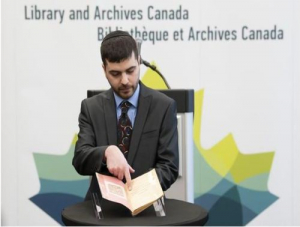
The September 14th 2020 presentation of the Historical Society of Ottawa took us on two journeys. One was to the Middle East; but more on that in a moment. The other journey was shorter in distance but was a big step technologically. With recent social restrictions forcing us to cancel live presentations at the Main branch of the Ottawa Public Library (for the time being) our Regular Events coordinator, Ben Weiss, asked guest speaker Michael Kent if he’d be interested in making a presentation online through a video conferencing application called Zoom, so that HSO members and the community could link in and make the journey half way around the world from their own home.
And so HSO hosted its first on-line lecture. Fortunately, Michael’s presentation included a number of videos, so the digital platform was perfect. (Zoom allows presenters to show photos, videos, and slides.) This allowed Michael to tell about his personal research of ancient Hebrew texts from Canada’s own large collection at Library and Archives Canada, here in Ottawa, as well as the many efforts being made around the world to reconstruct ancient texts that survive often only as small shards of paper; sometimes with only a few words, or even a few letters. It’s like putting a puzzle together when many of the pieces are blank.
While international in scope Michael also talked about, and was asked questions about, Jewish artifacts from Ottawa. There are a number of active synagogues in Ottawa today, including the beautiful and historic Adath Jeshurun Synagogue on King Edward Avenue, but others, like the Machzikei Hadas Synagogue on Rideau Street are gone. Fortunately texts from many old synagogues, Talmud schools, and homes survive and have been catalogued by Library and Archives Canada. Ancient books are still being reconstruction in Cairo today from pieces found in Egypt decades ago.
One advantage of online presentations is that they can be recorded and played back later. This allows those unable to participate live to watch later. So if you think you’ve missed Michael’s presentation, you haven’t! You can watch it now by going to our website at www.historicalsocietyottawa.ca and choosing the ‘Resources’ link on the top toolbar. On the drop-down box, choose ‘Videos’ and you can watch this and other presentations.
Bytown Museum’s Roots with the Historical Society of Ottawa
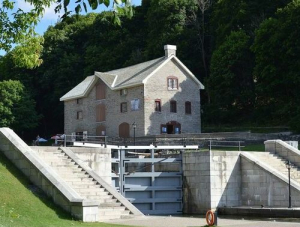
The guest speaker for the first HSO meeting of 2020 is familiar to many who have a love of Ottawa’s past. As the executive director of the Bytown Museum, Robin Etherington has been an enthusiastic promoter of culture and heritage in Ottawa for over 20 years. Robin has been the executive director of Bytown Museum since 2012.
The Bytown Museum is located in the oldest building in the city. Of course, the museum wasn’t built as a museum. The stone structure was initially a “commissariat” and its construction was supervised by none other than Lieutenant-Colonel John By.
Built as early as 1826 and located near the entrance lock of the Rideau Canal, today’s Bytown Museum initially served as the operational nerve centre during construction of the canal (the Commissariat Department of the British military oversaw the supply of food and provisions) and then as the administrative headquarters of the canal once it opened in May 1832.
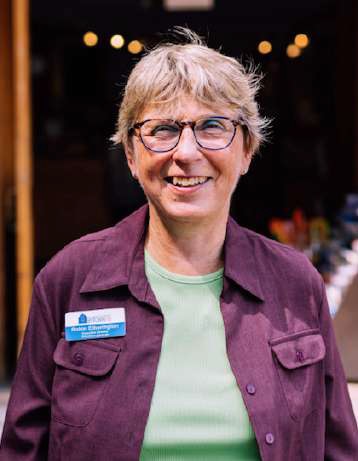 Robin EtheringtonRobin noted that By was more than just a canal builder. He was as much an urban planner. He laid out the early streets of Lowertown and also what is now the Parliamentary Precinct. She also noted that By purchased land in Ottawa to reassure others that a thriving community would soon grow here.
After talking about the early days of the museum building, Robin discussed the formation of the organization that ran the Bytown Museum for 105 years. In 1898, thirty-one Ottawa ladies formed the Women’s Canadian Historical Society of Ottawa (WCHSO) to promote a better understanding of the city’s history.
The society was limited at the time to holding community meetings, but in 1917 an opportunity arose to expand the society’s scope. In 1910, the City of Ottawa had moved out of the registry office on Nicholas Street that it had occupied since 1871.
After the building was left vacant for seven years, the WCHSO proposed to establish a museum there to display artifacts that the ladies had collected over the years, with their own money.
In 1952, the Bytown Museum moved to its present location. In 1955, the men of Ottawa were invited to join the WCHSO. With the “W” now redundant, the name of the organization was changed in 1956 to the now-familiar Historical Society of Ottawa (HSO).
HSO continued to manage the museum and to hold regular meetings for members and the public until 2003, when the decision was made to transfer the Bytown Museum to a separate not-for-profit organization.
It was at this time that HSO “lost” its museum, but the association between HSO and Bytown Museum has remained strong. As such, Robin was less a “guest” speaker at our Jan. 15 meeting than she is friend, supporter and member of HSO.
Following her review of the history of the museum, Robin talked about something that is near and dear to her: the museum’s future. It’s not all good news. Being part of the Parliamentary Precinct’s independent, and rapidly aging power supply system, blackouts have become an all-too-frequent occurrence. Rockslides are a constant threat, as natural geological dynamics take a slow toll on Parliament Hill, which overlooks the museum.
Located near the bottom of a hill so steep that the lay of land forced Colonel By to build eight locks, universal accessibility to the museum has been an ongoing problem. And let’s not forget that the museum building itself will reach the beginning of its third century in 2026.
But there is a lot of good news, too. Robin observed that, “today is tomorrow’s history” and that was inspiration for Bytown Museum’s most recent exhibit, 100 Years of Youth in Ottawa.
This is a collection of photographs of young Ottawans from 1917 to 2017, showing how the many activities that youth have engaged in through the years have changed . . . and how many remain the same. All photos for the exhibit were selected and researched by the museum’s Youth Council.
New for 2020 is an exhibit entitled A Local Canvas: Paintings from the Bytown Museum Collection, in which the museum curates an eclectic assortment of paintings from an equally curious list of collectors and artists. The items chosen for the display were selected during the museum’s continuing project to capture digital images of its collection.
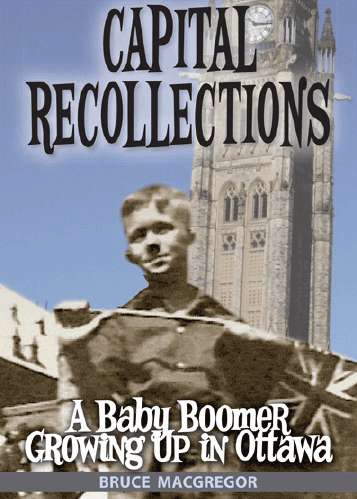 Burnstown Publishing.The last word for the evening went to Bruce MacGregor, who is author of Capital Recollections: A Baby Boomer Growing Up in Ottawa. Bruce has been a resident of Ottawa since 1952.
He taught English at Glebe Collegiate for 30 years. Capital Recollections is his first work of non-fiction. Bruce read an excerpt from his new book about a not-yet famous Canadian who happened to be at a local arena in 1963.
You’ll have to buy the book to find out who. It’s available for $20 via burnstownpublishing.com.
Quick Links
About
Supporting Partners