

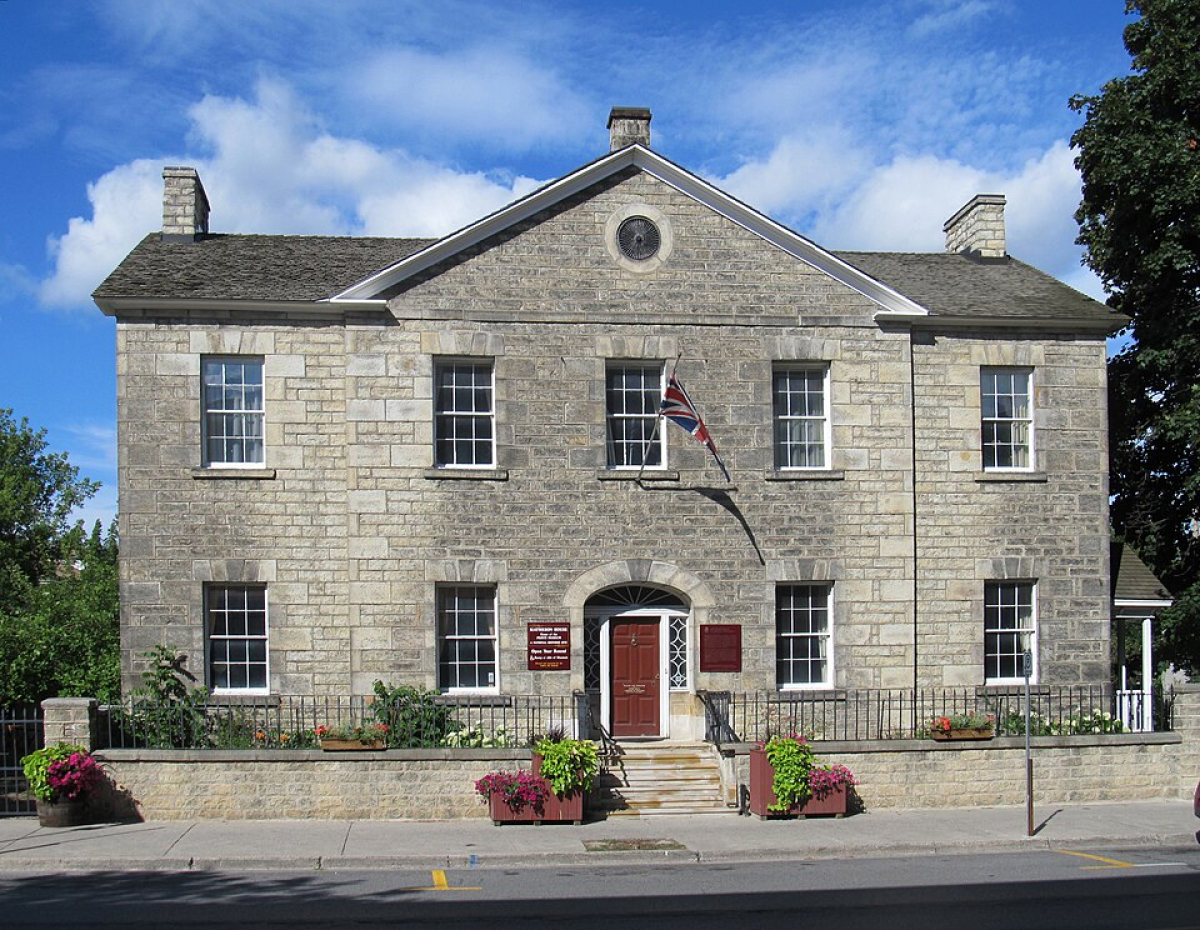
On Tuesday, August 18, 2026, the Museum Club undertook its final outing of the season, a trip to Perth to visit the Perth Museum and to learn the history of the Tay Canal. We were welcomed on our arrival by Kathryn Jamieson, Manager of Tourism & Culture for the Town of Perth, who had been instrumental in making all the arrangements for our visit. Though 24 of our members had registered, only 17 were able to attend on the day, but boy!, were they ever treated to a wonderful time.
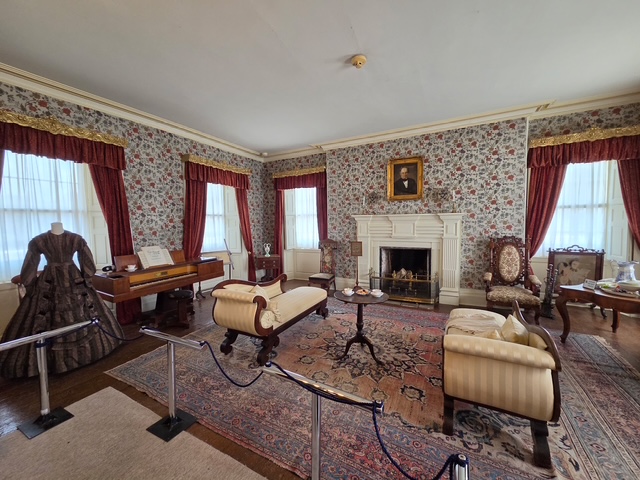 Perth Museum 2nd floor parlor photo by Justin Lacasse.
We started our day with a guided tour of the 1 st and 2 nd floor of the Perth Museum, 11 Gore Street East, the former Matheson House. Our guide, Debbie Sproule, had an encyclopedic knowledge of the history of the Matheson family, the house and seemingly every artifact contained there-in. Her presentations as she led us through the rooms were both highly informative and often amusing as she revealed the history of the house, and the community as a whole. Following the tour, we were invited to explore the other artifacts on display on the 3 rd floor and to visit the Information Centre and gift shop on the ground floor. We all took advantage.
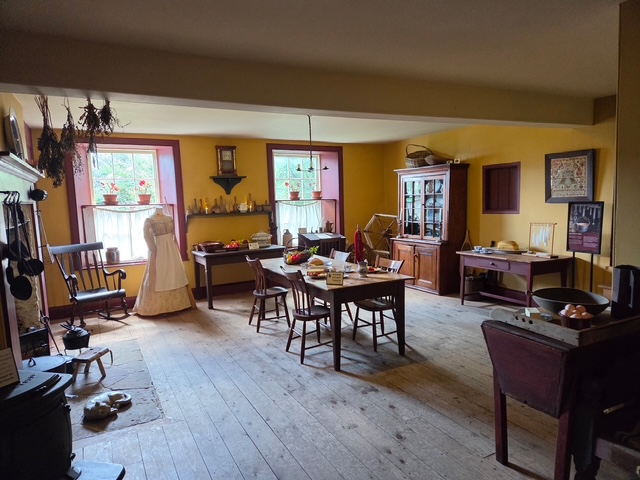 Perth Heritage Museum kitchen photo by Justin Lacasse.
After our tour, we took the short walk to Fiddleheads, 53 Herriott Street, accompanied by Debbie and Susan Code McDougall, who was our guide for the afternoon walking tour. Once our orders had been placed, and many of us were happily sipping on a locally produced beverage, Susan gave us a talk on the history of the two Tay Canals. The first Tay Canal was completed in 1834 and connected Perth to the mouth of the Tay River. Built by the Tay Navigation Company to take advantage of the economic opportunities offered by linking to the now completed Rideau Canal, the Tay Canal consisted of 5 locks and was narrower and shallower than the Rideau Canal. Though suitable for barge traffic hauled along a tow path, it was not suitable for steamship use and was never a commercial success. It soon fell into disrepair and was abandoned. In the 1880s, there was renewed interest in a Tay Canal, initiated by the local M.P., John G. Haggart. The canal would be known locally as “Haggart’s Ditch”. It was built to the same specifications as the Rideau Canal, using a revised route from Perth to a set of 2 locks at Beveridge Bay on the Lower Rideau Lake. The canal is run today by Parks Canada and is part of their Rideau Canal system.
Susan then took us on a walk through Code Park and Stewart Park, explaining their industrial heritage, mainly in distilling, and noted that Stewart Park had been gifted to the Town of Perth with several conditions, one being that no economic activity could take place within the park. As such, the annual Stewart Park Music Festival is free, and the vendors, including the food trucks, line up along the street outside of the park. Crossing Gore Street East, Susan pointed out a number of the historic buildings in the downtown, including the beautiful Town Hall and the former Carnegie Library. As we walked beside the canal, we passed the “Crystal Palace” an event venue, that in its previous life was the ill-fated OC Transpo Bus shelter that stretched along both sides of Rideau Street, east from the Rideau Centre for a couple of blocks. Reaching the old tow path at the swing bridge at Beckwith Street, we ended the formal part of our visit, several of us stopping in at Bridge Masters Brewing Company, 29 Beckwith Street East, for a final taste of Perth before heading home.
.jpg) Tay Canal Basin, Perth Ontario. Photo by Kenn Chaplin from Toronto, Canada, CC BY-SA 2.0 , via Wikimedia Commons
Tay Canal Basin, Perth Ontario. Photo by Kenn Chaplin from Toronto, Canada, CC BY-SA 2.0 , via Wikimedia Commons