

Working to preserve Ottawa's past
for future generations.
A Personal History of Laroque's Department Store
Robert Vineberg, son of one of Laroque's co-owners, shares his personal stories and the history of one of Lowertown Ottawa's well-known and well-loved department stores.
Media
Additional Info
- Year 1956
- Date May 15
One early April afternoon, Karen Lynn Ouellette and myself had the honour of attending the last class of Dr. Sarah Templier’s Canadian Digital History course at the University of Ottawa. This was a big day for Dr. Templier’s students who in groups of two or three presented their digital history projects. All the projects were related to the Historical Society of Ottawa. Besides enjoying the wonderful presentations, our job was to help Dr. Templier and PhD candidate, Celeste Dagiovanni, to judge the students’ work, and to select the top three projects. Celeste is the student coordinator of the Venture Initiative Program working with Fahd Alhattab who is in charge of the program as the entrepreneur in residence at the Faculties of Arts, and of Social Sciences.
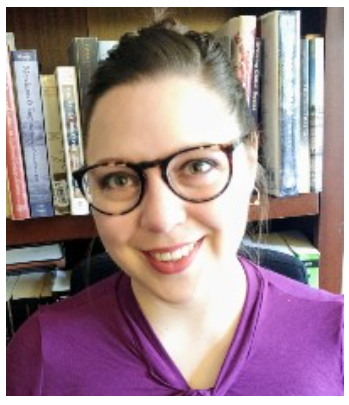 Sarah Templier, University of Ottawa.The idea of partnering with the HSO was the brainchild of Professor Templier. Before the start of the semester, she had contacted Karen Lynn with the idea of involving her fourth-year digital history students with the Society in some fashion. A number of ideas were floated, including going through the Society’s archives held by the City of Ottawa to document and digitize key documents. However, with the City Archives closed owing to Covid, an alternate project was selected under which student teams would develop websites that contributed to the HSO’s mission and online presence in a meaningful way.
In teams of two or three students, five website projects were presented—Epidemics in Ottawa by Jessica Barton and Victoria Pope, Ottawa and the Fur Trade by Danny Bengert and Jordan Johnstone, The Rideau Canal by Charles Wickens, Breanna Campbell and Jameson Holdip, The Murder of Thomas D’Arcy McGee and the Fenian Brotherhood by Jack Lapalme and Thomas Wagner, and The Galloping Gourmet by Rowan Moore and Brenna Roblin. The projects were judged on the basis of how the project contributed to the Society’s on-line presence and mission, the team’s research and ability to reach the target audience, their innovative use of visuals and digital tools that would enhance a reader’s experience, and the ability of each team to effectively “pitch” their project in the allotted time and answer questions.
All five presentations were excellent, making the choice of the top three very challenging. After more than thirty minutes, judges agreed that the top three presentations in order of preference were The Galloping Gourmet, The Rideau Canal, and Ottawa and the Fur Trade. Rowan and Brenna’s winning entry on the television show filmed in Ottawa from 1968 to 1971, styled their presentation in the form of a TV Guide. Their presentation featured recipes, a map of the locations Graham Kerr, a.k.a. the galloping gourmet, visited to inspire his recipes, an interview with a participant who viewed the filming of an episode at the Merivale Road studio, fashion in the 1960s, as well as a section on Graham Kerr’s life after the series ended. Their lively and fun presentation helped to bring to life the late 1960s as well as a little-known part of Ottawa’s television history. It is sure to delight Ottawa history buffs.
In second place, Charles Wickens, Breanna Campbell and Jameson Holdip’s presentation on The Rideau Canal had several innovative features. It was bilingual and acknowledged that the Canal cuts through Indigenous territory. The “then and now” feature was well done. In addition to the usual history of the Canal, the website featured sections on the financing of the canal and what the life of a labourer would have been like. The team noted the importance of the HSO highlighting the significance of the Canal for Ottawa’s upcoming bicentennial.
The third-placed presentation on Ottawa and the Fur Trade by Danny Bengert and Jordan Johnstone provided a useful reminder that life existed along the Ottawa River before the establishment of Bytown by European settlers. It filled a big gap in the HSO’s coverage of Ottawa’s history and heritage, highlighting the contribution of the area’s original Indigenous inhabitants to the fur trade in an engaging and informative fashion.
While the final two presentations on Ottawa pandemics from the early 1800s to the present by Jessica Barton and Victoria Pope, and on the assassination of Thomas D’Arcy McGee by Jack Lapalme and Thomas Wagner did not make the top three, they too treated their subjects well and provided useful insights. We wish we could have provided prizes to all the presenters.
After the students complete their projects, the HSO intends to link the Society’s website to the five student websites so that all those interested in Ottawa history and heritage can benefit from them. As thanks for their hard work on behalf of the Society, each student was given a copy of Controversy, Compromise and Celebration: The History of Canada’s National Flag by Glenn Wright, as well as a one-year membership in the Historical Society of Ottawa. The University also gave cash prizes to the top three projects.
We hope all those who participated in this digital history project learnt a lot about Ottawa’s rich history and had fun in the process. The Society would like to thank Dr. Templier for an excellent initiative and looks forward to future collaboration in the years to come.
James Powell, April 2022.
Thomas Barber is proud of how much the Black community in Ottawa has prospered over time. Thomas tends to look at a darker past not with anger or bitterness. Instead he tends to see Black History in Ottawa as a series of challenges overcome and lessons to be remembered. Understanding the past is key to measuring how far we’ve all come in establishing a more inclusive community, and it’s to our benefit that Thomas relates the past with insight and humour.
Much of Thomas’ presentation highlights his family members' journey confronting prejudice and overcoming these obstacles, but Thomas started his presentation with a history of the many cultures that make up Ottawa, the problems they faced moving here, and how they took on these challenges.
People from all over the world have been coming to Canada for over 200 years, but Thomas focused his attention on why they chose Canada over other places, and (most importantly to Thomas) what these people of such diverse heritage did to make Canada a better place for themselves and for others.
Thomas is the right person to tell this story of his family's achievements. He’s done the research with passion and a dedication to accuracy.
The family of Thomas’ grandfather Paul Barber were one of earliest of African descent to settle in Ottawa. In Thomas’ presentation to the HSO, he talks about how his grandfather had been taught a particular trade by his Kentucky slave-owners and how, after Emancipation, Paul Barber came to Ottawa and earned respect as an expert in this trade as a free man in Canada.
It’s a wonderful story of how one person prospered through adversity, and how Paul Barber passed this tradition of hard work and resilience down through his family.
You can view the full presentation in the video section of the HSO website.
In honour of Black History Month in Canada, both of our guest speakers for February discussed the history of Ottawa's Black community — one that is growing both in numbers and influence in our culturally-diverse city, and of the challenge of confronting prejudice and exclusion in the past.
June Girvan is an award-winning educator, activist and community leader who came to Ottawa from Jamaica almost 70 years ago. June is the president of Black History Ottawa (a non-profit organization dedicated to carrying out research in the history, culture, traditions and achievements of Canadians of African descent) and founder of J’nikara Dinqinesh Education Centre.
In June’s presentation, she shared her personal journey. In June’s own words we heard of the struggles and successes that she and others have seen in their lifetimes..
June also spoke extensively of the challenge for people of African descent to now come to terms with streets signs and tributes in their neighbourhoods, that honour the names of those who held their ancestors as slaves.
We need to better understand and reconcile the co-incidence between the street names of Ottawa, inherited slaveholder family names of Black children, and the names of those who appear in the British Slave legacies database.
June urged that we consider the impact of the of these names in ensuring that Ottawa "is experienced as a safe, friendly community by children of all human colours of the sun".
You can find the conversation with June in the video section of the HSO website.
A Genteel Woman in Need: Emma Maud Lampman
Dianne Brydon tells us about the life of Emma Maud (Playter) Lampman: married young to "Confederation Poet" Archibald Lampman, widowed at age 32, and being among the first women to work in Canada's civil service at the turn of the 20th century.
Media
Additional Info
- Year 1906
- Date April 30
The Barber Family: Our Proud Place in Ottawa's History
Born into slavery in Kentucky, Paul Barber, was one of Ottawa’s earliest Black permanent residents and a renowned horse trainer, founding a family that has made its mark in the capital for over a century. Thomas Barber, Paul Barber's grandson, shares the remarkable story of his family and their important role in Ottawa’s past.
Media
We are the Children
Award-winning educator, activist, and community leader June Girvan discusses the importance of understanding and reconciliation—and the complicated journey we all share in trying to make peace with the past.
Media
Football fans in this town have managed to remain loyal to their home team for 145 years, be it the Rough Riders, or the Renegades, or back again to the Rough Riders, and now the Redblacks. Hockey fans have retained their allegiance to two different Senators teams over 80 seasons, separated a by a 58-year winter when locals were forced to chose between the Leafs, Habs, or other members of the Original Six. But as we learned at our January 26th presentation, Ottawa’s sports history is much more than hockey and football.
Our guest speaker for the January 26, 2022, Virtual Speaker Series was HSO member James Powell, who began his presentation by reminding us that in the late 19th century, watching professional sports was not nearly as popular as participating in amateur pastimes like lacrosse, cricket, and cycling. As James noted, skiing was a popular pastime in Ottawa before devotees could even come to agreement on how to spell the name of their favourite sport.
As always, when it comes to James’ presentations, his history is well researched. During the Q&A session that followed, one participant though he might have stumped James with a question regarding the obscure sport of “hose reel racing” which was held annually in Ottawa a century ago. Suffice to say, James had an answer. I won’t tell you here what hose reel racing is. You’ll find it more entertaining to watch James’ presentation for the answer.
Like all our Virtual Speaker Series presentations, you can find James’ talk at our HSO website. The website is also the place to register for upcoming presentations.
Quick Links
About
Supporting Partners