

2. Where was CFRA located at the time?
Before my time there, CFRA’s original studio and office location was in the Auditorium at Catherine and O’Connor streets from 1947 to 1957 when the station then moved to a new 3-story building on Isabella Street. By 1975 as growth continued, CFRA and CFMO moved to a new building at the same Isabella Street address. Then another move to Walkley Road in 1989 until 2000 and a move back downtown to George Street, its current location.
3. Tell me a little about the history of the CFRA licensing for the AM and FM stations and the owner Frank Ryan
Frank Ryan got his license for an AM station in 1946, and CFRA at 560 on the AM band went on air May 3, 1947. He also secured a secured a second license at 93.9 on the FM band. Station CFRA FM went on air a short time after CFRA AM. CFRA FM became CFMO in 1961 and within a year, CFRA had to 580 on the AM dial with a power increase to 50,000 watts. CFRA’s programming from 1947 through the early 1960’s was a balanced blend of mainstream country and pop hits. The top hits of the day were featured on Gord Atkinson’s Campus Corner and Hi Fi Club shows,later changed to the Campus Club in the early 1960’s..
By 1964 I knew I wanted to get into radio. I wrote letters to CFRA, CKOY, and CKPM and said I was looking for a part-time job this summer. Only CFRA wrote back and said they’d keep my resume on file. That’s when I heard that CFRA’s Ken “The General” Grant would be broadcasting ‘live’ one particular morning at the Carlingwood Shopping Centre so I thought I’d head there to meet him. After the show ended, I introduced myself and told him of my interest in radio. I asked if he had any summer work available that year. Ken replied that the station needed a person to set up the PA at CFRA ‘Happy Blunderers’ softball games that summer So, some part-time work happened that summer opening the door for me at the station. At one point I showed an interest in being a producer so after school I was allowed regular access to the station to simply observe the control room operations through the glass of an adjoining studio.
I have a little story about a brief but wonderful encounter with Frank Ryan in late 1964. . Walking by his office one afternoon, I was startled to hear “Dave… come here for a moment I want to show you something.” He had a large book on a lectern with pictures and drawings which was his vision for a revamped Lansdowne Park. He was running for mayor at the time and he said “If I win the mayoralty race, I’m going to present this plan and we’ll get Lansdowne upgraded”. It needed to be fixed up anyway. Well, unfortunately he didn’t win the election for Mayor in ‘64 (he came in second) but he was so eager to show me those drawings I was certainly hoping that he would win.
I managed a few other one-off projects around the station in ‘1964-65 including painting the wood-frame garage behind the Isabella Street station where Frank Ryan parked his late 1950’s Lincoln, acting as a driver on occasion for Frank’s wife Kathleen, and booth work at CFRA’s location in the Pure Food Building at the Central Canada Exhibition..
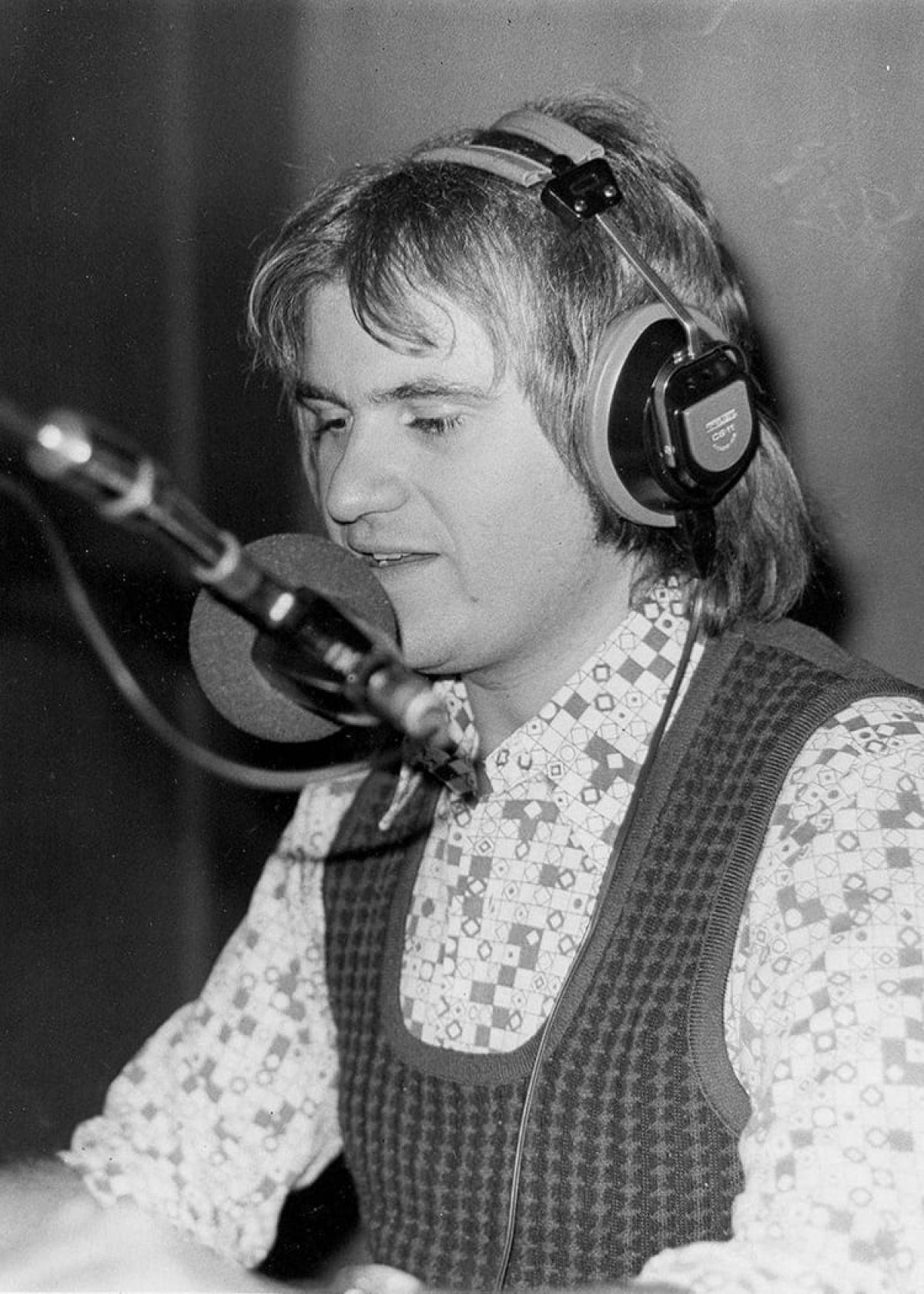
Al Pascal started at CFRA in September 1965 replacing Dick Maloney. Dick was hosting an early evening show in the early ‘60s called “Best Sellers’. Dick had left for CJOH to host the show “Saturday Date”. I was interested in Al’s show because it was a new era and he was playing all the hits of the day from 8 to 10pm. In March of 1966, CFRA brought me on as a regular part-time producer while still at Hillcrest High School. I was mostly with Al Pascal’s show until 1969. My first on air shift was around the fall of 1966 and it seems to me the overnight host had a toothache and Gord Atkinson called me and said “Dave I’m stuck, the overnight guy has a toothache so can you keep the show on overnight?”. I said “I’ll just do time checks and maybe weather”. The first time I opened the microphone, after 12 midnight I could hear myself breath in my earphones and I panicked! Now what do I do? But I got through it okay!!
I was more interested in the overall radio process; how the control room ‘board’ worked, the interactive process between producer and announcer, what makes radio stations successful, ratings, sales and marketing and so on. After high school I went to Algonquin and graduated from their two-year Advertising Program and News Program, graduating in 1969. It was out of that that I started full-time in the Promotion Department at CFRA and CFMO. I moved to the Creative Writing department in 1971 and a year later became CFRA Music Coordinator.
4. You eventually decided to leave the station for a period. Can you reflect on that?
Yes, in 1975, I decided to do some travelling because a buddy of mine suggested that since we had not really seen much of the country, maybe we should take some time off to get on the road! I took a leave from CFRA that fall. So my friend Rick bought a beat-up Chevy Van and we headed east. We got to St. John’s, NL in late fall of ’75 and decided to stay for a bit. I managed to get a job with CJON radio in St. John’s for a couple of months and Rick got a job as an auto mechanic – he was a Class A auto mechanic. We left in early ’76 and travelled all the way across the US to California where my cousin was living. One day, while at my cousin’s place in LA, the phone rings and it’s Al Pascal who was now the Program Director at CFRA! I couldn’t believe that Al had found me but he said “well, your younger brother Bob is working here on the switchboard so that’s how I tracked you down!” Al said they wanted me back at the station and he would hold the job until I got back to Ottawa.
Several weeks later, Al brought me back in as his assistant and Music Director. By this time, music programming was becoming a strategic science due to the increasing market and industry competition. You had to be mindful of your audience and what has made the station successful - and make sure you’re staying within the defined target of the station. I assisted Al and handled some license renewals for CFRA.
5. Can you talk about the rise of FM and its early effect on AM?
Well, more and more diverse programming and formatting was occurring on FM because the quality of the signal was better. In the early 80s, AM could almost see a need to potentially ‘re-invent’ itself, so along came AM Stereo. AM Stereo worked for a while and Sony had an AM Stereo Walkman but manufacturers were generally reluctant to jump on the bandwagon with AM Stereo. Thus, music on FM continued growth while AM garnered increasing success with news and talk-related programming. Through the 70’s and 80’s CFRA had strong listener profiles in music and talk programming, so staying on top of the growth curve was priority-one. Another core strength of CFRA was the commitment to community! Personalities were encouraged to get involved in as many outside activities as possible.
6. Tell me about Ken “The General” Grant in the morning and Al Pascal in the evening.
Ken was out in the community 360 days of 365 days of the year. He was out everywhere. Ken was huge in the morning maintaining a top position in the market from his arrival in 1961 through the next 32 years. Although retired in ‘93, Ken returned to CFRA for a short time then moved to host the morning show for a couple more years at Oldies 1310 (CIWW formerly CKOY). We stayed in touch along the way.
Fast forward to 2015, I helped Ken Grant prepare the photo assembly, cover photos and camera-ready artwork for his books “I Woke Up With ‘The General’ Too”, followed by “Oh Great Granteenie” in 2016 and his celebrity cookbook, “If They Came Over” in 2017. Sadly, Ken passed away in December 2023 at age 88.
And Al’s show was huge at night as well. Between 1967 and ‘70, Al Pascal averaged 90% of the available teen audience in the Ottawa area listening between 7 and 11pm. I produced his show until 1971 but full-time responsibilities mentioned earlier were increasing.
Al left in 1989 and shortly after, I accepted the Promotion Director, CFRA and CFMO position. In the early ‘90’s, I was part of CFRA’s Strategic Planning Committee researching a format change from Music to ‘News and Talk’. CFRA changed to ‘News Talk’ in June 1993 and it retains that format today.
7. Jumping back to your music days, tell me about your connection to Roy Orbison
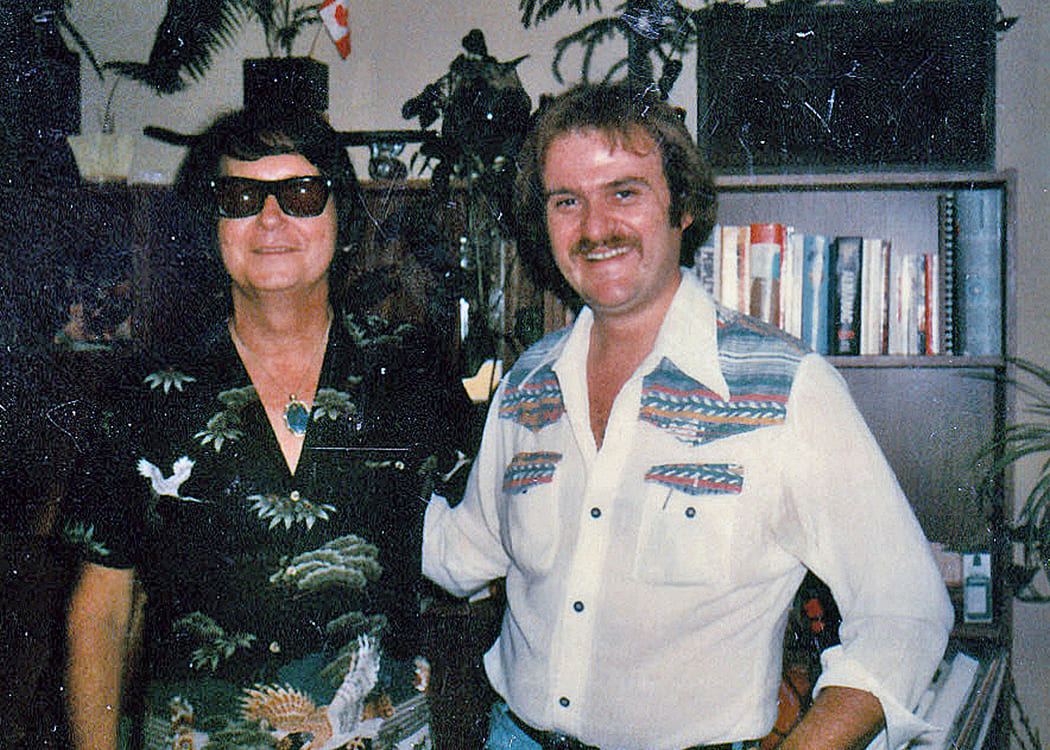 With Roy Orbison at CFRA circa 1982
He had performed here in the early 80s and I attended the show. He breezed through the station one day and we did a quick interview. He was very personable, likable, and engaging. It’s sad that he’s not with us anymore because he was one of the best.
There is significant ‘music story’ I wanted to pass along too.
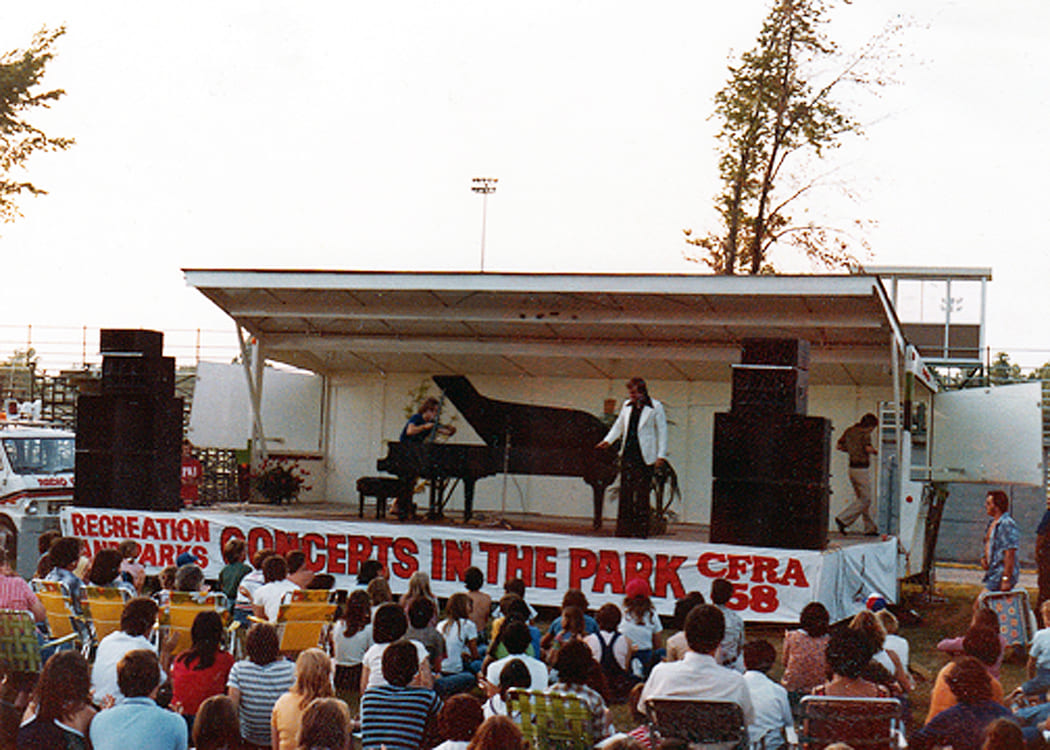 Concert in the park with Frank Mills early August 1978
In April of 1978 we received a usual product delivery from Polygram Records and this particular package included the 1974 album “The Poet And I” from Canadian songwriter, artist Frank Mills. With disco ‘hot’ on the radio back then, I wondered why a 4-year old album (at that time) was being re-distributed. But, those kinds of things happen in the industry for a variety of reasons. Well, anyway, I filed the album and a day later a demo 45-rpm record showed up. The “A” side was ‘The Poet And I’, and the “B” side, ‘Music Box Dancer’. As normal, our Music and Programming team listened to new product, and that included ‘The Poet And I’, but it wasn’t what we were looking for at the time. However, in the music meeting, I flipped the record over to check out the “B” side (something we rarely did) and ‘Music Box Dancer’ sounded fresh and new!
We decided to give ‘Music Box Dancer’ a quick play on CFRA’s mid-day show with host Bill Drake. Immediately, phone calls began arriving from listeners wondering where they could get the sheet music for ‘Music Box Dancer’! That triggered a phone call to Polygram that Frank’s “B” side, ‘Music Box Dancer’ could be a hit! Polygram responded by sending hundreds of copies of the single to retail locations in Ottawa. We added the tune to our regular playlist, and the singles were selling!
 Gold record presentation per Frank Mills Nov 1978
By the summer of ’78, ‘Music Box Dancer’ was in the Top 10 at CFRA and it was starting to break-out across the country. Frank wanted to thank CFRA for the record’s support, so we booked the City Of Ottawa’s ‘Showmobile’ for a free concert at Mooney’s Bay. We expected perhaps 2 or 300 folks to come by; the numbers of visitors were in the thousands! Frank was late for his show – due to a traffic jam for ‘his’ concert on Riverside Drive near Mooney’s Bay! Ultimately, It was a wonderful show! In addition to several plays of his ‘Music Box Dancer’, Frank played tracks from his albums and tunes from his earlier days with the top Canadian group, “The Bells”.
By the spring of 1979, ‘Music Box Dancer’ was in the Top 5 on Billboard, a gold record in Canada and it had hit #1 in 26 countries! Certainly, a nice feather in his cap – especially since it was a ‘B’ side to begin with!
8. Can you talk about the changes in radio technology over the years.
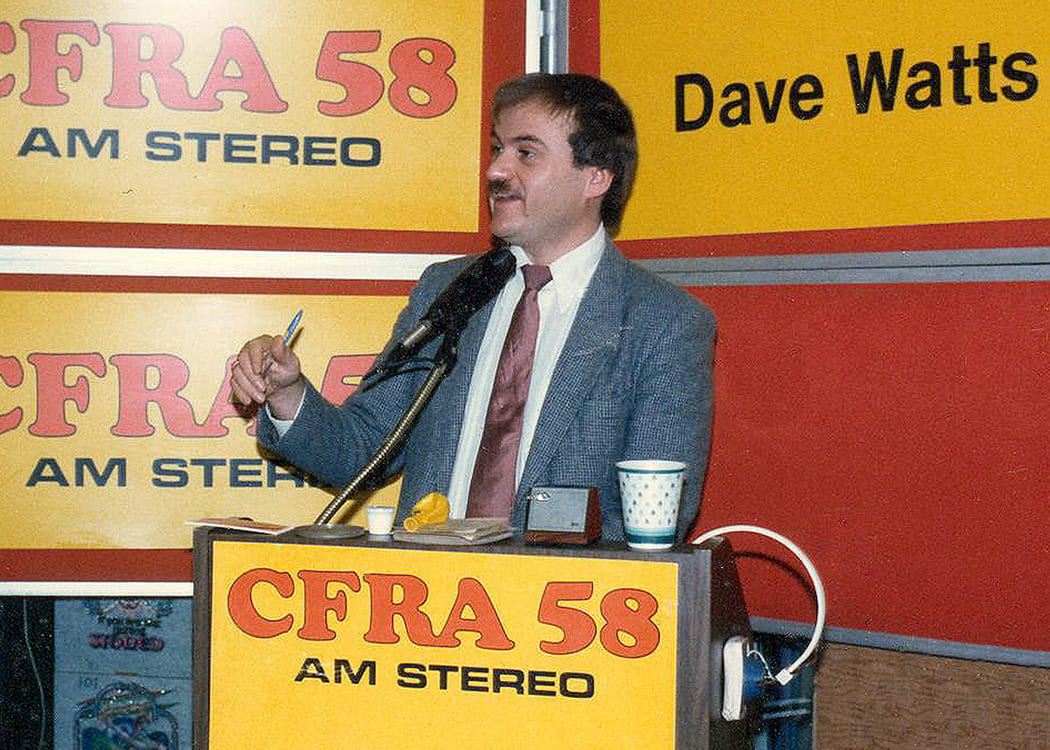 On location remote broadcast mid 1980s
Well, as I said earlier, regarding music play, AM was being increasingly challenged by FM. Everything originally was analog for the most part up until the early 90s. But things didn’t really change for the listener as the technology changed. But digital audio was on the way!
I guess one of the interesting developments was in 1995 at CFRA where a group of broadcasting students from Algonquin College came for a tour of the station. Right at the end of my address, I said to the group… “Something to keep in mind, make sure you learn as much information on radio and broadcasting as you can – in all areas. So even though radio might be a difficult place to find a job in the future, the whole communications industry is expanding due to this thing called the INTERNET”! I told them there would be great opportunities in developing projects on the Internet. No such thing as ‘Social Media’ back then! The change was coming so I tried to remind them to be ready for it and use their accruing knowledge to their advantage along the way.
I left radio in 1996 to test the water on some other initiatives but nothing really transpired so I came back to CFRA (or CHUM Ottawa) part-time in 1997 to do some on-location remote shows, freelance voice-over, writing and later hosting “Experts On Call”. This allowed time to work on other projects and interests including Media Relations instructor at Algonquin College for a semester, Marketing and Communications for the former Ottawa Central Railway, a contract project for OC Transpo and Marketing with the former Ottawa-based environmental certification firm, Terra-Choice. To this day, I’m still with CFRA hosting numerous Saturday afternoon “Experts On Call” shows.
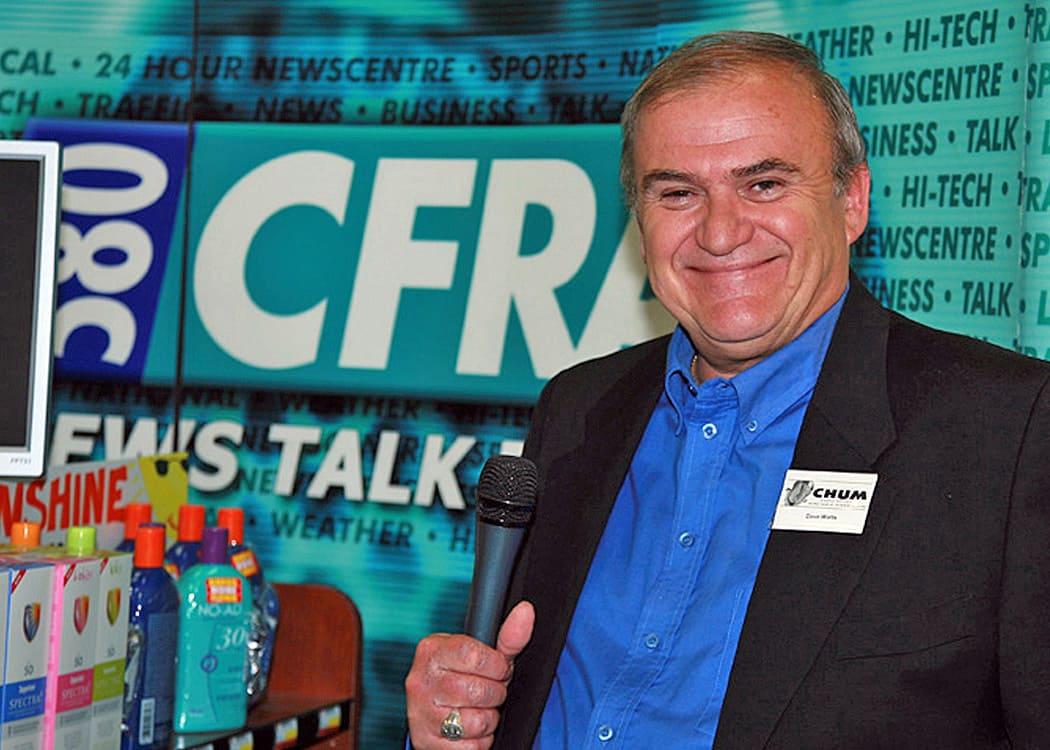 On location remote broadcast early 2000s
9. Any other stories about musicians you met?
Huey Lewis came by the station in 1984 and he did an interview. After it was finished, he came into my office and sat down, put his feet up on my desk, cowboy boots and all and just wanted to talk. Then his road manager came in and bellowed, “we’ve got a sound check to do at the Civic Centre”!. So Huey left; it was a candid and fun but short chat. There was an episode of the “King of Queens” with Kevin James who gets into a Huey Lewis concert and the security kicked him out! At the end of the show, Lewis comes to the door and makes a quick reference to Doug Heffernan (Kevin James) about playing in Ottawa!
You can listen to the full interview with Dave Watts conducted by John Leefe on January 25, 2025: <.wav file>