

Working to preserve Ottawa's past
for future generations.
Additional Info
- Year 1908
- Date January 2
Additional Info
- Year 1904
- Date January 11
From small acorns do mighty oaks grow, the saying goes. And this is certainly true for the HSO Facebook page. It was almost four years ago that Karen Lynn Ouellette, our President, and Jen Seltzer, HSO Director, met to discuss the feasibility of using social media to promote the Historical Society of Ottawa. While our pamphlets, meetings, and website were valuable tools for spreading the word about Ottawa’s rich and fascinating history, they believed that social media had the potential to not only engage with our members, but also to attract a younger demographic and to reach out to the broader heritage community. The two quickly set up the Society’s Facebook page. Starting with only six followers, more quickly signed up as the news of the page spread. With a few months, there were several hundred followers. This rose to 660 by late 2019.
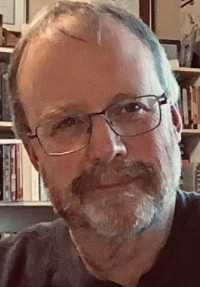 Ben WeissBut it was after the COVID-19 pandemic began in early 2020 that our site came into its own under the guidance and curation of Ben Weiss. With in-person meetings and special events cancelled, Facebook took up the slack, becoming the Society’s primary means for sharing heritage news, events, and stories with others interested in Ottawa-area history. The site’s followers increased rapidly in number, doubling by the end of 2020, with more than 16,000 visits to our page in any given month. Stories were shared, commented on, and discussed within our growing Facebook community.
While these results were fantastic, little did we know what was to come in 2021. The number of followers soared through the year as did the number of views. By late 2021, we had more than 4,400 followers and in a good month we could expect roughly 100,000 visits to our Facebook page—not bad for a small organization with fewer than 250 members!
But these remarkable numbers were blown out of the water by the reception received by a short article that Ben posted in December 2021 on the world’s first nuclear meltdown that occurred in 1952 at the Chalk River Nuclear Power Plant and the heroic roll played by future US president Jimmy Carter in the subsequent clean-up. The story went viral, receiving almost 800,000 visits within three days, with twelve thousand shares, more than three thousand likes, and hundreds of comments. The story was quickly picked up and re-posed by a host of other outlets including on Twitter. Given the social media buzz, Newsweek Magazine summarized the story, noting its HSO origins, and fact-checked it, giving it the magazine’s top “True” rating. CFRB in Toronto and CBC radio interviewed Ben on the story. There were also requests for interviews coming from as far away as Texas!
For those who missed all the excitement, the story centred on the role played by 28-year-old Lieutenant Carter in stabilizing and cleaning up the Chalk River facility which was awash with radioactive water after the accident. Carter, who was a nuclear expert working for the US Navy at the time, was called in to help Canadian and US scientists deal with the disaster. Leading a 24-person team, Carter divided his men into small groups, each working in 90-second shifts to minimize their radiation exposure as they were lowered into the damaged reactor. He and his teams absorbed a year-worth of radiation for every shift. Carter’s urine still tested radioactive six months after the event. His Chalk River experience left a profound impression on Carter’s views on nuclear power and weapons and coloured his decisions when he was in the Oval Office twenty-five years later.
Thank you, Ben, and congratulations for your terrific work on the Society’s Facebook page. Thanks also go to our many contributors and volunteers who have helped over the past four years to make the page what it is today. Thanks also to our Facebook community whose comments and discussions have enriched our knowledge of Ottawa history.
News Flash: As we post this article, the Chalk River/Jimmy Carter story has received just short of one million views.
Additional Info
- Year 1900
- Date December 12
Additional Info
- Year 1939
- Date December 17
Upheaval across Canada's Landscape of Commemoration
Follow this HSO presentation by Randy Boswell, Carleton University professor and journalist, as he investigates the ongoing controversy over our commemorative landscape and explores whether there are constructive healing ways forward.
Media
They’re easy to spot when you’re walking along any of Ottawa’s busy streets. They’re designed to be recognized.
Our October 13, 2021 presentation is about the traffic control boxes at many of Ottawa’s intersections; not of the drab utility boxes themselves, but about the colourful history lessons that have been applied to them to remind you of what Ottawa used to look like 10, 50, or 100 years ago, and to tell the story of a significant event that took place near each control box.
David Dean has been a professor of History at Carleton University since 2000. He got the kiosk project moving forward in 2015 with utility boxes along Bank Street, to tell the story of the local businesses. This early stage was completed in collaboration with the Workers History Museum and the Carleton Centre for Public History. The Capital History Kiosk Project expanded city-wide in 2017, as part of Canada’s 150th Anniversary celebration.
Danielle Mahon is an MA student as Carleton. She talked about the process of gathering information on each kiosk, and uploading location information on the kiosks to the Capital History website, at www.capitalhistory.ca. Students have also assisted in the project to add QR codes at each traffic box so that pedestrians can scan the code with a cell phone to read more about the history depicted at each box.
Being the national capital, there is no shortage of stories to tell about Ottawa, and fortunately there is no shortage of control boxes. David notes that the city as about 19,000 of them. The kiosk project is expanding as more research is done, so don’t be surprised if you see a new one next time your walking, jogging, or cycling around town.
Visit the HSO YouTube channel for to view the full presentation about the Capital Kiosk Project.
Mapping the Ottawa Valley’s Ancient Indigenous Trails
Richard CollinsHSO Presentation Wednesday, November 17, 2021
Imagine going online 500 years ago to find something on Google Maps. You’d see no grid of streets with familiar, mostly British names; no array of colourful icons directing you to coffee shops or LRT stations. What you’d have seen then is a vast wilderness broken only occasionally by a few narrow, meandering paths. These trails were winding, not because the trail makers were lost, but because the trail makers were following the path of least resistance. To the Anishinabe traders, trappers and hunters, it made more sense to go around a steep hill rather than over it. It was easier and safer to go out of your way to cross a river at its narrowest or calmest point.
The Indigenous trails that criss-crossed the Gatineau and Ottawa valleys were ignored in later centuries by civil engineers and town planners who preferred their roads to be as straight as possible, regardless of the lay of the land. As a result, the early trailways of the Ottawa area have all but vanished, but thanks to Dr. Peter Stockdale, they’re coming back to life.
Peter is continuing his research to find the routes used by the Anishinabe, to have these trails marked with informative plaques, and where possible turned back into public trails for recreational use. Peter is the founder of Kichi Sibi Trails.
In his research, Peter has confirmed that there are different types of Indigenous trails. Portage trails cross the highland between watersheds. Ritual trails were often challenging walks that lead to remote vistas were the solstice and equinox events could be watched. There are also possible “war paths” that the Anishinabe of this area may have used as much for defence as for attack. Peter is still looking into the heritage of these types of trails.
We were also fortunate to have Barb Sarazin and Merv Sarazin join in on Peter’s discussion. Barb and Marv are current councilors of the Algonquins of Pikwakanagan First Nation. Barb told a personal tale about her family and how they came to be involved in the affairs of the First Nation. Merv talked about his preferred way to get around; which is by canoe. Although land trails that Peter has been investigating were necessary to get to final destinations, the rivers and streams were the main highways for Anishinabe travelers. Merv has been making canoes since we was a child.
Find out more about the ongoing work that Peter and his team at Kichi Sibi Trails have undertaken at the Kichi Sibi Trails Facebook page.
Check out the HSO YouTube channel for a video of the full presentation.
Mapping the Ottawa Valley's Ancient Indigenous Trails
Dr. Peter Stockdale, founder of Kichi Sibi Trails, explores Indigenous trails of Ottawa-Gatineau, eastern Ontario, and western Quebec. In addition, Barb Sarazin & Merv Sarazin, from Pikwakanagàn First Nation, share in the conversation about Algonquin traditions.
Media
Grandpa Jack - British Home Child
In this presentation HSO director Emma Kent shares stories from her grandfather's memoirs to explore what kind of life British Home Children faced.
Media
Quick Links
About
Supporting Partners