

Working to preserve Ottawa's past
for future generations.
Randy Boswell – “The Birth of Bytown & The Rideau Canal”
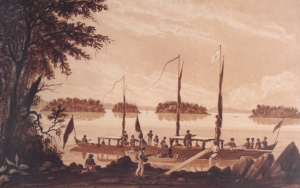
On September 25, 1826, hoping to obtain vice-regal confirmation of his chosen route for the Rideau Canal, Lt.-Col. John By led the Governor-in-Chief of British North America, Lord Dalhousie, on an arduous 13-km hike through the then tangle of forests and swamps that we have come to know today as Centretown, the Glebe and Old Ottawa South, quite likely reaching the point where the Rideau Canal would eventually meet up with the Rideau River at what we know today as Mooney’s Bay.
At one point during their round-trip trek back to that morning's starting point at Sleigh Bay (today’s Ottawa Locks), By and Dalhousie were graciously welcomed into the log cabin home of one of Old Ottawa South’s earliest settlers, Lewis Williams.
“After feasting on his potatoes,” Dalhousie wrote in his journal, “after our hot walk we asked for a little rum, but he had none. We drank water from his well as cold as any ice. I need not say that our visit gave the old man unbounded joy, tho’ we left without giving the least hint who we were.”
The following day, September 26, 1826, Lord Dalhousie recorded in an official letter that he had met with Colonel By at Sleigh Bay, below the future Parliament Hill, and confirmed that site’s selection to be the northern starting point of the Rideau Canal at the Ottawa River.
In that same meeting, the letter stated, plans were also approved for the town site for the future Bytown, divided by the intended canal into Lower Town and Upper Town; for a series of bridges across the Ottawa River to connect Upper and Lower Canada; and, at the request of the region’s fledgling logging industry, a dredged canal at Richmond Landing to ease the passage of timber rafts around the turbulent Chaudière Falls.
In this comprehensive and fascinating new essay, Carleton University professor and longtime Ottawa journalist Randy Boswell, a former HSO board member and HSO newsletter editor, chronicles these and more of the extraordinary events surrounding the “birth” of Bytown and the Rideau Canal two centuries ago this past month, including detailing long-overlooked interactions with the Indigenous people at the time, and the long-term impact of this uninvited settlement on the future of the Anishinaabe Algonquin:
Bytown 200 – The Birth of Bytown
An abridged version of this essay appeared as an article in the September 26, 2026 edition of the Ottawa Citizen and is also featured in a new book by Randy Boswell and Ottawa photographer John McQuarrie, “Ottawa, Spirit of Place — 200th Anniversary Edition”.
Lillian Scott Desbarats – Bytown Mayor Richard W. Scott, “Peace Maker” on July 12, 1852
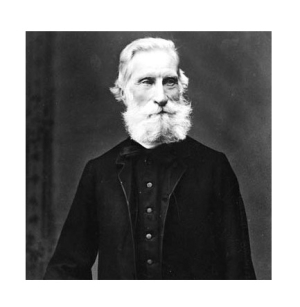
“My father, R. W. Scott (an Irish Catholic) was Mayor of Bytown in 1852, being but 27 at the time. The (Protestant) Orangemen asked him if they could walk in procession through the streets of Bytown on the 12th of July.
He gave them permission to do so. The other (Catholic) Irishmen said, ‘If you let those (Protestant) Orangemen walk, there will be trouble, we will stone them’.
My father said: ‘If you do, you will stone me, I am going to head the procession’ and so he did. (I have heard it said that he rode a white horse, but I am sorry to say that is not true.)
He lived in Lower Town; from there he drove a horse and buggy on to the Sappers Bridge, and when the Orange Parade came along he joined it, leading them all through Lower Town.
Not a stone was thrown, but he was defeated for Mayor when the elections came around. The Irish Catholics wouldn't vote for him because he joined an Orange procession, and the Orangemen wouldn't vote for him because he was Catholic."
The above is a short excerpt from “The Irish Settlers of Bytown and Early Ottawa", a chapter from Lillian Scott Desbarats' fascinating memoir, “Recollections", published in 1957, in which she recalls the time her father, Richard Scott, tried to play “peace maker” in pre-Confederation Bytown.
View the accompanying document for her full text regarding her father’s exploits on July 12, 1952: The Irish Settlers of Bytown.
Richard W. Scott survived this defeat and went on to an extraordinary career in the Ontario Legislature and Canadian Parliament, serving as Secretary of State in the Cabinets of both Alexander Mackenzie (1874-1878) and Wilfrid Laurier (1895-1908) and serving in the Senate until 1913.
Sir Richard Scott was one of the leading proponents behind Ottawa’s eventual choice as Canada's capital. He was also responsible for the 1863 Scott Act guaranteeing the right to separate schools in Ontario and the 1878 Scott (Temperance) Act allowing counties and municipalities to prohibit the sale of liquor.
In Bytown Pamphlets #80, #81, #82 and #84 we have published further excerpts from Lillian Scott Desbarats’ 1957 memoir “Recollections”: www.historicalsocietyottawa.ca/publications/bytown-pamphlets
Hamnet Pinhey Hill – LeBreton’s Influence on the Route of the Rideau Canal: Historical Fact… or Myth?
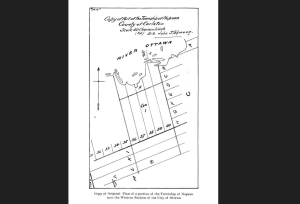
A favourite tale of Ottawa lore, re-told repeatedly, is the intriguing story that a plan to place the Rideau Canal entrance at LeBreton Flats was changed because of Lord Dalhousie’s anger at Captain John LeBreton, who the Governor General believed had used privileged information of the plan to purchase Lot 40 (the planned location) for personal gain.
Historians, however, as far back as Hamnet Pinhey Hill in 1919, have persevered to dispel the apparently groundless legend that this dispute actually had any impact on plans for the Rideau Canal.
Reproducing primary sources, including the full written accounts of both Dalhousie and LeBreton, Hill attests that the story of canal plans playing a part in the matter is without basis – the only plan figuring into Dalhousie’s anger having been one for placement of a storehouse to serve the terminus of the Richmond Road.
As per Hill: “There was however, an unpleasant misunderstanding between Lord Dalhousie and LeBreton over his purchase of Lot 40 at the sale, and the freedom with which Dalhousie vented his indignation probably accounts for the distorted story”.
Hill maintains that the land purchase disputed between Dalhousie and LeBreton had been in regard to planned use of the lot for a storehouse, not for the Rideau Canal.
Here is the link to the essay penned in 1919 by Hamnet Pinhey Hill, a local lawyer, MLA for Ottawa West and great-grandson of early March Township landowner Hamnet Pinhey.
We invite you to read Chapter V (pages 28-39), which will prove to be of particular interest to this long-running debate, as to whether the legend of the Dalhousie/LeBreton/Rideau Canal "scandal" is historical fact... or myth.
James Powell – Bytown Mechanics’ Institute
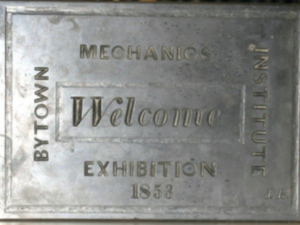
Back in rough and tumble 1840s Bytown, what was there for a man looking to improve his lot in life -- as opposed to spending his days hanging out in Bytown's abundant taverns?
Bytown’s first “Mechanics’ Institute” was established on January 28, 1847.
One might assume that a "Mechanics' Institute" was somewhere you might go to get your buggy serviced -- but you would be incorrect.
Mechanics’ Institutes, tracing their roots to 1820s Scotland, in fact, were set up to offer weekly lectures and reading room resources to the common man -- established on the novel premise that the working classes were entitled to as much respect as any other class and that their education should be promoted equally with others.
James Powell takes us back to the beginnings of the Bytown Mechanics’ Institute and its intersecting history with similar organizations such as l’Institut Canadien-Francais d’Ottawa:
todayinottawashistory.wordpress.com/2025/11/08/bytown-mechanics-institute/
Follow this link for more of James Powell’s contributions to the HSO Bytown200 Bicentennial Story Collection, as James shares stories of the Rideau Canal, the Shiners’ War, the Stony Monday Riot, The ByWard Market and more:
www.historicalsocietyottawa.ca/resources/bytown-200/james-powell-today-in-ottawa-s-history-428
James is the author of the blog Today in Ottawa's History giving a day-by-day account of local history.
You can read more about the Bytown Mechanics' Institute in our Bytown Pamphlet #39: The Bytown Mechanics' Institute: Improving the Mind of the Working Class
The Era of Bytown
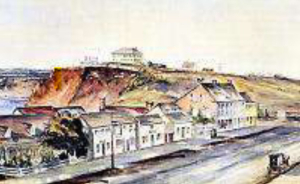
On April 25, 2026, the Society hosted the third presentation of its Bytown200 series. It followed a February presentation by Dr. Lynn Gehl on the past, present and future of the Anishinaabeg Algonquin of the Ottawa Valley, and one in March by Allison Margot Smith who gave a screening of her documentary on the Rideau Canal. Presented by Society member James Powell, the third and final part of the Bytown200 trilogy focused on Bytown itself. Despite stiff competition from two hockey games that afternoon with both the Ottawa Senators and the Ottawa Charge in action, close to 100 people attended James’s presentation at the Ottawa Public Library.
James started by looking at the men who were instrumental in Bytown’s early development, starting with Lord Dalhousie, Canada’s Governor General, who with great foresight bought 400 acres of land in 1821 at would become the entrance of the Rideau Canal in anticipation of a sizeable town developing there. James then talked about Colonel By who was given the task of planning the new town that took his name along with constructing the Rideau Canal. Attention then shifted to Nicholas Sparks, who owned much of the land that was to become downtown Ottawa. Sparks became extremely wealthy when the Rideau Canal cut through his property. And let’s not forget Philemon Wright, the founder of Hull, Quebec, Thomas Mackay, the father of New Edinburgh, and Louis-Théodore Besserer, the father of Sandy Hill.
James then gave a fascinating overview of life in Bytown. With a population of about 2,000 in 1840, the small community was divided in two parts--Upper Town which was mostly well-to-do, English and Protestant and Lower Town which was mostly poor, French or Irish and Catholic. The two communities, separately by about a half mile, were linked by one road and one bridge over the Rideau Canal. Regardless of where one lived, however, Bytown was “unsafe, dirty, smelly, unsanitary and unhealthy.”
Ethnic rivalries, often fuelled by alcohol, spilled over into the streets. Irish loggers called Shiners fought their French counterparts for control of the timberlands. Shiner atrocities led one Catholic priest to say Il n’y a pas de Dieu à Bytown. Without running water, sanitary sewers, garbage collection or paved streets, life in Bytown was harsh and unpleasant. Roads were often muddy and covered with horse manure. People donned wooden pattens (overshoes) to protect their boots. But one thing that they could not protect themselves from was disease. Cholera, typhoid, typhus, smallpox, diphtheria, measles, and scarlet fever ran rampant through the town. A measure of health care was brought to the town in 1847 by Élisabeth Bruyère, mother superior of Bytown Sisters of Charity, who founded the first civilian hospital aided by Dr. Van Cortlandt.
Still, there were opportunities for fun and education. In addition to boozing in the town’s many bars and taverns, Bytown citizens enjoyed cricket and lacrosse. Plays were produced at Her Majesty’s Theatre on Wellington Street. Two newspapers, the Bytown Gazette and The Packet, the forerunner of The Citizen, provided windows to the world outside of Bytown. Two literary groups—the Bytown Mechanic’s Institute and Atheneum and L’Institut canadien français d’Ottawa—gave learned lectures and for a fee provided Bytown residents access to circulating libraries.
James also talked about the fraught political scene in Canada at that time with people divided between Tories and Reformers. When rioting Tories burnt down the Parliament building in Montreal in 1849, incensed by Lord Elgin, the Governor General, signing into law the Rebellion Losses Act, Bytown’s was back in the running to become the capital of Canada. But Bytown too was divided between Tories and Reformers. Just months after Parliament was torched in Montreal, fighting between the two groups broke out on the streets of Bytown. Stones were thrown and shots fired in the Stony Monday Riot in the Byward Market during a public meeting to discuss an invitation to Lord Elgin to check out Bytown as a potential future capital. One man died. Two days later, armed Reformers and Tories squared off close to the canal. Separated only by a group of British soldiers, calmer heads fortunately prevailed and the two groups peacefully dispersed. Civil war was averted. The Packet newspaper wrote: Can it be true? Can such a scene have occurred in the middle of the 19 th century in enlightened Canada?
Four years later, the political environment had mellowed, and Lord Elgin finally journeyed to Bytown where he was warmly greeted by Joseph-Balsora Turgeon, Bytown’s first Francophone mayor. Both Tories and Reformers, eager to make a good impression, wined and dined the governor general during his stay in Bytown and his trip up the Ottawa River. The political storm had passed.
Bytown became Ottawa in 1855, a name viewed as more fitting for a town aspiring to be the new capital of Canada. After years of sterile debate and failed votes in the legislature, the Canadian government asked Queen Victoria in 1857 to settle the debate over the location of the new capital. Ottawa won, beating outrivals Toronto, Quebec and Kingston. Following more months of political wrangling, Parliament finally ratified the Queen’s choice in 1859, but the vote was close. Had three MPs voted differently, ratification would have failed.
After the presentation concluded, there was a lively question and answer period covering such topics as John LeBreton’s land speculation, reasons why Queen Victoria selected Ottawa as the capital, schools in Bytown, and the occupations of people who lived in Upper Bytown.
For those unable to attend (or were watching the hockey games!), the presentation was recorded.
The HSO 2026 Bytown200 Bicentennial Storytelling Challenge
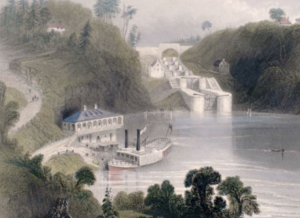
Let’s hear your stories about Bytown and the Rideau Canal as we begin to mark 2026, the 200th anniversary of the beginning of both!
All contributions are welcome. Selected submissions will be shared on a special webpage on the HSO website for all to access, including educators. Eligible contributions can be submitted in a variety of formats, including written or audio/video.
We hope to also incorporate selected contributions into our many other platforms – such as our blog, the HSO Capital Chronicle newsletter, website articles and the Ottawa Stories sections and potentially our pamphlet series. All will be shared through our social media platforms well.
We welcome stories that pertain to the Rideau Canal or Bytown (1826-1855) or the Ottawa area’s history beforehand, as well as stories exploring the impact that the establishment of both had on the lives and livelihoods of Indigenous people.
We welcome new as well as updated or previously-published materials for submission. Contributors will allow HSO the right to publish their materials while also retaining the right to do so themselves.
Contact us to learn more: This email address is being protected from spambots. You need JavaScript enabled to view it.
We will also be happy to discuss any proposals for submissions you may have.
Have a look at our collection of stories: www.historicalsocietyottawa.ca/resources/bytown-200
Louise Charbonneau SCO – The Venerable Élisabeth Bruyère
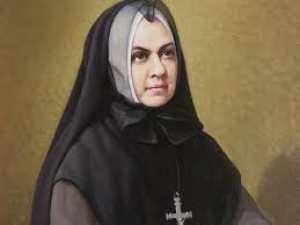
Did early Bytown bear witness to the work of a Saint? April 5, 2026, marks the 150th anniversary of Mother Élisabeth Bruyère’s death, yet her selfless spirit lives on and her mission continues to inspire important work in health care, education, social services and the promotion of social justice.
On April 14, 2018, by decree of Pope Francis, Élisabeth Bruyère was declared Venerable, in recognition of her heroic practice of faith, hope and charity.
Sister Louise Charbonneau invites us to fully appreciate the legacy of this innovative and virtuous pioneer of Bytown, the Venerable Élisabeth Bruyère, and the cause for her beatification and ultimate canonization.
- In English – As Bytown Celebrates 200 Years, Let Us Remember Our Founders Venerable Élisabeth Bruyère: An Innovative and Virtuous Pioneer of Bytown 1845-1876
- In French – Alors que Bytown célèbre ses 200 ans, souvenons-nous de ses fondatrices: La vénérable Élisabeth Bruyère : une pionnière innovante et vertueuse de Bytown, 1845-1876
Sister Louise Charbonneau is a Sister of Charity of Ottawa (SCO). The Sisters of Charity of Ottawa, known as the Grey Nuns of the Cross, have been following in the footsteps of their foundress Élisabeth Bruyère since her arrival in Bytown in 1845.
The City of Ottawa Archives – Bytown 200th: Ottawa's history
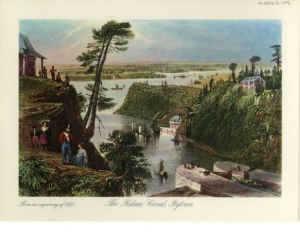
The City of Ottawa Archives joins in marking 200 years since the founding of Bytown, by presenting a serialized look at the community’s early development.
“Bytown: Construction Camp to Fledgling City” explores the transformation of a frontier settlement into a vibrant urban centre. Through archival records, historical insights, and profiles of key figures, follow this series as the Archives brings Bytown’s story to life—one chapter at a time: https://ottawa.ca/en/node/3042265
The City of Ottawa Archives are the custodians of permanent and historical civic government records on behalf of the City of Ottawa and its many departments, as well as local, community records with historical value. They preserve, acquire and make these documents accessible for City staff, the public, and other researchers, for present and future generations.
Ben Weiss – 1926 Centenary Flashback
Join us as we (carefully) flip through the withering pages of a (barely) surviving copy of the August 16, 1926 edition of the Ottawa Evening Citizen -- and travel back a century and explore some of the news items and advertisements published in the newspaper’s special “Centenary Edition”, kicking off Ottawa’s celebration of its first 100 years.
FRONT PAGE “CENTENARY EDITION”
.jpeg)
August 16, 1926
Bold headlines announce that “Mayor Hands ‘Key’ of City to Visitors”, “Throng on Parliament Hill for Centenary Official Opening Ceremonies” and “Sunday Scenes at Lansdowne Park When Centenary Opened with Garrison Church Parade”.
(Let’s not be confused! A fourth unrelated headline is inserted reporting that “Empty Casket in Case Alleged to Contain the Body of Kitchener”, a story that has nothing to do with Ottawa’s Centenary but rather a discovery at a train station in London, England.)
On the same page, the Citizen boasts that “1,400 pounds of ink will be consumed” publishing this special 128-page Centenary edition.
For more on that week’s celebration of Ottawa’s 100 th birthday, check out James Powell’s “Ottawa’s Centenary”: todayinottawashistory.wordpress.com/2019/07/20/ottawas-centenary/
FIRST SHOWING OF “BEN HUR” IN THE BRITISH EMPIRE
.jpeg)
August 16, 1926
This silent-era MGM classic, showing at Ottawa’s Auditorium, accompanied by a touring symphony classic is the “first time shown in the British Empire” and “will not be shown here again for at least 12 months”.
James Powell tells us more about the remarkable legacy of the Auditorium (1923-1967): todayinottawashistory.wordpress.com/2024/08/31/the-auditorium-the-aud/
CENTENARY STAMPEDE
.jpeg)
An advertisement for the week-long Centenary Stampede, the highlight of Centenary celebrations at Lansdowne Park. James Powell tells us more about this “Most Thrilling Sporting Event!”: todayinottawashistory.wordpress.com/2025/10/25/the-centenary-stampede/
A CENTENARY “WELCOME!”
.jpeg)
August 16, 1926
We were being promised “Two Big Weeks of Fun and Merriment” August 16-28, with the Centenary celebrations – the Stampede and Historical Pageant – at Lansdowne Park the first week, with the Central Canada Exhibition (the “Ex”) hoping to capitalize on the wave of momentum when it takes over the venue the second week.
Note: “Reserved Seats for all events on sale at Centenary Headquarters, Russell House Block, Phone Q. 1127”.
On the same page, an ad for Fournier’s noting that the retailer will be closed Wednesday (August 18) for “Ottawa’s Birthday” but offering broadcloth shirts for as low as $1.79 and neckties and socks for under a dollar for those who shop on Tuesday.
Also on the same page, a listing of “Radio Programs” from stations broadcasting as far away as Philadelphia and New York City, including a report on the previous two nights’ radio reception, courtesy of the Department of Marine and Fisheries: “Sunday – Reception good. Saturday – Fair, with some static and slight fading”.
“OTTAWA CENTENARY AWAY TO SPLENDID START”
.jpeg)
August 16, 1926
“Impressive Church Parade Features Sunday Ushering City’s Big Celebration”, “Thousands of Visitors From Near and Far in Capital”, “Crowded Streets, Gaily Decorated and Illuminated”.
On the same page:
A Bishop visiting from England for the Centenary, preaching at Christ Church Cathedral, pleads with the congregation to “Keep Canada British”, stating “We welcome those from other countries, and God knows where they call come from, but don’t let us, for God’s sake, lose the British ties of blood which once bound the early settlers of Canada.”
Mackenzie King (leading the Opposition during Arthur Meighen’s brief 3-month tenure as Prime Minister that summer) is accused by one of Meighen’s ministers as repeating “false statements” accusing the Customs Department of “maladministration”.
Saturday night’s “annual sweet pea show”, put on by the Westboro Horticultural Society is deemed “a signal success, as evidenced by the large attendance and the many entries”.
SPORTS PAGE – TWO HOMERS FOR BABE
.jpeg)
August 16, 1926
“Babe Ruth and his mighty bat were busy over the week-end” against the Washington Senators,”Babe Brings Home Run Total Up to 39”. (The Babe would finish 1926 with 47 home runs, the fifth highest in his career, batting a career-high 60 homers the following year.)
Also on the same sports page:
Four new “Dominion” records were established in swim meet held in the Rideau Canal this past weekend.
Toronto’s team in baseball’s International League narrowly remained in first place (the Toronto “Maple Leafs” would go on to win 29 of the next 38 games and win the league championship for their last time until 1943.
The local “Lauriers” of the Independent Baseball League were beaten by Wakefield before a crowd of 2,000 on Porter’s Island.
Four Canadian and three U.S. power boats competing in a regatta on the Ottawa River.
Centenary motorcycle and bicycle races drew a large crowd at Lansdowne Park.
Almonte beat the Defence HQ in cricket at Rideau Hall.
Also on the same page, the day’s “Our Boarding House” cartoon featuring the tall-tale-telling “Major” Hoople.
“O.E.R. (OTTAWA ELECTRIC RAILWAY) NEWS”
August 16, 1926
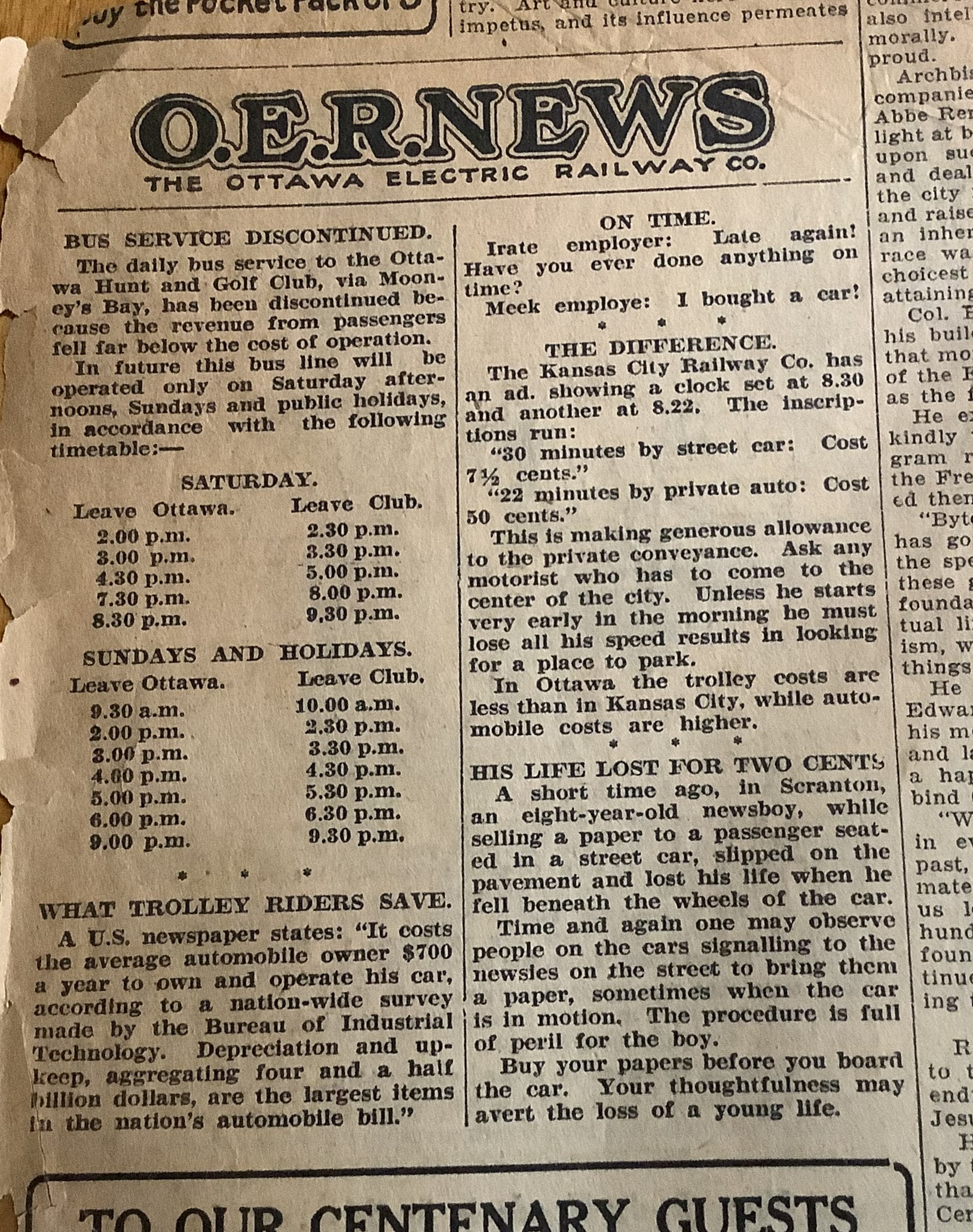
“The daily bus service to the Ottawa Hunt and Golf Club, via Mooney’s Bay, has been discontinued because the revenue form passengers fell far below the cost of operation.”
This sort of blunt announcement may have become frequent in the 1920s, as the rapid increase in automobile ownership began to precipitate a correspondingly sharp decline in street car ridership, eventually leading to the termination of Ottawa’s street car system by 1959.
In a valiant effort to reverse the trend, “O.E.R. NEWS” goes on to quote a national U.S. survey reporting that, with depreciation and upkeep “it costs the average automobile owner $700 and year to own and operate a car”.
Also quoted is a Kansas City Railway Co. ad that claims one of its main routes is “30 minutes by street car: cost 7 ½ cents” vs. “22 minutes by private auto: cost 50 cents”. The O.E.R. NEWS goes on to comment “this is making generous allowances to the private conveyance. Ask any motorist who has to come to the center of the city. Unless he starts very early in the morning he must lose all speed results in looking for a place to park.”
This unflattering verdict against the automobile is followed by the grim story of an eight-year old newsboy from Scranton, Pennsylvania who lost his life when he slid under the wheels of a car while trying to sell a newspaper to one of its passengers.
Finally, in a separate advertisement on this same page, the Ottawa Electric Railway lets potential customers know that it is now offering the services of motorized coaches, in addition to its street car service.
The late Cliff Scott wrote about the rise and fall of the Ottawa Electric Railway: www.historicalsocietyottawa.ca/publications/ottawa-stories/significant-technological-changes-in-the-city/ottawa-s-street-railways
RETAILERS HOP ON BOARD THE CENTENARY BANDWAGON
August 16, 1926
.jpeg)
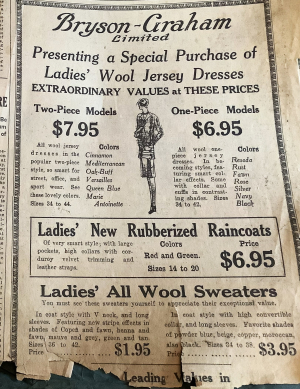
Poulin’s, Max Feller, Freiman’s, Devlin’s, Fisher’s, Murphy-Gamble, Bryson-Graham and the Ottawa Beach Motor Company were among the Ottawa merchants to take out ads in this special Centenary edition.
 Max Feller.jpeg)
Devlin’s welcomes “visitors to Ottawa” to the “fair village of Colonel By”. With stores required to close Wednesday for the Centenary, Murphy-Gamble and Freiman’s advertise Tuesday-only specials.
 - Devlin's.jpeg)
.jpeg)
.jpeg)
 Murphy Gamble.jpeg)
James Powell writes about some of these icon retailers of Ottawa’s past:
todayinottawashistory.wordpress.com/2017/10/07/bryson-graham-ltd-ottawas-greatest-store/
Sonja McKay – Zéphérine Brunet, a French Canadian in Bytown
Among the settlers who populated Bytown, many were francophones. By examining the stories of her own francophone ancestors, Sonja McKay reveals a window through which we obtain a glimpse of what life would have been like for many French-Canadians during that era.
Sonja McKay is a retired public servant and social policy analyst, an amateur genealogist, and member of the Historical Society of Ottawa.
Zéphérine Brunet, a French Canadian in Bytown, 1830s-1850s
Among the settlers who populated Bytown between 1826 and 1855, there were many francophones who came from what is now Quebec. Some of them were my ancestors. I will describe the experiences of a few of them in this article.
Many French-Canadians arrived in Bytown to work in the growing lumber industry in the 1840s and ‘50s. As well, some highly-educated French Canadians came to Bytown (e.g. physicians, lawyers, religious officials, business owners and their families). Lucien Brault’s 1941 in-depth thesis on the history of Ottawa recounts that by 1851, there were 2,056 French Canadians in Bytown, out of a total population of 7,760. Over 25% of the population were francophones.
We know too, that the land and waterways around Ottawa had already long supported Indigenous families and nations – notably the Algonquin Anishinabe nation on whose traditional lands Bytown emerged. Bytown was not a beginning for the Ottawa region, but it was the beginning of my personal family history here.
This article tells the stories some of my francophone ancestors and their friends who came to Bytown in the 1830s and ‘40s. A key figure is Zéphérine Brunet, my great-great-grandmother. In learning bits of information about her and her family, we can see a glimpse of what life was like for labouring French Canadians in those days.
A quest to learning about the origins of my grandpère, Adonias Robillard
I never met my grandfather, Adonias Robillard, because he died before I was born. Adonias was born in 1893 in Ottawa, and he did metalworking until his death in 1955. My mother, Carmen, remembers him as a kind and loving father. Carmen grew up in a franco-Ontarian family in Eastview (now Vanier). Her mother Eva Létourneau was born near Québec City and migrated to Ottawa with her parents when her father obtained a civil service job in the federal government. The couple married in 1930. My family has few photos of Adonias – one was taken on his wedding day. It shows him dressed in his best outfit, probably standing outside his bride’s home on Friel Street in Lowertown Ottawa.
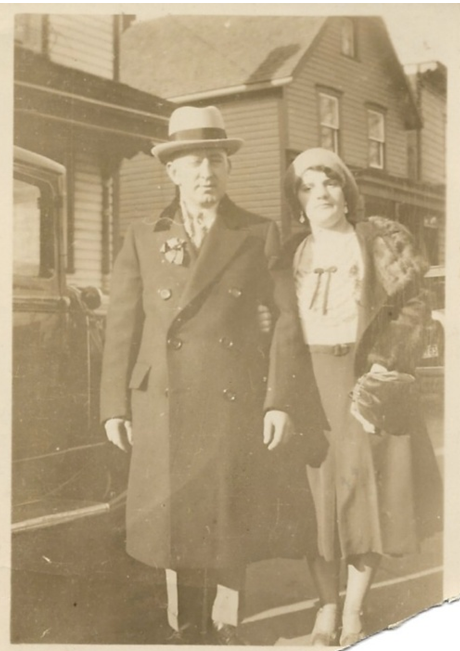 Figure 1: Adonias Robillard and Eva Létourneau, circa 1930. Photo courtesy Carmen McKay
When I searched for more information about Adonias, I found that both of his parents were born in the Ottawa area (one in Gatineau) and all four of his grandparents were either born in Bytown or moved to the town before 1855.
Bytown in the 1830s was in a period of transition from the building of the Rideau Canal in 1826-32 towards becoming a booming lumber town. Between 1835 and the mid-1840s, it seems there were more people than jobs in the lumber industry, and consequently conflict. It’s said that the Shiner’s War between mainly French-Canadian and Irish lumber workers took place then. There was no police force and no jail. What could go wrong?
1830s: Zéphérine Brunet, her family and friends
The earliest of my great-great-grandparents to arrive in Bytown was Zéphérine Brunet. She moved here with her parents in the year 1835, or possibly a year or two earlier, when she was just six years old.
Zéphérine’s approximate year of arrival in Bytown is decipherable because of records of her siblings (and her own) dates of birth and places of birth. The eldest of 9 children were born in St. Eustache (just north-east of Montreal) where her parents had married. Zéphérine and others were born in La Petite Nation (which includes what are now the towns of Papineauville and Montebello on the north side of the Ottawa River). Zéphérine was born in the summer of 1828. Her youngest two brothers were born in Bytown – one in 1835, the last in 1840. So, they were in Bytown by 1835.
Zéphérine’s father, Janvier Brunet, is identified as a “journalier” or labourer in various documents. The family migrated following employment opportunities, with mother Narcisse and children making a lively home wherever they went. It’s possible Janvier worked mainly in Bytown (rather than away in a lumber shanty), perhaps in a lumber yard, or assisting a merchant in the ByWard market.
The Brunet family knew another family that came to Bytown around the same time – the Brûlés. Both families spent a few years living in La Petite Nation east of Bytown on the north shore of the Ottawa river, a region named in reference to the Indigenous people that already lived there. That region of la Petite Nation was just beginning to be settled by Europeans in the early 1800s. Similarly to Bytown in the 1820s, there was not yet a permanent church or priest assigned to the area. Missionaries would travel to the area every few months. In fact, Zéphérine was not baptized until five months after her birth, probably due to the family’s distance from a priest.
The Brunet and Brûlé families may have held land leases in La Petite Nation, but I found no evidence of this. Possibly they were employed by leaseholders to cut trees, clear rocks or till the soil. Perhaps, once the trees were sold, they moved on. For whatever reason, both the Brunet and Brûlé families moved to Bytown in the 1830s.
My family’s picture starts to become more clear in the 1840s as more records of births, marriages, and deaths appeared in my family tree.
The 1840s
In 1843, a law was passed called the Vesting Act. This made the acquisition of land and establishment of public amenities more feasible in Bytown, where previously the residential lots had been merely available for lease to townsfolk. This encouraged people to invest more in building solid homes.
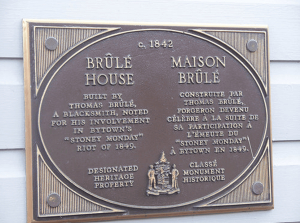
In this context, a still-standing heritage building on St. Patrick Street in Lowertown was built in approximately 1842 by Thomas Brûlé, a francophone blacksmith. Whether he began building it before or after the Vesting Act was passed, it seems likely he would have finished it as an owner of the lot, not just a tenant, as the building was solidly built enough to still stand today. Located at 288-290 St. Patrick Street, the building’s façade sits close to the street, and it has two front doors, indicating it formed two side-by-side homes. Behind the house one can glimpse a paved yard that once might have held a shed for a horse or a pig.
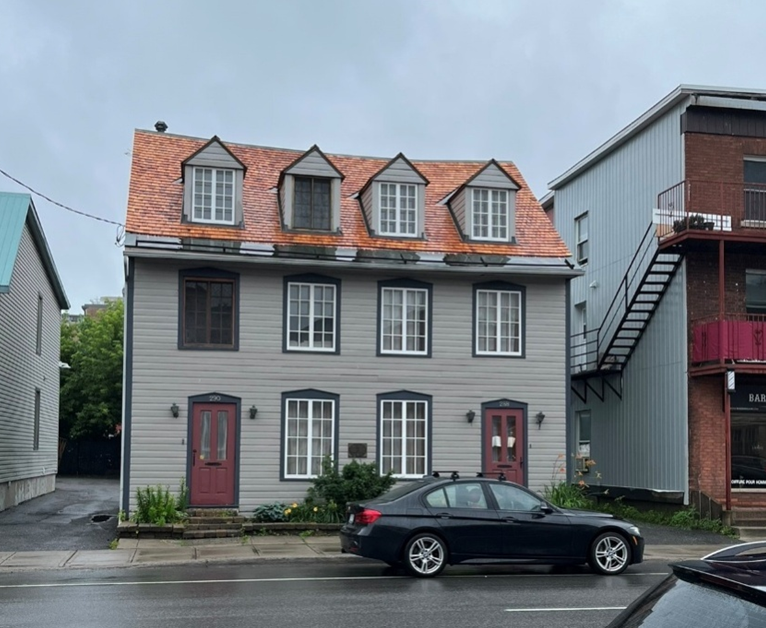 Figure 2: Brûlé House, 288-290 St. Patrick Street, 2024. Photo credit: Sonja McKay
As the Brunet and Brûlé families’ children grew up, well, they got married. Zéphérine Brunet married Edouard Brûlé on July 1, 1846, in Bytown. Edouard was a brother of Thomas, and Thomas served as a witness. The marriage would have taken place in a wooden church, the precursor of today’s Notre Dame Cathedral. (Construction of the cathedral had begun in 1841, and the walls and roof were completed in 1846, but it was not quite ready to host services yet.) Edouard made a living in the logging industry, and may probably have spent significant time away from his wife. They had two daughters by 1849. As I’ll show below, it’s very likely they lived in the Brulé house with Thomas and his family.
As author Michael McBane described in his excellent 2022 book, Bytown 1847: Elisabeth Bruyère and the Irish Famine Refugees , Lowertown was a muddy, crowded place in the 1840s. Most homes were built of wood and the streets were not paved. There was no municipal plumbing or electricity. Many households kept animals such as horses and pigs in their yards, the latter to eat the leftover scraps and to be butchered for food. Cows were allowed to feed on local grass. Land not yet built on served as vegetable gardens in summer. Ice hauled from the river in winter was stored and sold in summer to cool food. Potable drinking water was scarce, and outbreaks of communicable diseases occurred.
Another event of the 1840s is worth noting here: Thomas Brûlé participated in the “Stoney Monday” riot in September of 1849, another violent episode in our city’s past. He and another man were charged with murdering the only person to die that day, but both were acquitted. It turned out no one saw who shot the victim, David Borthwick. The riot had erupted between people of different political views, which had coalesced into a dispute over whether to invite the Governor General to Bytown or not. I imagine the trouble Thomas found himself in worried his family greatly. In the end, he was free to resume his livelihood.
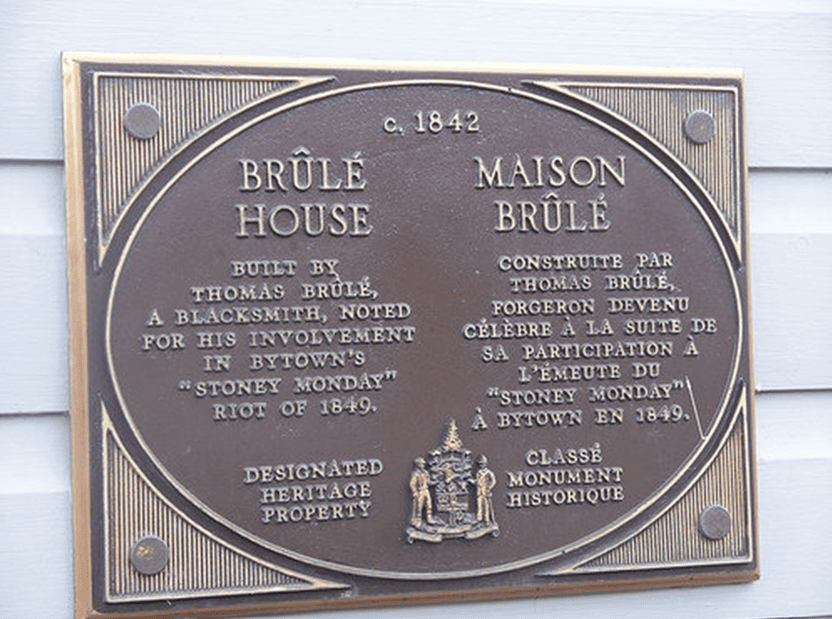 Figure 3: Plaque on Brûlé house 288-290 St. Patrick Street, Ottawa. Photo credit: Sonja McKay
The 1850s – A husband’s death, a new marriage
The 1851 census (taken in January 1852) shows that Zéphérine Brunet and her now three young children lived with Thomas Brûlé and his family -- see the orange circle in the census image, beside Zéphérine’s name, followed by her three daughters Heloise, Exina, and Theodosie. This residence must have been the 288-290 St. Patrick Street building, though no street addresses were given on the census. Sadly, Zéphérine was described as a widow. How could this be, I wondered?
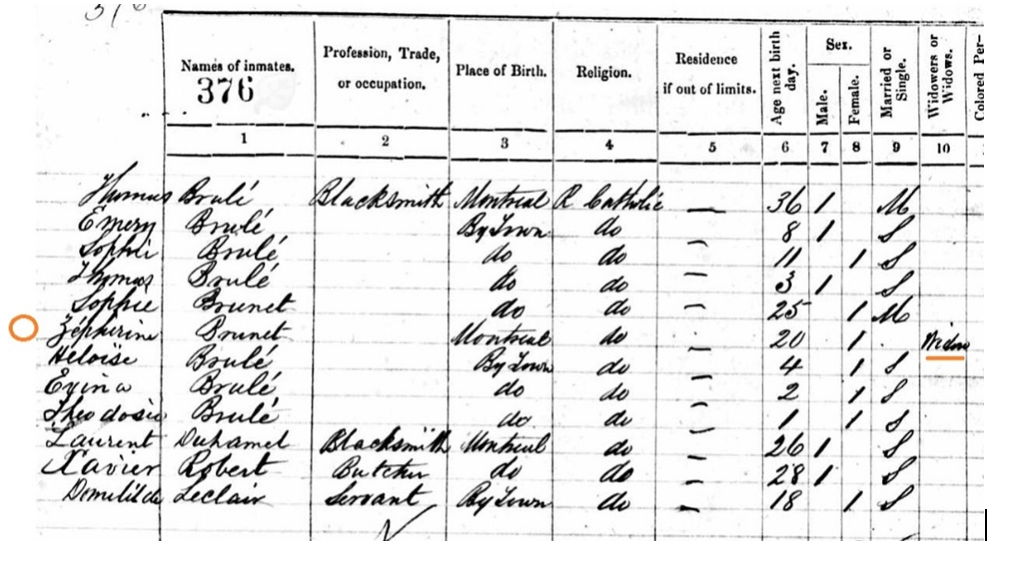 Figure 4: Excerpt of 1851 Census showing those living with Thomas Brûlé. Source: Library and Archives Canada.
Edouard had died a mere two months earlier, on November 14, 1851. A chilling note on the church register for his burial reads “tué par la chute d’un arbre” – Edouard was killed by a falling tree. It’s mainly because of this note that I assume Edouard worked in logging industry, and this was likely an accident in the forest while felling trees. The notation was written by father Damase Dandurand, a priest who arrived in Bytown in 1848 and who went on to serve the Roman Catholic community for the next 30 years. Thomas Brûlé was a witness to the ceremony.
This sad event had a silver lining, however, at least from my perspective. Edouard’s death paved the way for Zéphérine to remarry and have more children – one of whom became my great-grandmother Joséphine.
Zéphérine married her second husband, Eugène St. Jean, in Bytown on October 10, 1853. Eugène lived in Bytown, and he was from a town north of Montreal – St. Roch de l’Achigan. Again, the ceremony was performed by father Damase Dandurand, and Thomas Brûlé was a witness. The wedding likely took place inside the new Notre Dame cathedral, as it had been consecrated on September 4, 1853. Though the church’s decorate elements remained to be completed over the coming years, it already stood as solid beacon for the Roman Catholic community in the town.
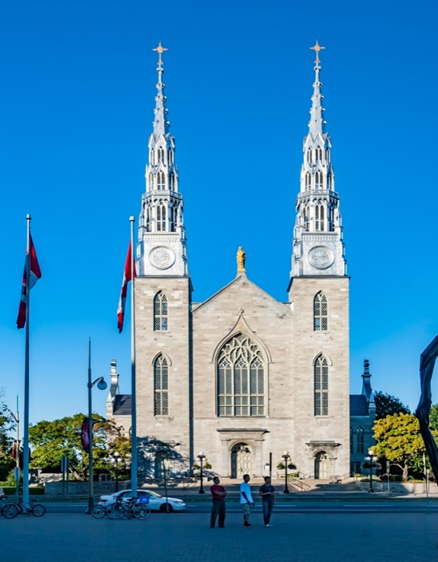 Figure 5: Notre Dame Cathedral, Ottawa. Photo by Michel Rathwell, CC BY 2.0, via Wikimedia Commons
The couple had five children together – a son and four daughters. Their youngest child, Joséphine, grew up to become my great-grandmother (Adonias’ mother). By the 1860s, the family had moved to the northern side of the Gatineau River – just across the Ottawa river in Pointe-Gatineau. This is where Joséphine was born in 1866.
Not much is known about Eugène St. Jean other than the interesting fact that he studied classics at the College de l’Assomption between 1839 and 1841 in Quebec. I imagine from this that he may have worked as a clerk or some other occupation which required education. Unfortunately, he too passed away before 1871 when Zéphérine appears in the 1871 census as a widow in Pointe-Gatineau.
Later, Zéphérine moved back to the Ottawa side of the river, showing how closely connected the two sides of the river were (as they are to this day). She married a third time, and lived to the ripe old age of 96.
Conclusion
This story focussed on the Bytown days of my family’s history. As we know, Bytown was renamed Ottawa in 1855, and soon was appointed by Queen Victoria to become Canada’s capital city. My family’s Ottawa story continued until my mother met my father in Ottawa. While I was raised primarily in an English-speaking household, I am proud of my francophone heritage and happy to share some of it with readers.
My heart is filled with gratitude to know that these relatives, and other settlers, survived in Bytown through the help they gave each other. It saddens me to know they also grieved the early deaths of loved ones, but this was common for the time. This story demonstrates in a concrete way how families survived by cooperating and sharing resources, and moving to where there was work. We can glimpse through them, much about what life in Bytown was like for its francophone settlers.
References:
Brault, Lucien (1941). Ottawa: Capitale du Canada de sesorigines à nosjours . PhD Thesis presented to University of Ottawa.
Brault, Lucien (1946). Ottawa Old and New. Ottawa Historical Information Institute. Available at the Ottawa Public Library.
Centre de recherche en civilisation canadienne-française.Vie française dans la capitale. A virtual museum website about Ottawa’s francophone history. Bilingual. https://www.viefrancaisecapitale.ca/ Accessed 2026-02-03.
McBane, Michael (2022).Bytown 1847, Elisabeth Bruyère and the Irish Famine Refugees.Available in bookstores and at the Ottawa Public Library.
Notre Dame Cathedral. https://notredameottawa.com/history . Accessed 2026-02-02.
Quick Links
About
Supporting Partners