

Working to preserve Ottawa's past
for future generations.
We’ve all been obligated to face many new challenges this year, and it was with some concern that the Historical Society of Ottawa chose to make a transition to on-line meetings so that we can continue to reach out to our members and the community during this difficult time. We weren’t certain how well the transition would go. Perhaps people might pass on HSO presentations if they were to be presented via computer. However, for our second online lecture we gathered 86 participants. That compares favourably to some of our most well-attended live meetings.
Our October guest speaker is no stranger to on-line communication. As a part-time teacher at the University of Ottawa, Jo-Anne McCutcheon has been working with her students through Zoom since COVID restrictions began.
Jo-Anne talked about the many resources available to students, historians, genealogist and researchers online. Her presentation, which you can watch anytime at the HSO website, shows how to link to newspapers (current and historical), photo galleries, documents, academic papers, and records of meetings of Parliament. Jo-Anne’s presentation walks you through the process of creating your own files for storing information and even adding and sharing your own content.
You may be surprised to find out just how much is out there to help you do research or just surf the web for sites with unique, authentic historical content. In this HSO presentation, Jo-Anne has picked out some of her favourite sites and shows how to take advantage of their features.
You can link to Jo-Anne’s presentation by visiting our website, and choosing Videos on the ‘Resources’ tab.
The September 14th 2020 presentation of the Historical Society of Ottawa took us on two journeys. One was to the Middle East; but more on that in a moment. The other journey was shorter in distance but was a big step technologically. With recent social restrictions forcing us to cancel live presentations at the Main branch of the Ottawa Public Library (for the time being) our Regular Events coordinator, Ben Weiss, asked guest speaker Michael Kent if he’d be interested in making a presentation online through a video conferencing application called Zoom, so that HSO members and the community could link in and make the journey half way around the world from their own home.
And so HSO hosted its first on-line lecture. Fortunately, Michael’s presentation included a number of videos, so the digital platform was perfect. (Zoom allows presenters to show photos, videos, and slides.) This allowed Michael to tell about his personal research of ancient Hebrew texts from Canada’s own large collection at Library and Archives Canada, here in Ottawa, as well as the many efforts being made around the world to reconstruct ancient texts that survive often only as small shards of paper; sometimes with only a few words, or even a few letters. It’s like putting a puzzle together when many of the pieces are blank.
While international in scope Michael also talked about, and was asked questions about, Jewish artifacts from Ottawa. There are a number of active synagogues in Ottawa today, including the beautiful and historic Adath Jeshurun Synagogue on King Edward Avenue, but others, like the Machzikei Hadas Synagogue on Rideau Street are gone. Fortunately texts from many old synagogues, Talmud schools, and homes survive and have been catalogued by Library and Archives Canada. Ancient books are still being reconstruction in Cairo today from pieces found in Egypt decades ago.
One advantage of online presentations is that they can be recorded and played back later. This allows those unable to participate live to watch later. So if you think you’ve missed Michael’s presentation, you haven’t! You can watch it now by going to our website at www.historicalsocietyottawa.ca and choosing the ‘Resources’ link on the top toolbar. On the drop-down box, choose ‘Videos’ and you can watch this and other presentations.
Additional Info
- Year 1949
- Date November 18
Additional Info
- Year 1893
- Date November 2
Additional Info
- Year 1835
- Date October 20
Additional Info
- Year 1880
- Date October 2
Élisabeth Bruyère: Caring and Daring Bytown Pioneer
Sister Louise Charbonneau, SCOVenerable Élisabeth Bruyère — 175th Anniversary
Gravely needed in Bytown, Élisabeth Bruyère (aged 26) and her small entourage of young Grey Nuns bravely journeyed the frozen Ottawa River by sleigh from Montreal.
Within three months of their arrival in rugged Bytown, Mother Bruyère and her group had founded a school, a general hospital, a home for the aged and an orphanage; and within another two years Mother Bruyère and the sisters would defy the risk of deadly contagion and tend to the sick as Bytown found itself in the midst of a severe typhus epidemic.
Mother Élisabeth Bruyère was a woman with a caring and compassionate heart and of daring faith. She founded the first congregation of religious women in the Archdiocese of Ottawa, the Sisters of Charity of Ottawa (also called Grey Nuns of the Cross until 1968).
Élisabeth Bruyère was born in L’Assomption, Que., on March 19, 1918. Her father died when she was six years old. She spent her childhood in Montreal where her mother became a household servant to earn a living for her family. Élisabeth was educated by the Sisters of the Congregation of Notre Dame.
Spiritual Daughter of Marguerite d’Youville
In 1839, Élisabeth, attracted by Saint Marguerite d’Youville’s charisma, entered the Congregation of the Grey Nuns of Montreal. In 1841, she pronounced her vows of religion; for the next four years, she was given the responsibility of educating 40 young orphan girls.
Her remarkable qualities were admired by her Superiors who chose her as the founding Superior of the mission in Bytown.
Arrival in Bytown: Founder by the Will of God
Astonished to receive this assignment, Sister Élisabeth Bruyère saw in this nomination the expression of God’s will. On February 19, 1845, she left with three professed Sisters, 1 postulant and 1 aspirant. On February 20, 1845, they arrived in Bytown where the caring and daring Bytown pioneer’s mission of love, service and compassion began.
Absolute Trust in Providence
Grace nurtured faith which led Mother Bruyère to seek God’s will. Her unconditional trust in Divine Providence opened her hands to all those in need. Pain never failed to resonate in Mother Bruyère’s caring heart as she reached out to everyone the Lord placed on her path.
Heroism of Charity
Mother Bruyère’s daring faith never failed her. The Sisters’ accomplishments went far beyond the imaginable, given their meagre resources. Barely 3 months after the Sisters’ arrival, the first bilingual school in Eastern Ontario, a General Hospital (today Bruyère Continuing Care), a Home for the Aged, an orphanage and a home for foundlings came into existence.
Mother Bruyère was a woman of heroic charity. During the typhus epidemic of 1847, 17 of the 22 Sisters contracted the disease while caring for the Irish immigrants, but none of them died. The same heroism was manifested during a smallpox epidemic in 1871.
No one wanted to care for the victims; the Sisters secretly set up a “lazaretto” in the convent yard. For over two years, 5 Sisters and 2 aides lived in isolation to care for the contagious patients.
Specific Charism
 Alongside Sister Rachelle Watier, Superior General of the Sisters of Charity, Ottawa Mayor Jim Watson declares Mother Élisabeth Bruyère Day on February 25, 2020, during a ceremony at the Bruyère Hospital in Lowertown. Bruyère’s arrival in Bytown in 1845 marked the beginning of organized healthcare in the city.Spiritual daughter of Saint Marguerite d’Youville, “Mother of Universal Charity”, Mother Bruyère sowed the seed of this legacy in the hostile soil of Bytown. Incarnating Marguerite d’Youville’s charism of compassion for the poor, she added a new dimension: education, a priority need in Bytown. The Congregation’s distinctive character gradually became evident: on the one hand service to the poor, the forsaken, the suffering; and on the other hand, education adapted to all levels of society and to all human needs.
A Caring and Daring Bytown Pioneer
Mother Bruyère’s pastoral initiatives responded to the urgent needs discerned in Bytown: classes for the children and for mothers, home visits to the poor and the sick, assistance to the dying. During the epidemic, she did not hesitate to bury the dead. She paid close attention to the repentant wayward girls, opened St Raphael’s house for immigrants and regularly visited prisoners. Sensitive to the spiritual needs of the Church and to the social needs of the citizens of Bytown and beyond, she opened new houses, not only in Ontario and Quebec, but also in the U.S. so as to provide schools for the Franco-American population.
Mission Well Accomplished
For 31 years Mother Bruyère was a witness to the Father’s tender love while also bearing the responsibility for her young Congregation. At the end of her life, she said: “All was blessed by God because all has been accomplished in conformity with His Holy Will.” (Dec 24, 1875). Mother Bruyère entered eternal rest on April 5, 1876; she was 58 years old.
The Sisters of Charity of Ottawa Continue her Mission
The seed planted by Mother Bruyère in Bytown has grown to full stature and the small community of 1845 has extended its branches widely. Faithful to the spirit of their caring and daring Founder, the Sisters of Charity of Ottawa continue her mission, her charism and her spirituality.
They join their charism of compassion to the evangelization mission of the Church, happy to be witnesses of God’s tenderness and messengers of hope and salvation. Daughters of the Church, they go to the peripheries to share the Good News in Canada, the U.S., Lesotho, Republic of South Africa, Malawi, Zambia, Brazil and Japan.
Conclusion
Mother Bruyère’s life was a true quest for God. She entrusted herself fully to the Providence of God, the Eternal Father. The process toward Mother Bruyère’s Canonization opened in 1978. Her entire life of service and of compassion was a function of her faith, hope and love of God. She was found to demonstrate these virtues in a heroic manner. On April 14, 2018, His Holiness, Pope Francis declared the Servant of God, Mother Élisabeth Bruyère, to be Venerable, thereby opening the path to her eventual Beatification and Canonization … in God’s good time. Venerable Mother Élisabeth Bruyère, intercede for us.
Patrick Kerwin: Top Judge’s Grandson Tells Court Tale
Wilfred GilchristThe second speaker at the Historical Society of Ottawa meeting on November 27, 2020, was Stephen McKenna. His grandfather, Patrick Kerwin, was a justice on the Supreme Court of Canada for 27 years, from 1935 until his death in 1963, the last nine years as Chief Justice. During this time, the Supreme Court was housed in two buildings at different locations on Wellington Street. Stephen’s talk, entitled ‘Along the Road to Today’s Supreme Court’, told some of the story of the two buildings.
The Supreme Court of Canada was created by an Act of Parliament in April 1875, when Alexander McKenzie was Prime Minister. Initially the Court heard cases in the Senate and were given a room in the original Parliament Buildings.
In 1881, after the Supreme Court had been operating for six years, Sir John A. Macdonald moved the Court into a two-storey, gabled, Gothic style stone structure located at the north-east corner of Bank and Wellington Streets, just behind the West Block.
This new accommodation was built over former horse stables and workshops. Space was very cramped and the smells were dreadful, a result of the former use of the land. The Court didn’t have its own library yet. The justices had no privacy, the corridor just outside their offices was a public walkway. The building was an embarrassment to the Court.
Finally plans were made for a major expansion to the building. The construction budget, set at $11,000, grew to over $30,000 by the completion of the contract. The renovations added a basement and two additional storeys. This doubled the size of the court house. A library was added and stairs to the attic included.
For a time, the complaints slowed. But the smells were still there. In a report the Registrar of the Court said that while it was nice to have an addition “the building is filthy and quite unfit for the purpose for which it is used”. In 1906 a competition for new buildings was called but nothing came of it. At this time the area west of Parliament Hill, between Wellington Street and the river, was a mixture of businesses and middle- class homes. In 1918 they began to be expropriated. The last home was demolished in 1938.
In 1935, Patrick Kerwin was appointed to the Supreme Court. Stephen would hear his grandmother talk about the “bad air” and the dreadful state of the old building. As a teenager he didn’t know if he should take her seriously, but his research now shows that she was correct. In the 1930s Maclean’s magazine described it as a “shoddy little building”.
Finally plans for a new court house were announced. Building began in 1938. It was a massive building designed in the minimalist, classical style. It was completed in 1941 but the court didn’t get to move in until 1946 because of the Second World War. Maclean’s magazine now dubbed it as probably the finest public building in Canada. Stephen thinks it still is.
The Supreme Court heard their first case in February of 1946 in their new court room. Ernest Cormier, the architect, in addition to designing the building, designed all the new furnishings as well. It had a library with 135,000 volumes.
The old building was torn down in 1956 to make room for a parking lot, and later the RCMP vehicle screening and security entrance to the Hill. Today, in front of the Supreme Court there are two, three-metre bronze statues that stand next to the building’s front steps, Truth and Justice, created by Toronto artist, Walter Seymour Allward, creator of the Canadian National Vimy Memorial.
Lord Tweedsmuir was Governor General of Canada from 1935 until 1940. Tweedsmuir’s remarkable memory, writing capacity, and skill in working with people were what first drew the attention of Bill Galbraith, the speaker at the Ottawa Historical Society's afternoon meeting on January 29, 2020. Bill ended up writing a book about Lord Tweedsmuir, published in 2013, titled John Buchan: Model Governor General.
John Buchan, before being made a Baron by King George V in 1935, was a well-known journalist and author, having written over 100 books. He wrote the spy thriller The Thirty- Nine Steps in 1915. In 1935 Alfred Hitchcock made it into a movie, which can still be seen on YouTube. Written over 100 years ago, the book has never been out of print. The Guardian newspaper places it 42nd on its list of 100 best novels written in English. The Ottawa Public Library still has 21 of Buchan’s books in its online catalogue.
John Buchan was born in 1875 to a Scottish preacher. His mother, Helen Masterson, was from a sheep farming family in the border area of southern Scotland. Buchan spent his boyhood summers on the farm where he developed a love of the outdoors, hiking, and fishing along the River Tweed.
At age 17, Buchan entered Glasgow University to receive a classical education. Even at this young age, he had a commission from a London publisher to edit a book on the philosopher Francis Bacon. Buchan’s first book, a collection of Bacon’s essays, was published in 1894, when Buchan was 19 years old. The next year he published his first novel. Winning a scholarship, he went on to Oxford University to continue his studies in the classics. After graduation he moved to London and started at a solicitor’s office. In June 1901 he was called to the bar, specializing in commercial law.
From September 1901 to July 1903 he was in South Africa as a secretary to the High Commissioner, working on reconstruction after the Boer War. While there he met Commonwealth troops, including Canadians, from whom he gained an appreciation of their strong sentiments and pride for their respective countries.
Returning to London, Buchan worked in law, wrote for the Spectator magazine, and became a literary advisor to Thomas Nelson publishers. In 1905 he met Susan Grosvenor, a member of an aristocratic family. They married in July 1907. They had four children, one of whom married a woman from Ottawa.
At the start of World War One in 1914, Buchan was rejected for military service because of a duodenal ulcer. This was to plague him for the rest of his life. He began to write a contemporary history of the war for Nelson, with a lag of only a few months. This brought him to the attention of the Times newspaper.
He became its war correspondent. In the fall of 1915, The 39 Steps and eight volumes of his history of the war were published. Now the military took notice. He was commissioned a Lieutenant in the Intelligence Corps serving in France. In 1916, he published Greenmantle, another novel featuring Richard Hannay. Buchan was soon promoted to Lieutenant Colonel and returned to London to head an information department. In February 1917 his duodenal ulcer was operated on. In 1918 he became Head of Intelligence reporting to the Minister of Information, Lord Beaverbrook, a Canadian. Buchan finished his 24-volume war history in 1919.
After the war, in May 1919, a chance meeting occurred between Mackenzie King and the Buchans in London. King was struck by Buchan’s “scholarly appearance and his delightful English manner”. They both had Scottish backgrounds. Later that year, King became federal Liberal leader.
In 1924, King invited the Buchans, on their way to the U.S. on business, to Ottawa. King showed them around Ottawa and his estate at Kingsmere. The visit cemented an intellectual and spiritual attraction to Buchan in King’s mind. This was a factor when a successor to Gov. Gen. Lord Bessborough was to be considered. In 1927, Buchan became a U.K. Member of Parliament.
Finding a successor to Lord Bessborough, who was retiring, began in 1934 and ran into 1935. Opposition leader King was influential in having King George V select Buchan as a replacement. In March 1935, Buchan was named the future Governor General of Canada. King was happy, although a controversy arose. Buchan was a commoner, traditionally the appointment was of someone from the House of Lords. And why could the GG not be Canadian born? King George V wanted to be represented by a peer, so he raised Buchan to become a Baron. Buchan chose the name Tweedsmuir to reflect his Scottish roots.
The viceregal couple arrived in Canada on Nov. 2, 1935. Lord Tweedsmuir was sworn in as the 15th Governor General of Canada. Since he was well known for his popular books, people felt closer to him than they had towards any of his predecessors. Buchan knew the importance of his official role, but saw another role, too: to reach out to Canadians and encourage excellence. Susan Tweedsmuir soon became engaged in her own right. She took over speaking to women’s clubs to relieve John of certain duties.
Initially, discussions between King and Tweedsmuir were not smooth, but Tweedsmuir showed himself to be adroit in working with people. He provided assistance to King to better organize the office of the Prime Minister. He played a substantive role in the early stages of modernizing Canada’s machinery of government, helping to define the Prime Minister’s Office and the position of Clerk of the Privy Council.
Tweedsmuir was helpful during the abdication crisis of Edward VIII. He also was instrumental in having King George VI and Queen Elizabeth tour Canada in 1939 as a way of pointing out Canada’s independence from Britain. The visit was a huge success. It raised the country’s morale and boosted national unity.
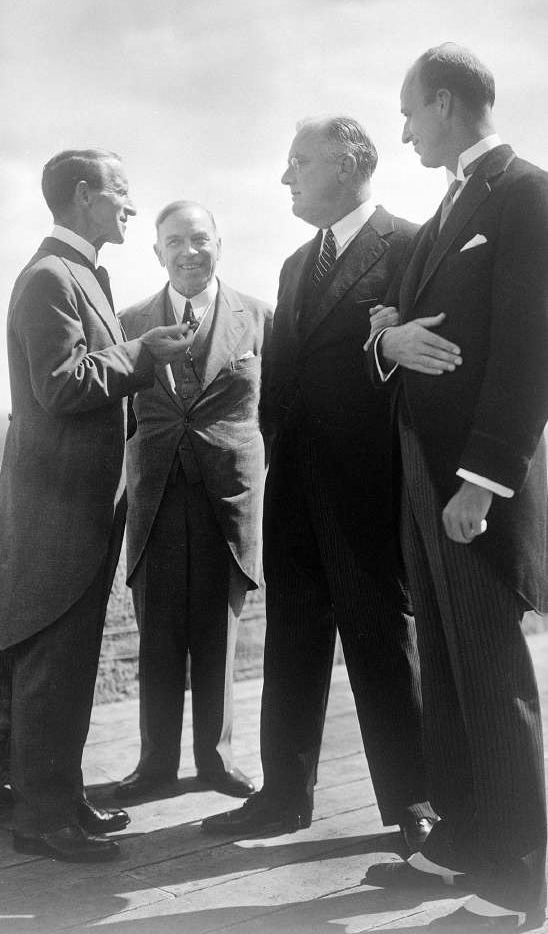 Gov. Gen. Lord Tweedsmuir (left) speaking with U.S. President Franklin D. Roosevelt (supported by his son James, right), with Prime Minister Mackenzie King looking on — July 1936, Quebec City. LAC PA164243.John Buchan became a bridge between Britain and North America. He developed a strong relationship with U.S. President Franklin Delano Roosevelt. Due to isolationist sentiment in the U.S., it was easier for Roosevelt to deal with Tweedsmuir than with Britain directly.
In their first two years in Canada, the Tweedsmuirs travelled extensively. During a major train journey through western Canada in 1936, Lady Tweedsmuir asked people along the way what she could do for them. They requested books. Susan initiated and personally managed what became known as the Lady Tweedsmuir Prairie Library Scheme. Books, 40,000 of them, were collected and sorted at Rideau Hall and delivered to the Prairies, all funded through private foundations.
In 1937 they travelled to the Maritimes. In the same year Lord Tweedsmuir travelled along Alexander Mackenzie’s path down the Mackenzie River to Aklavik at the river delta, then flew to Great Bear Lake and on to Kugluktuk, called Coppermine at that time. These travels gave Canadians a better perspective of their own land. As well, it provided inspiration for Buchan to write further books. Also, through his travels, Tweedsmuir provided new visions for government action. After discussions with Canadian literary groups, Lord Tweedsmuir established the Governor General Literary Awards in 1936. Tweedsmuir’s incredible memory particularly impresses Bill Galbraith. Because of Buchan’s remarkable memory, he could speak to almost any group or profession. This helped to make him a man of the people.
On the morning of February 6, 1940 while preparing for another full day, Tweedsmuir suffered a stroke. Treatment by Dr. Wilder Penfield could not save him. Tweedsmuir died on February 11, 1940.
The outpouring of grief, gratitude, and admiration was enormous. John Buchan felt himself to be Canadian. He was known and loved across the country. He was a model Governor General.
Bytown Museum’s Roots with the Historical Society of Ottawa
Richard CollinsThe guest speaker for the first HSO meeting of 2020 is familiar to many who have a love of Ottawa’s past. As the executive director of the Bytown Museum, Robin Etherington has been an enthusiastic promoter of culture and heritage in Ottawa for over 20 years. Robin has been the executive director of Bytown Museum since 2012.
The Bytown Museum is located in the oldest building in the city. Of course, the museum wasn’t built as a museum. The stone structure was initially a “commissariat” and its construction was supervised by none other than Lieutenant-Colonel John By.
Built as early as 1826 and located near the entrance lock of the Rideau Canal, today’s Bytown Museum initially served as the operational nerve centre during construction of the canal (the Commissariat Department of the British military oversaw the supply of food and provisions) and then as the administrative headquarters of the canal once it opened in May 1832.
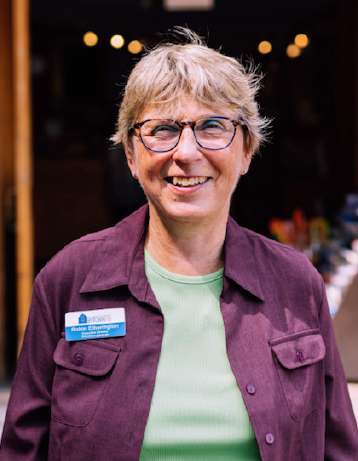 Robin EtheringtonRobin noted that By was more than just a canal builder. He was as much an urban planner. He laid out the early streets of Lowertown and also what is now the Parliamentary Precinct. She also noted that By purchased land in Ottawa to reassure others that a thriving community would soon grow here.
After talking about the early days of the museum building, Robin discussed the formation of the organization that ran the Bytown Museum for 105 years. In 1898, thirty-one Ottawa ladies formed the Women’s Canadian Historical Society of Ottawa (WCHSO) to promote a better understanding of the city’s history.
The society was limited at the time to holding community meetings, but in 1917 an opportunity arose to expand the society’s scope. In 1910, the City of Ottawa had moved out of the registry office on Nicholas Street that it had occupied since 1871.
After the building was left vacant for seven years, the WCHSO proposed to establish a museum there to display artifacts that the ladies had collected over the years, with their own money.
In 1952, the Bytown Museum moved to its present location. In 1955, the men of Ottawa were invited to join the WCHSO. With the “W” now redundant, the name of the organization was changed in 1956 to the now-familiar Historical Society of Ottawa (HSO).
HSO continued to manage the museum and to hold regular meetings for members and the public until 2003, when the decision was made to transfer the Bytown Museum to a separate not-for-profit organization.
It was at this time that HSO “lost” its museum, but the association between HSO and Bytown Museum has remained strong. As such, Robin was less a “guest” speaker at our Jan. 15 meeting than she is friend, supporter and member of HSO.
Following her review of the history of the museum, Robin talked about something that is near and dear to her: the museum’s future. It’s not all good news. Being part of the Parliamentary Precinct’s independent, and rapidly aging power supply system, blackouts have become an all-too-frequent occurrence. Rockslides are a constant threat, as natural geological dynamics take a slow toll on Parliament Hill, which overlooks the museum.
Located near the bottom of a hill so steep that the lay of land forced Colonel By to build eight locks, universal accessibility to the museum has been an ongoing problem. And let’s not forget that the museum building itself will reach the beginning of its third century in 2026.
But there is a lot of good news, too. Robin observed that, “today is tomorrow’s history” and that was inspiration for Bytown Museum’s most recent exhibit, 100 Years of Youth in Ottawa.
This is a collection of photographs of young Ottawans from 1917 to 2017, showing how the many activities that youth have engaged in through the years have changed . . . and how many remain the same. All photos for the exhibit were selected and researched by the museum’s Youth Council.
New for 2020 is an exhibit entitled A Local Canvas: Paintings from the Bytown Museum Collection, in which the museum curates an eclectic assortment of paintings from an equally curious list of collectors and artists. The items chosen for the display were selected during the museum’s continuing project to capture digital images of its collection.
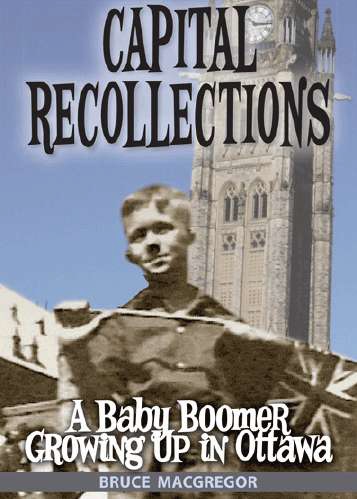 Burnstown Publishing.The last word for the evening went to Bruce MacGregor, who is author of Capital Recollections: A Baby Boomer Growing Up in Ottawa. Bruce has been a resident of Ottawa since 1952.
He taught English at Glebe Collegiate for 30 years. Capital Recollections is his first work of non-fiction. Bruce read an excerpt from his new book about a not-yet famous Canadian who happened to be at a local arena in 1963.
You’ll have to buy the book to find out who. It’s available for $20 via burnstownpublishing.com.
Then & Now
Quick Links
About
Supporting Partners