

Working to preserve Ottawa's past
for future generations.
The speaker for the HSO presentation on February 12, 2020, not only brought to our event a more culturally diverse crowd than usual, but also a younger crowd. Rawlson King has recently become an inspiration not only for young Ottawans, but also to Ottawans of any culture who feel marginalized and who look up to people like Rawlson to provide a voice for their concerns and hopes in the city.
Rawlson was elected as Ottawa’s first black councillor in a 2019 municipal by-election in Ward 13.
The successful campaign for councillor propelled Rawlson into one of the most challenging jobs in the City of Ottawa. Rideau-Rockcliffe Ward, which wraps around the former City of Vanier, includes some of Ottawa’s richest people (in Rockcliffe Park), but is also home to some of Ottawa’s poorest, as well (in Overbrook).
Rawlson made it clear in his presentation that he wants to represent all Ottawans in his ward fairly, but how does one navigate a course of reconciliation in a ward with such divergent paths?
It is fitting that Rawlson had the opportunity to speak to us in February, which is Black History Month in Canada. History is important, Rawlson noted, because it helps marginalized people “go forward, guided by the past.”
As Canadians, we look to the past and see our nation as a safe haven for freed or escaped slaves from the U.S., but in the earliest days of Upper Canada, slave owners arriving as Loyalists at the end of the American Revolution could continue to own slaves 25 and older until each slave’s death.
Those under 25 became free at 25, but with no social network in place to provide jobs and education. Slavery was ended across the British Empire in 1834, but freedom from servitude didn’t necessarily mean freedom of opportunity. Even into the 1930s, the Ku Klux Klan thrived in many Canadian communities, using fear to diminish Canadians of black heritage.
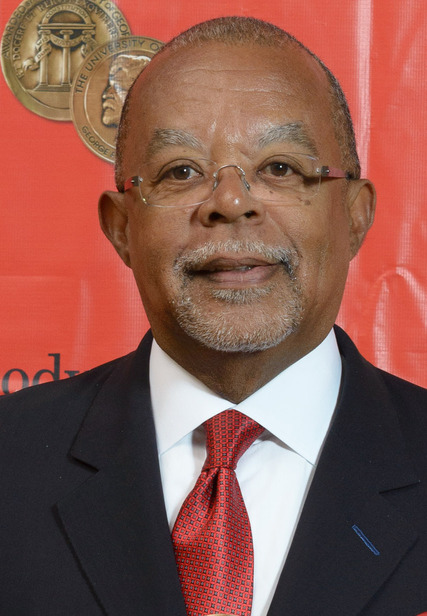 King counts U.S. writer Henry Louis Gates as a key influence.Today we call this same intimidation “erasure”, and Rawlson said he wants to do what he can to erase erasure. To this end, Coun. King read from a book, Talkin’ That Talk, by Henry Louis Gates Jr., which inspired him to join a local residents group, and later to run for the position of school board trustee. The proposed closure of a school in his ward, made up mostly of minority cultures and with one of the lowest graduation rates in the city, encouraged Rawlson to help define a “coherent poverty reduction strategy to help marginalized people gain access to public services and affordable housing.”
Rawlson spent a few moments to tell us of his own family’s history. Rawlson’s mom had to work hard to earn a scholarship to pay her way through teacher’s college in Saint Vincent and the Grenadines, where black people faced difficulties entering the workforce.
Both his parents were trained as teachers, but neither could find work in a Canadian school. Rawlson’s mom had to take a job in a paint factory in North York when she came to Canada.
Canada’s cautious acceptance of African and Caribbean peoples has helped define Rawlson as an opponent of erasure in our society today. He feels that young Canadians of minority cultures can oppose it through “economic inclusion”. Ottawa’s city council must do its part, he said, through “policies that focus on human potential.”
Rawlson didn’t get a chance to answer all the questions posed to him after the talk. But he assured those who didn’t get time, that he can always be contacted through his city e-mail address.
Thank you to Rawlson for a most enlightening and positive presentation, and thanks also to fellow councillor Tim Tierney of Ward 11, Beacon Hill-Cyrville, who introduced the evening’s guest speaker. The event drew other prominent members of the region’s black community, including Hull-Aylmer Liberal MP Greg Fergus, Black History Ottawa president Jean Girvan and Tom Barber, descendant of one of Ottawa’s first black residents, the renowned horse trainer Paul Barber.
Additional Info
- Year 1864
- Date September 9
Additional Info
- Year 1870
- Date September 6
At the Historical Society of Ottawa November 2019 afternoon meeting, Joanna Dean, a Carleton University history professor, described to listeners the Trouble With Trees. While being a lover of trees, Joanna acknowledged that trees sometimes do cause the city and its residents problems.
William Saunders, the first director of the Experimental Farm was instrumental in promoting elm trees. Many were planted on King Edward Avenue and Clemow Avenue. However, in 1903, 1922, and 1932 reports, city engineers described problems that trees were causing to infrastructure. They heaved sidewalks, grew into the sewers, and tangled with a “multiplicity of poles carrying wires for telephone, telegraph, electric light, electric railway, and fire alarm services.” Various city utility companies took turns butchering the trees. It is estimated that 4,000 trees were removed between 1921 and 1945.
A shift came in the 1960s when Dutch elm disease came to Ottawa. It devastated these tall, stately trees. The dead elms had to be removed. The streets looked barren and empty. A city-wide planting campaign was put in place, 2600 trees were planted in 1961, compared to 24 trees planted in 1944.
The white birch is another popular city tree. During construction of the Parliament Buildings in the 1860s, the bluffs along the river were a handy dumping place for refuse and rubble. To make the bluffs accessible to the public a walkway, named Lover’s Walk, was built in the late 1800s that wound along the sides of the hill. The walk became a major tourist attraction. White birches were planted in the early 1900s. Birches are a pretty tree but are susceptible to disease and didn’t do well. People pulled bark off, the canopy was thin, the roots were exposed, and caterpillars were identified. The trees were struggling. In the end the walk was closed. The birches died out.
Lombardy poplars were planted in the Glebe, bordering Central Park. They are fast growers, up to six feet in a year, and a great shade tree. So fast and so shady that they caused consternation with the neighbours. Some of whom complained to the Federal District Commission, now the NCC, for years. A few were cut down to limit the complaints. Trees cause trouble. Political trouble.
Crab apple trees were planted as the 1967 Centennial tree, a declared war on ugliness, a Made in Canada solution. They were and are a very pretty tree. But they are so susceptible to disease that even Trevor Cole who managed the arboretum in the Central Experimental Farm singles them out as trees that should not be planted.
Bur oaks are native to Canada and to the Ottawa area. Champlain described them when he came up the Ottawa River. The Deschênes Rapids are named after them. They can live up to 300 years. When one that is a mere 150 years old was approved by the city to be removed in Champlain Park to make room for a house expansion it impacted the neighbourhood. It was taken down. Joanna obtained a cookie from the trunk and counted the rings. It was 158 years old.
From the human perspective, trees cause problems. We need to remember that from the trees perspective they are simply pursuing their own agenda.
Construction of the Rideau Canal began early in the year 1827. Taking only four years to construct, it opened for navigation in the spring of 1832.
About 150 years later, Hunter McGill arrived in Ottawa to attend Carleton University, located near Hartwell’s Locks. Since the 1980s he has been a member of the Friends of the Rideau. Hunter talked about the history of the Canal, how it has operated since its opening, and some of his views on the Rideau Canal today.
The British Colonial Administration of Canada was very concerned, during and in the immediate after-math of the war of 1812, about the vulnerability of the blockading, by the United States forces, of the communications route via the St. Lawrence River from Montreal to Kingston.
In 1820, Lord Dalhousie was appointed Governor of British North America. The Duke of Wellington thought a canal was a good idea. With this high-level backing, Dalhousie, as a preliminary step, began to acquire land in key locations.
Dalhousie chose Entrance Valley, the present site between the Château Laurier and Parliament Hill, for the canal headlocks.
A retired Royal Engineer officer, Lt.-Col. John By, was reactivated and hired by the British Army Ordinance department to be Superintendent of the Rideau Canal. He was an excellent choice.
He recommended that the lock size plan be increased to accommodate steam-powered vessels that were just coming into use.
The definitive approval for the building of the Rideau Canal was given in September of 1826. Work, began early in 1827.
The work was hard and the tools modest, such as picks, shovels, draft animals, simple rigs to lift and postion the stones for the lock chamber walls. Diseases such as typhoid, malaria, typhus and poor nutrition were prevalent.
The opening of the entire canal for navigation took place in the spring of 1832. Of the completed 202 kilometres length of the Rideau Canal, 19 kilometres are constructed canal. The remainder is through natural waterways. Final cost was 822,000 pounds, about $150 million Canadian in today’s dollars.
By the time the canal was completed the military needs were not pressing. It was more needed as a commercial enterprise. The canal made movement of settlers into the region much easier.
With the completion of canals on the Ottawa River in 1834, transportation links were opened to Montreal. During the 19th century the Rideau waterway was used to transport minerals from iron, phosphate, and mica mines in the Rideau Lakes area to smelters and other users.
In the 20th century, as commercial navigation ebbed due to improved roads and railway lines, a recreational fishing and tourism industry developed.
It took engineering genius to construct the Canal, in four years, in the sparsely populated region of Canada using simple tools and facing dis-ease and other great challenges.
Hunter says we are not doing a good job of telling Canadians and visitors about the Rideau Canal. The designation of the Rideau Canal, in 2007, as a UNESCO World Heritage Site was only the second canal in the world to be so recognized. This helped to raise the profile of the canal, but it has not been matched by any of the three levels of government involved, he argued.
Hunter stated that the biggest threat to the historic character of the Rideau Canal is putting heritage landscapes at risk, thus making commemorative integrity an ongoing issue. Both private sector and public sector investments and infrastructure often do not adequately take into account the need to respect key settings.
Hunter McGill spoke at the HSO meeting October 30, 2019.
Although COVID-19 continues to prevent us from getting together in person, your Society is getting back in action—virtually!
After a successful, virtual, Annual General Meeting held in July, Ben Weiss has organized three fantastic, virtual presentations to kick off our 2020-2021 speakers’ programme. Leading off will be Michael Kent, the curator of the Jacob M. Lowy Collection at Library and Archives Canada. Michael will be speaking to us about Ottawa’s Jewish history on September 16th. Up second on October 14th will be Jo-Anne McCutcheon from the University of Ottawa. Jo-Anne will be examining vintage Ottawa from 1870 to 1920 viewed through today’s digitized lens. Finally, but by no means least, Stephen Jarrett, Project Manager, Archeological Excavation of Parliament Hill 2019, will reveal to us Parliament Hill’s past on November 18th.
The three presentations will be held at 7:00 pm on the dates indicated using the Zoom conferencing system. While we will miss out on the comradery of our in-person get-togethers, one benefit from going virtual is that our members and friends from outside of the Ottawa area will be able to enjoy and participate in the meetings. So, come and enjoy insightful, interesting presentations on Ottawa’s rich heritage and history from the comfort and safety of your own living rooms! All are welcome.
For more details on how to register and watch the presentations, please consult “Upcoming Events.”
We do indeed live in interesting times. Normally HSO holds its Annual General Meeting in May, but with all of us putting our lives on hold, the decision was made in April to postpone the AGM until we could safely get together again. Once it became clear that a community gathering was not going to happen soon, the decision was made to invite as many members as possible to join us electronically for an Annual General Meeting on July 22, 2020. We’re aware that this is not a perfect solution, since some of our members may not have an internet connection, but at this “interesting time” we felt that an on-line AGM, via Zoom, was the best way to connect to members and get some much-needed housecleaning done.
If you’ve not heard of Zoom (I hadn’t until just a few months ago), it’s like a conference call but on your computer or tablet. Zoom allows those who have linked in to the meeting to post comments, ask questions and – most importantly for us – vote on motions.
Considering this was our first attempt at an on-line AGM, and a first-time experience for many of the 29 members who joined in, the event went smoothly. A glitch with the voting process early on was quickly resolved by having members vote through the “Chat” option. Special thank to one of our directors, Erik Foisy, for chairing the event under challenging circumstances.
Here’s an update of the AGM for those who were unable to “attend”.
James Powell ask for a motion, seconded by Randy Boswell, to approve the agenda. Lynn Payton moved to have the minutes of the 2019 AGM approved, seconded by Dylan Van Heck. (The agenda for the 2020 AGM and the minutes of the 2019 AGM had earlier been sent to members). Both motions were carried.
Then the members were asked to approve the President’s report, as well as the reports from the Membership committee, Regular Events committee, Special Events committee, Publications committee, and Communications committee. These reports were sent out to members prior to the AGM. A motion to approve these reports was made by Karen Lynn Ouellette, and seconded by Dylan Van Heck. The motion was carried.
James Powell was invited to present members with a brief explanation of our 2020 Budget, and a Special Financial Statement. Before voting to approve these, Karen Lynn made a motion (seconded by Dylan Van Heck) that monies in excess of $50,000 in the R&D fund and $10,000 in the Colonel By Fund be used to fund projects consistent with the HSO mandate. After discussion, the motion was present and carried. As a result of approval of this motion, Karen Lynn made another motion (seconded by Dorothy Phillips), that HSO develop a clear process to encourage and receive ideas from our members about how to utilize these liberated funds, reviewing the ideas based on clear criteria supporting the society’s mandate, and a clear process for decision-making. The participating members discussed this motion through Zoom’s “Chat” option. The motion was carried.
Next, a motion to approve the HSO’s 2020 Budget was made by Dylan Van Heck, and seconded by Lynn Payton. The motion was carried.
Last on the agenda was the nomination and election of directors. The slate of directors presented, alphabetically, is as follows: Dave Allston (Director at Large), Randy Boswell (Newsletter and Publications), Richard Collins (Director at Large), Erik Foisy (Treasurer), Kathy Krywicki (Secretary), George Neville (Past President), Karen Lynn Ouellette (President), Evlyn Payton (Special Events), and James Powell (Communications). Dylan Van Heck (who, as you can tell by now is an experienced Chat user and, as a result, quick to reply to motions) made the motion to accept the slate of directors as presented. I had the honour of seconding the last motion of the AGM. The motion was carried.
It took about 90 minutes to get through the meeting, but it was necessary, and those who participated generally agreed that our first “virtual AGM” was a unique experience and well worth their time.
Hope to see you all for our next AGM . . . in person.
Additional Info
- Year 1874
- Date August 21
Additional Info
- Year 1926
- Date August 16
Additional Info
- Year 1908
- Date July 8
Then & Now
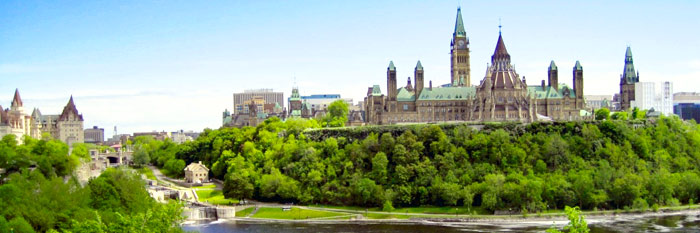
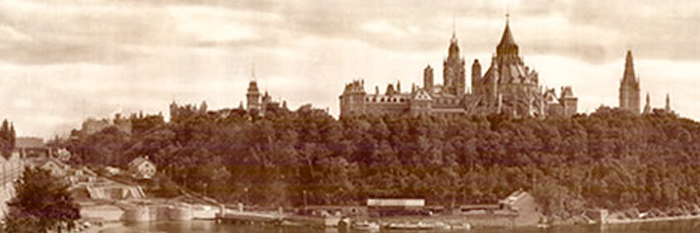
Quick Links
About
Supporting Partners