

Working to preserve Ottawa's past
for future generations.
Museum Club Starts the Season with National Holocaust Monument Tour
Zoe-Elizabeth CookOn Sunday May 31, 2026, the HSO Museum Club had the privilege of touring the National Holocaust Monument, led by members of the Centre for Holocaust Education and Scholarship (CHES), Artur Wilczynski and Alyssa Novick. The monument was inaugurated in September of 2017, after a student had proposed a monument back in 2013, and had helped to get a parliamentary bill passed to construct one.
Our tour began with an explanation of the symbolism behind the shape of the monument. The monument is made up of six triangular sections, and when viewed from above they resemble the Star of David. The above view can also be seen to represent that important symbol of Judaism being broken, with this notion being contrasted by the monument itself, showing that Judaism remained together. The triangles in the design also represent the different triangular configurations that the Nazis used to identify different prisoners based on why they were in the camps. As we descended into the centre area of the monument, the noise from the traffic nearby faded away and we learnt that this was by design. The monument has high and thick concrete walls and a sloping entrance that is meant to symbolize the isolation of the victims of the Holocaust. On one of the walls in the centre area there are panels of information that provide historical context for the monument, such as what the Holocaust was, the growth of the Second World War, the mass murders that took place, and Canada’s role in all of this.
The centre and side areas also contain six images each embedded into their own wall, of different Holocaust sites as they look today. The images were photographed by Canadian photographer Edward Burtynsky who had taken over 150 photos that had been narrowed down to these six. There is no specific order to view these photographs in, and each has an explanation written on a plaque next to it. The monument does not have much writing in it (aside from the panels of historical context) as it can be paired with the IWalk app which contains in depth explanations of the images and Holocaust Survivor testimonies which add a human, personal element to the monument.
The first image is of the abandoned rail tracks leading to Treblinka which had been a labour camp, with Treblinka II, a death camp just a few kilometres south of it. The second image is of the Okopowa Street Jewish cemetery in Warsaw. This was a hiding place used by Jews to escape the deportation to the Treblinka death camp in the summer of 1942. The next image is of a prayer room from a Czech town called Terezin that served as a ghetto. This prayer room, decorated with Hebrew texts, was created by Rabbi Artur (Asher) Berlinger, a German-Jewish artist, imprisoned in the camp, risking severe punishment if caught. Another image shown is of Track 17 in Berlin which was the track that most of the German Jews coming from Berlin were deported on. The track now has steel plaques on it with information about those who were deported. Next to the image is a photograph of Auschwitz-Birkenau which was the largest concentration camp. The last image is one next to the plaques of information which is of the site of the Death March in Mauthausen, Austria. Near the end of the war, the Nazis forced tens of thousands of prisoners to walk for days without food or water, and those who survived ended up at Mauthausen.
Moving away from the centre area, we were led to the room with the Flame of Remembrance, which is a space for reflection and memory. The flame is in the Jewish tradition and is called “Ner Tamid” (Hebrew for eternal light), and it has also been associated with God’s eternal presence.
The last section of the monument is a set of stairs (or elevator) leading up to an upper viewing area that looks out at the Peace Tower on Parliament Hill. This path out of the isolated area symbolizes the journey made by 40,000 Jewish people at the end of the war who came to Canada and eventually found peace here.
A big thank you to Artur Wilczynski and Alyssa Novick for leading the tour and to Ana Cristina Villegas for helping to organize the event! The National Holocaust Monument is open to the public for free every day from 7am to 9pm.
On the evening of Thursday, May 14, 2026, the staff at the Beechwood Cemetery launched a new book on their history. Attending were the two authors, Erika Wagner and Nicolas McCarthy, the current and former Beechwood management and staff, and a large crowd, all who had gathered in the Sacred Space at the cemetery for the formal part of the launch.
Erika Wagner acted as the emcee for the evening, introducing key project members and thanking the audience for their attendance. She went on to explain the somewhat long and involved process that has now produced this fabulous book. She spoke with great excitement and obvious joy regarding her own part in the project, relating a number of incidents along the way, including “help” from her cat, when she had all of the proof pages spread out across her floor. She thanked all who had participated in the research, selection of materials, proofreading, photography and production of what is truly a beautiful piece.
Nicolas McCarthy then spent about fifteen minutes talking about Beechwood Cemetery from its origins in 1873, as a replacement for the Sandy Hill Cemetery, (Macdonald Gardens Park), which had been in use, but faced closure due to the pressure of the expanding community. The Catholic internees of the Sandy Hill cemetery were reinterred at the Notre Dame cemetery, while all others went to Beechwood. The decision was made to make Beechwood a public rather than a religiously affiliated cemetery, thus as each new community found its home in Ottawa, Beechwood welcomed them, created a space for them where their own traditions and expressions of faith would be honoured and respected. Nick went on to speak of the role of Beechwood as Canada’s National cemetery, with dedicated areas for the Armed Forces, the RCMP and CSIS. Finally, he discussed the role of the cemetery and how Beechwood is today looked to by other cemeteries as the example of how to bring the cemetery back into the community.
A reception and book signing followed.
The book itself, The Journey of Beechwood Cemetery: Canada's Legacy Written in Stone , is a large format hardcover volume of 196 pages. It is available in French as L’Épopée du cimetière Beechwood : L’héritage du Canada gravé dans la pierre . It is beautifully illustrated throughout with black & white and colour photos appearing on almost every page. The book tells the history of our city and our country through the lives of both the famous and the forgotten. A joy to read, it can be ordered through the Beechwood website, Foundation Products Archives - Beechwood Ottawa , for pick up at the cemetery or for home delivery.
Back in rough and tumble 1840s Bytown, what was there for a man looking to improve his lot in life -- as opposed to spending his days hanging out in Bytown's abundant taverns?
Bytown’s first “Mechanics’ Institute” was established on January 28, 1847.
One might assume that a "Mechanics' Institute" was somewhere you might go to get your buggy serviced -- but you would be incorrect.
Mechanics’ Institutes, tracing their roots to 1820s Scotland, in fact, were set up to offer weekly lectures and reading room resources to the common man -- established on the novel premise that the working classes were entitled to as much respect as any other class and that their education should be promoted equally with others.
James Powell takes us back to the beginnings of the Bytown Mechanics’ Institute and its intersecting history with similar organizations such as l’Institut Canadien-Francais d’Ottawa:
todayinottawashistory.wordpress.com/2025/11/08/bytown-mechanics-institute/
Follow this link for more of James Powell’s contributions to the HSO Bytown200 Bicentennial Story Collection, as James shares stories of the Rideau Canal, the Shiners’ War, the Stony Monday Riot, The ByWard Market and more:
www.historicalsocietyottawa.ca/resources/bytown-200/james-powell-today-in-ottawa-s-history-428
James is the author of the blog Today in Ottawa's History giving a day-by-day account of local history.
You can read more about the Bytown Mechanics' Institute in our Bytown Pamphlet #39: The Bytown Mechanics' Institute: Improving the Mind of the Working Class
On April 25, 2026, the Society hosted the third presentation of its Bytown200 series. It followed a February presentation by Dr. Lynn Gehl on the past, present and future of the Anishinaabeg Algonquin of the Ottawa Valley, and one in March by Allison Margot Smith who gave a screening of her documentary on the Rideau Canal. Presented by Society member James Powell, the third and final part of the Bytown200 trilogy focused on Bytown itself. Despite stiff competition from two hockey games that afternoon with both the Ottawa Senators and the Ottawa Charge in action, close to 100 people attended James’s presentation at the Ottawa Public Library.
James started by looking at the men who were instrumental in Bytown’s early development, starting with Lord Dalhousie, Canada’s Governor General, who with great foresight bought 400 acres of land in 1821 at would become the entrance of the Rideau Canal in anticipation of a sizeable town developing there. James then talked about Colonel By who was given the task of planning the new town that took his name along with constructing the Rideau Canal. Attention then shifted to Nicholas Sparks, who owned much of the land that was to become downtown Ottawa. Sparks became extremely wealthy when the Rideau Canal cut through his property. And let’s not forget Philemon Wright, the founder of Hull, Quebec, Thomas Mackay, the father of New Edinburgh, and Louis-Théodore Besserer, the father of Sandy Hill.
James then gave a fascinating overview of life in Bytown. With a population of about 2,000 in 1840, the small community was divided in two parts--Upper Town which was mostly well-to-do, English and Protestant and Lower Town which was mostly poor, French or Irish and Catholic. The two communities, separately by about a half mile, were linked by one road and one bridge over the Rideau Canal. Regardless of where one lived, however, Bytown was “unsafe, dirty, smelly, unsanitary and unhealthy.”
Ethnic rivalries, often fuelled by alcohol, spilled over into the streets. Irish loggers called Shiners fought their French counterparts for control of the timberlands. Shiner atrocities led one Catholic priest to say Il n’y a pas de Dieu à Bytown. Without running water, sanitary sewers, garbage collection or paved streets, life in Bytown was harsh and unpleasant. Roads were often muddy and covered with horse manure. People donned wooden pattens (overshoes) to protect their boots. But one thing that they could not protect themselves from was disease. Cholera, typhoid, typhus, smallpox, diphtheria, measles, and scarlet fever ran rampant through the town. A measure of health care was brought to the town in 1847 by Élisabeth Bruyère, mother superior of Bytown Sisters of Charity, who founded the first civilian hospital aided by Dr. Van Cortlandt.
Still, there were opportunities for fun and education. In addition to boozing in the town’s many bars and taverns, Bytown citizens enjoyed cricket and lacrosse. Plays were produced at Her Majesty’s Theatre on Wellington Street. Two newspapers, the Bytown Gazette and The Packet, the forerunner of The Citizen, provided windows to the world outside of Bytown. Two literary groups—the Bytown Mechanic’s Institute and Atheneum and L’Institut canadien français d’Ottawa—gave learned lectures and for a fee provided Bytown residents access to circulating libraries.
James also talked about the fraught political scene in Canada at that time with people divided between Tories and Reformers. When rioting Tories burnt down the Parliament building in Montreal in 1849, incensed by Lord Elgin, the Governor General, signing into law the Rebellion Losses Act, Bytown’s was back in the running to become the capital of Canada. But Bytown too was divided between Tories and Reformers. Just months after Parliament was torched in Montreal, fighting between the two groups broke out on the streets of Bytown. Stones were thrown and shots fired in the Stony Monday Riot in the Byward Market during a public meeting to discuss an invitation to Lord Elgin to check out Bytown as a potential future capital. One man died. Two days later, armed Reformers and Tories squared off close to the canal. Separated only by a group of British soldiers, calmer heads fortunately prevailed and the two groups peacefully dispersed. Civil war was averted. The Packet newspaper wrote: Can it be true? Can such a scene have occurred in the middle of the 19 th century in enlightened Canada?
Four years later, the political environment had mellowed, and Lord Elgin finally journeyed to Bytown where he was warmly greeted by Joseph-Balsora Turgeon, Bytown’s first Francophone mayor. Both Tories and Reformers, eager to make a good impression, wined and dined the governor general during his stay in Bytown and his trip up the Ottawa River. The political storm had passed.
Bytown became Ottawa in 1855, a name viewed as more fitting for a town aspiring to be the new capital of Canada. After years of sterile debate and failed votes in the legislature, the Canadian government asked Queen Victoria in 1857 to settle the debate over the location of the new capital. Ottawa won, beating outrivals Toronto, Quebec and Kingston. Following more months of political wrangling, Parliament finally ratified the Queen’s choice in 1859, but the vote was close. Had three MPs voted differently, ratification would have failed.
After the presentation concluded, there was a lively question and answer period covering such topics as John LeBreton’s land speculation, reasons why Queen Victoria selected Ottawa as the capital, schools in Bytown, and the occupations of people who lived in Upper Bytown.
For those unable to attend (or were watching the hockey games!), the presentation was recorded.
This series of paintings was undertaken by Ruth Hall-McMillan in 1976 to commemorate the 150th anniversary of the start of construction of on the Rideau Canal by Colonel John By in 1826. The paintings depict scenes along the canal from Ottawa to Kingston during the years 1850 to 1895.
Ruth Hall-McMillan, a lifetime member of the Historical Society of Ottawa, was a local artist and writer whose work bridged the gap between fine art and historical preservation. She passed away in 2025 at the age of 93.
The Ruthven (Ruth) F. McMillan Rideau Canal Series, gifted by her family in honor of their mother, Ruth, and her father, R.H. “Bill” Hall, former Curator of the Bytown Museum.
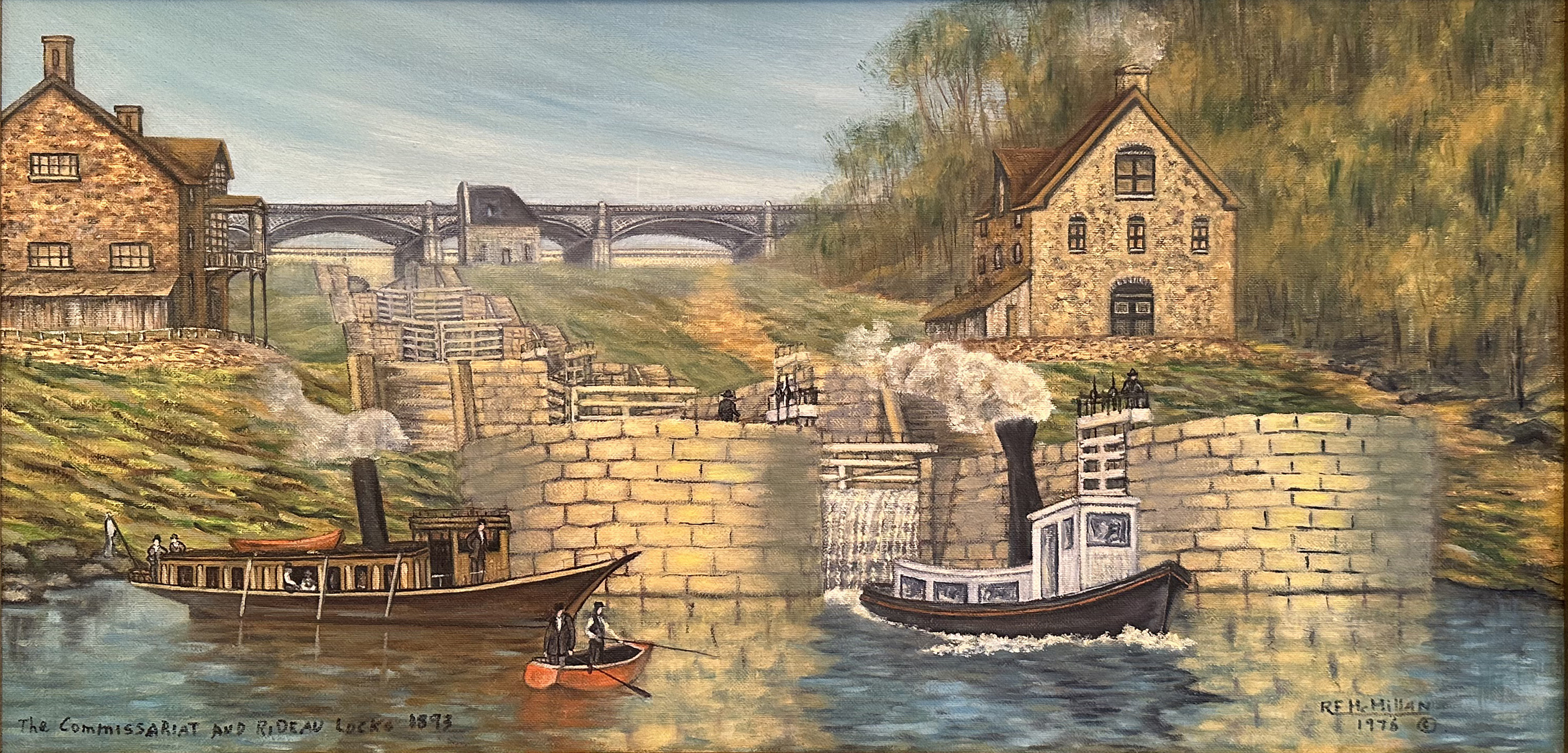 RF McMillan Rideau Lock
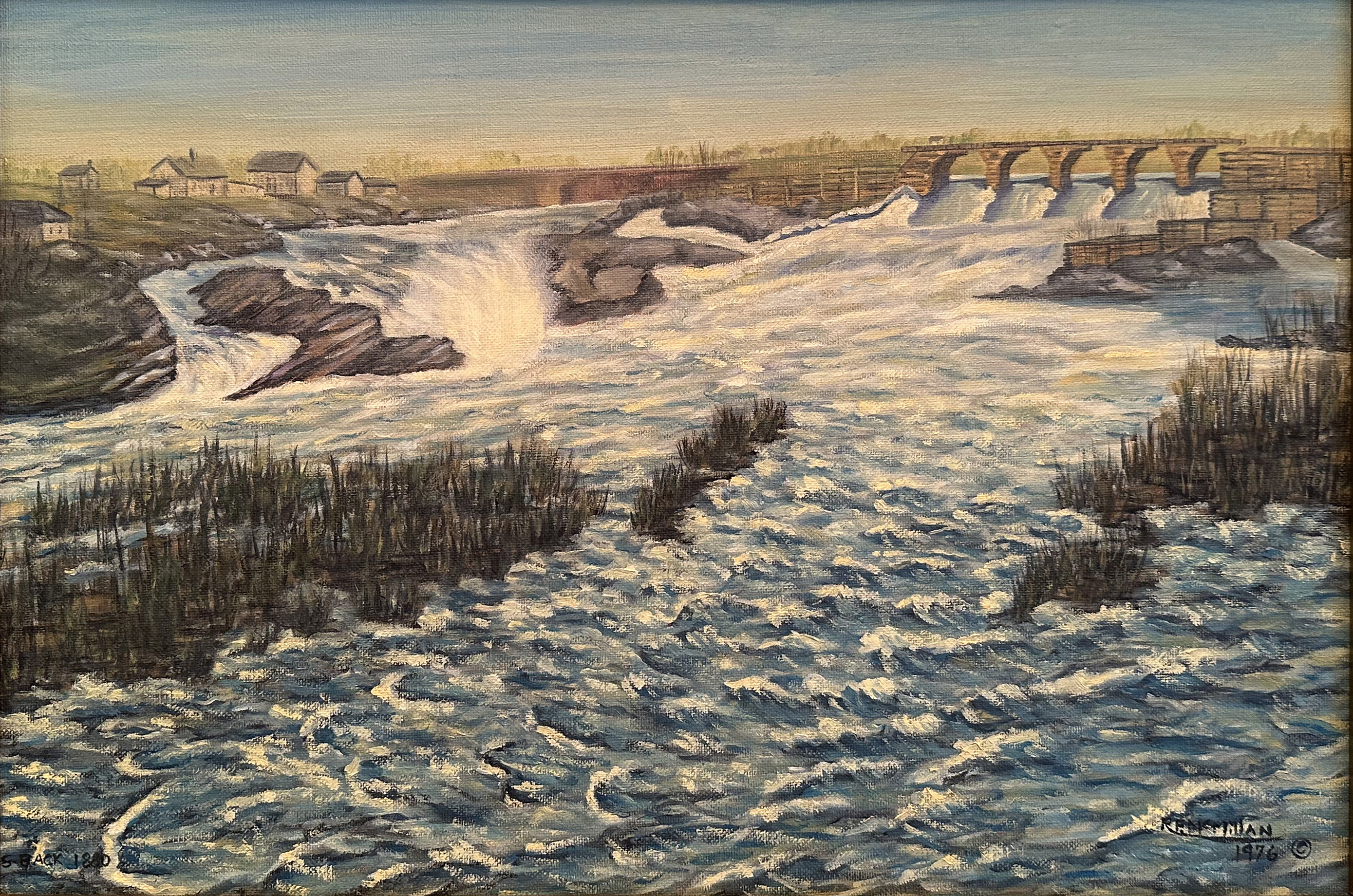 RF McMillan Hogsback
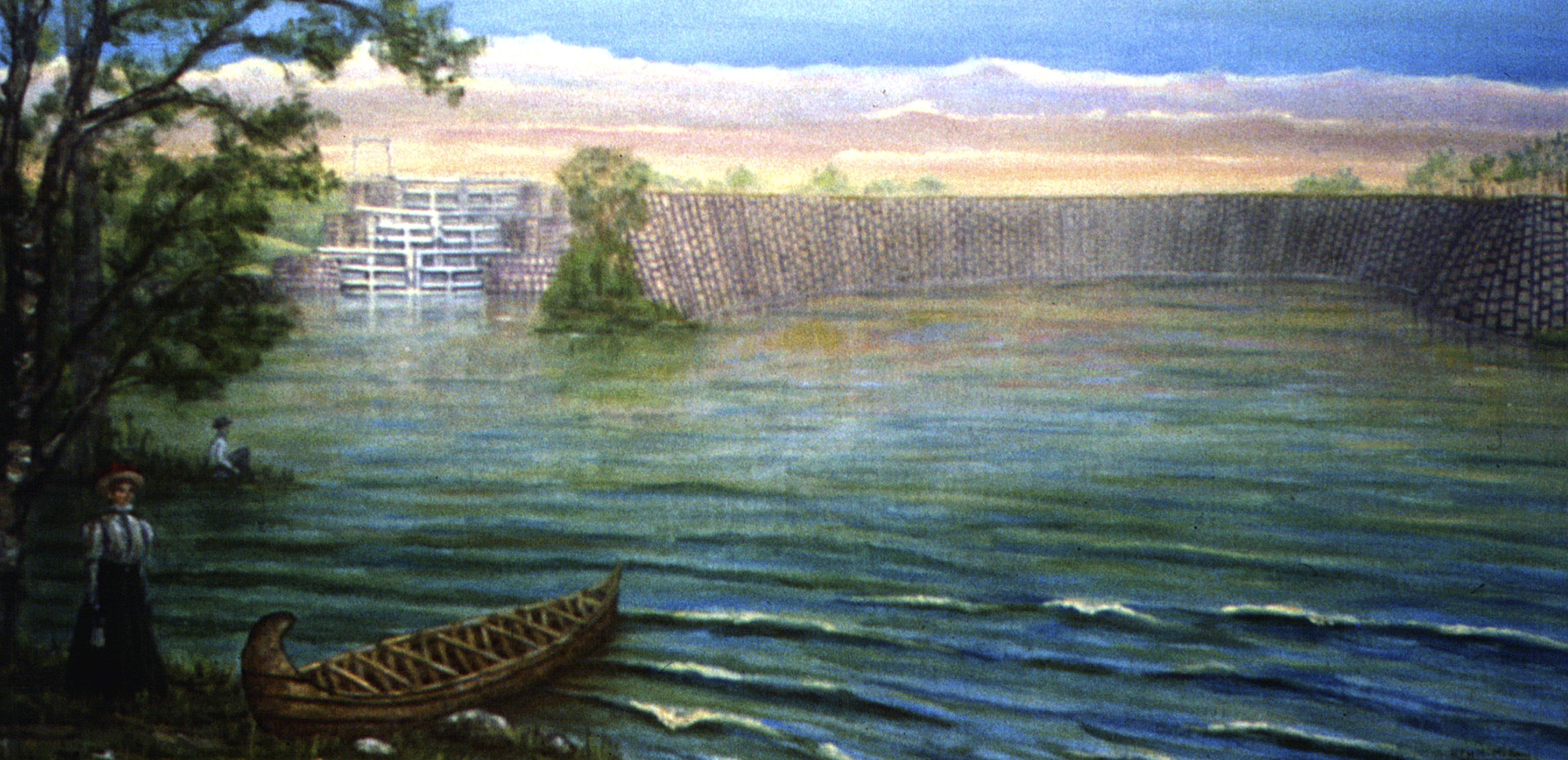 RF McMillan Long Island
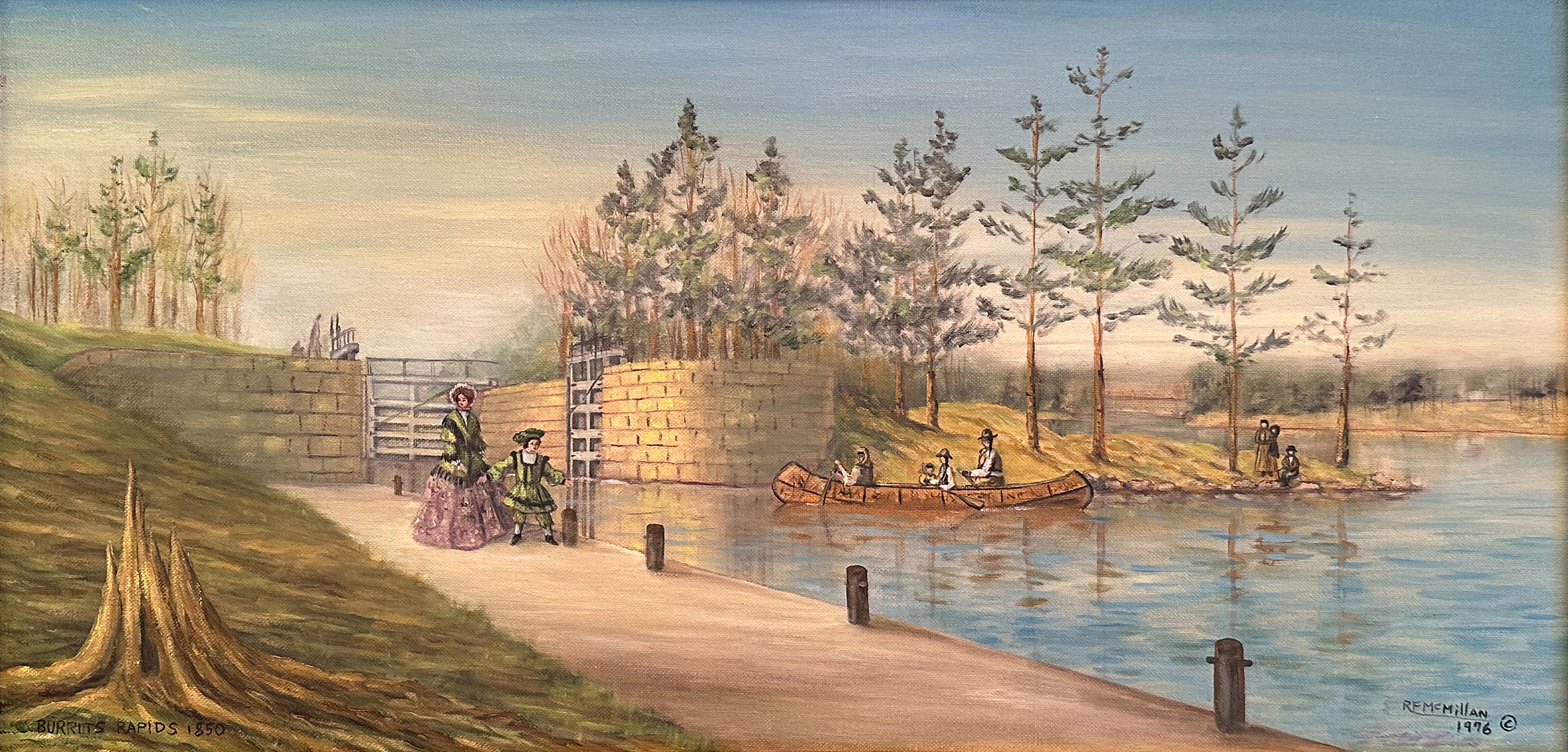 RF McMillan Burrit's Rapids
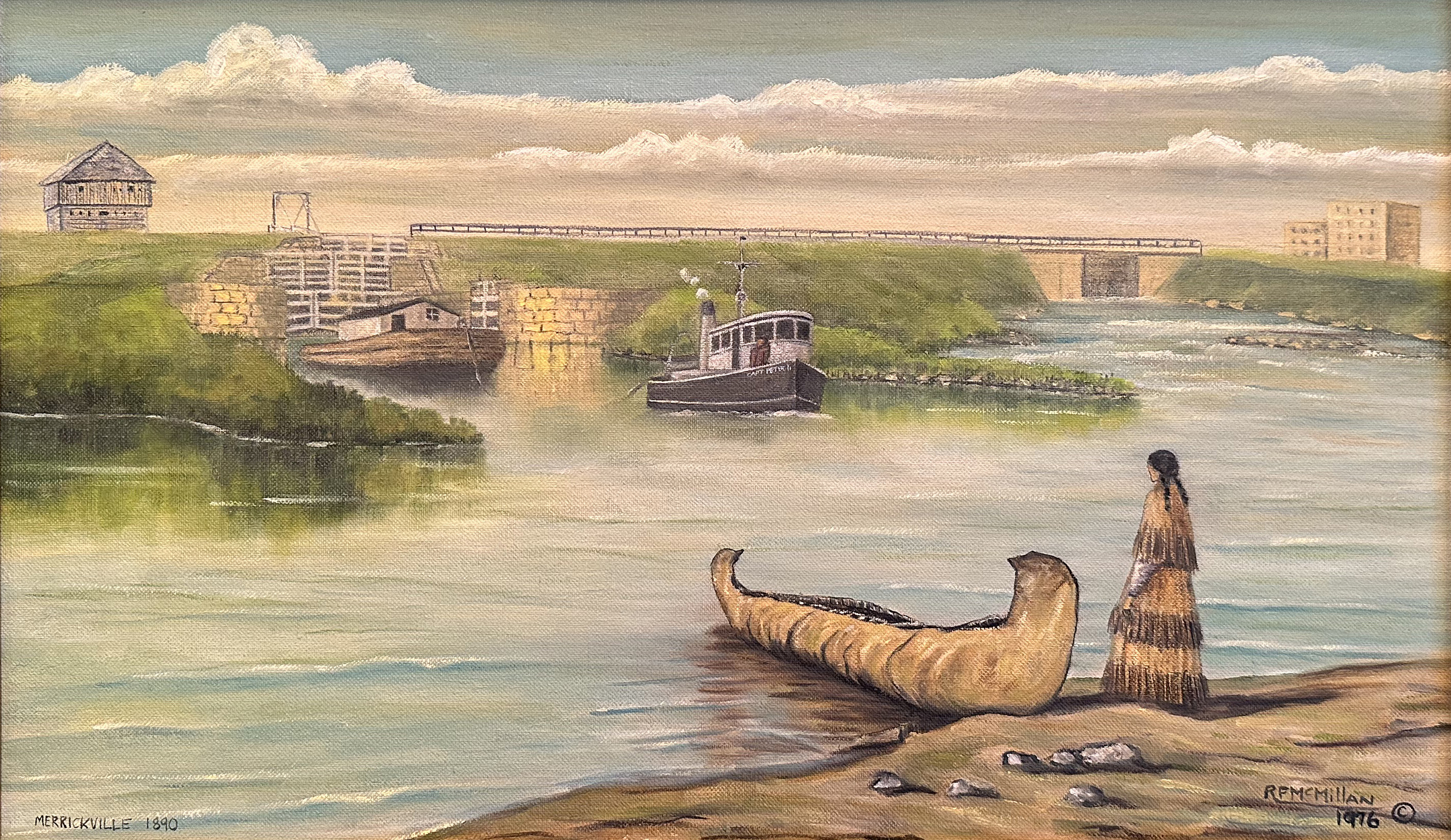 RF McMillan Merrickville
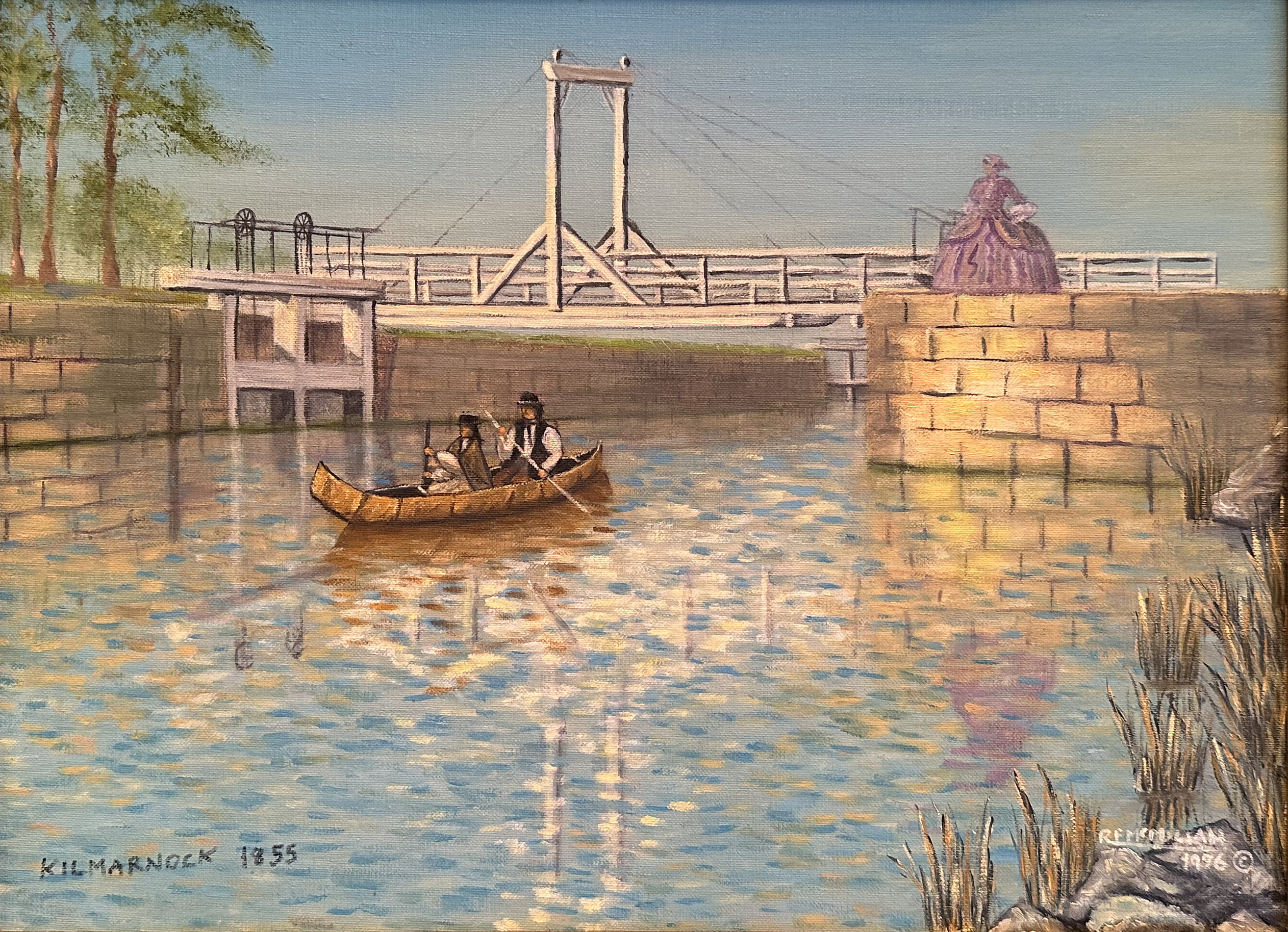 RF McMillan Kilmarnock
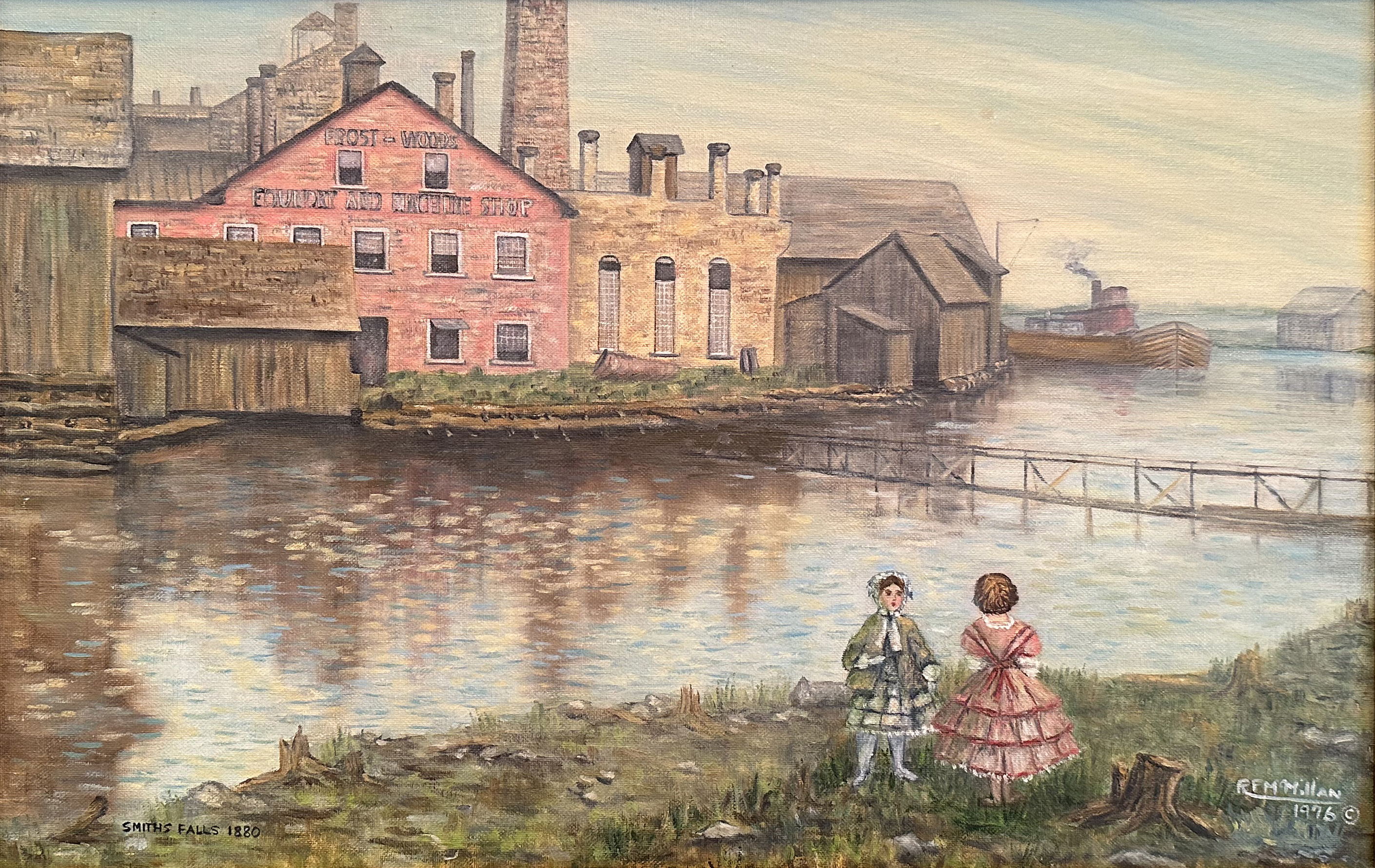 RF McMillan Smith Falls
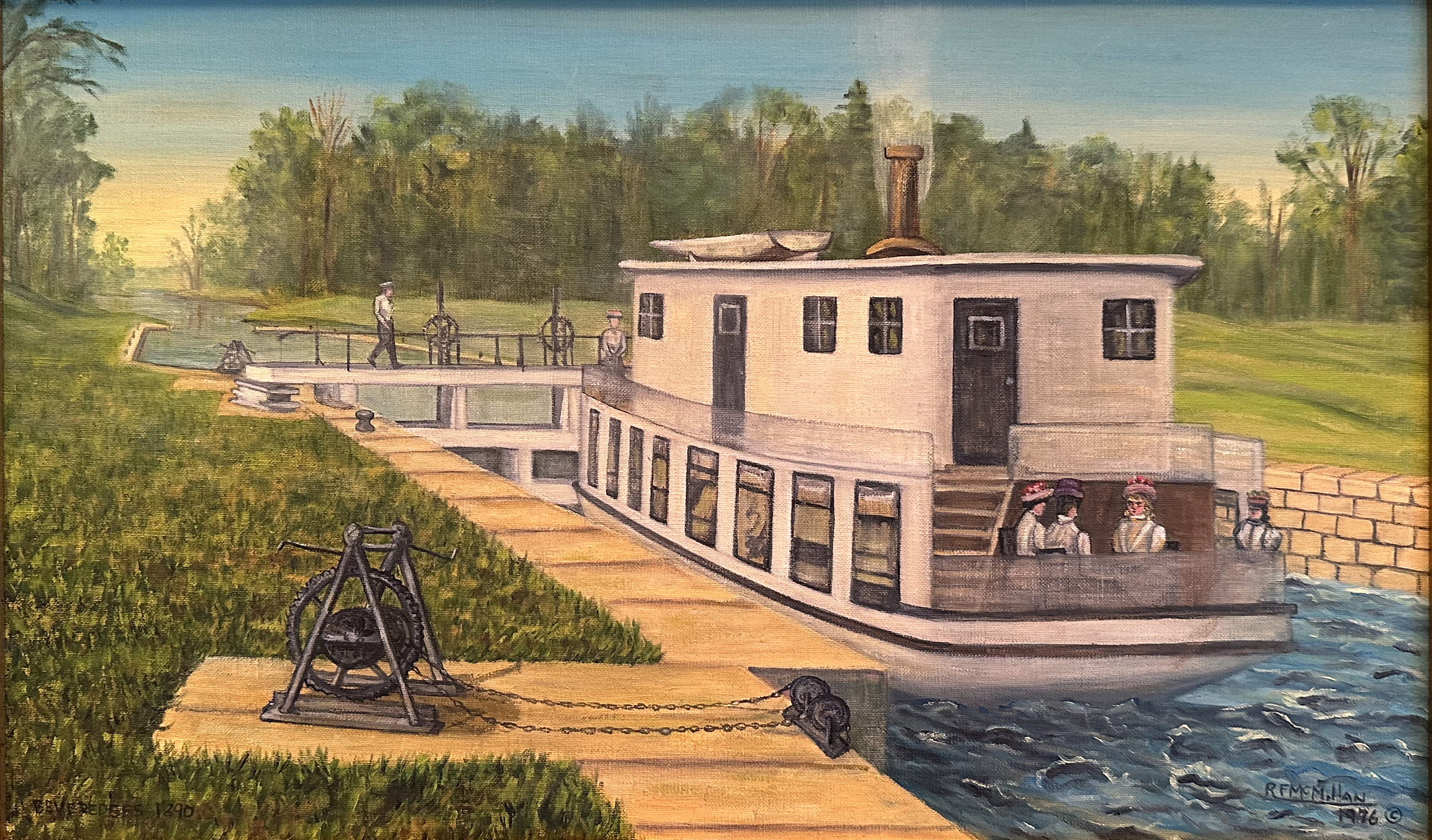 RF McMillan Beveridge
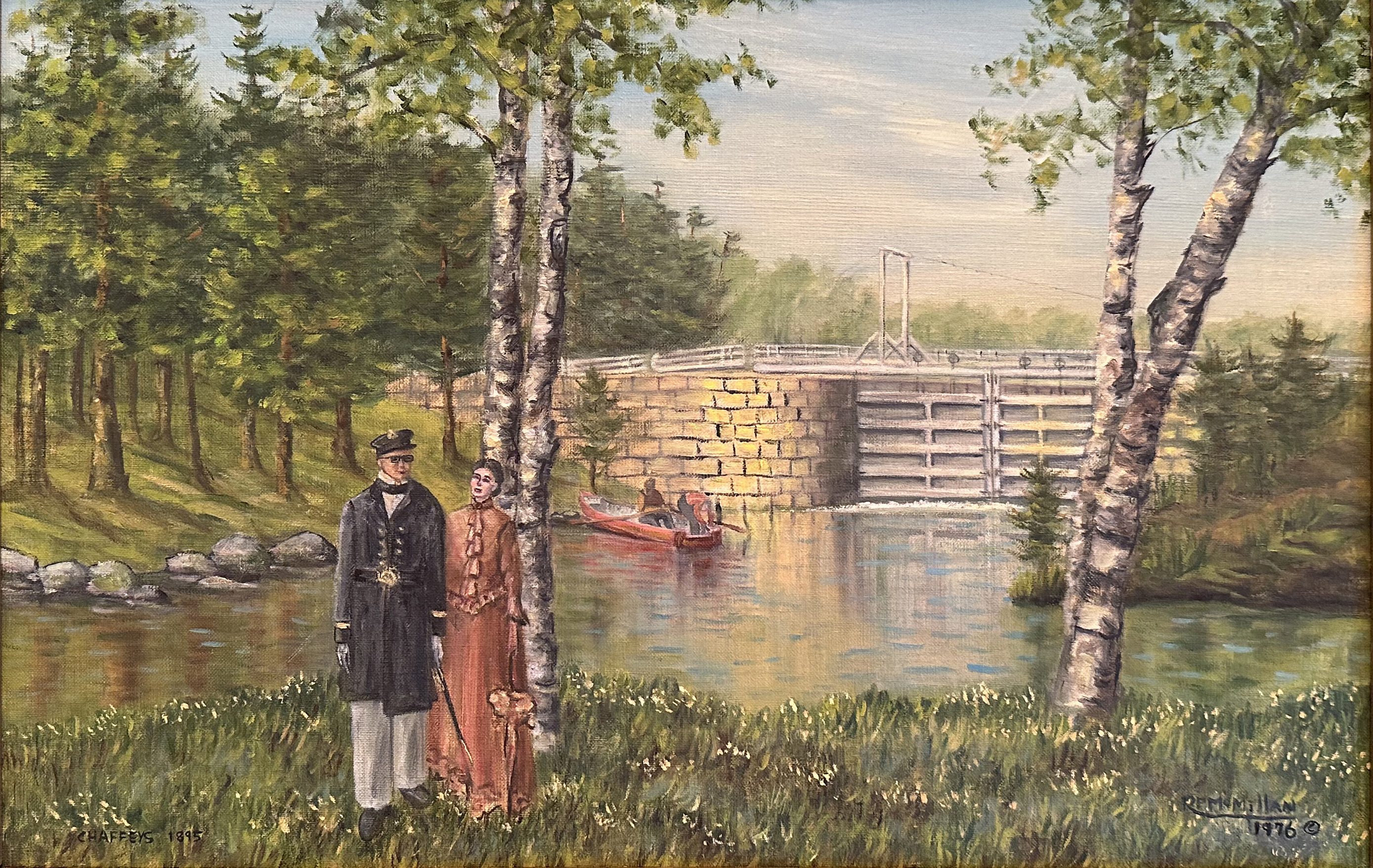 RF McMillan Chaffey's
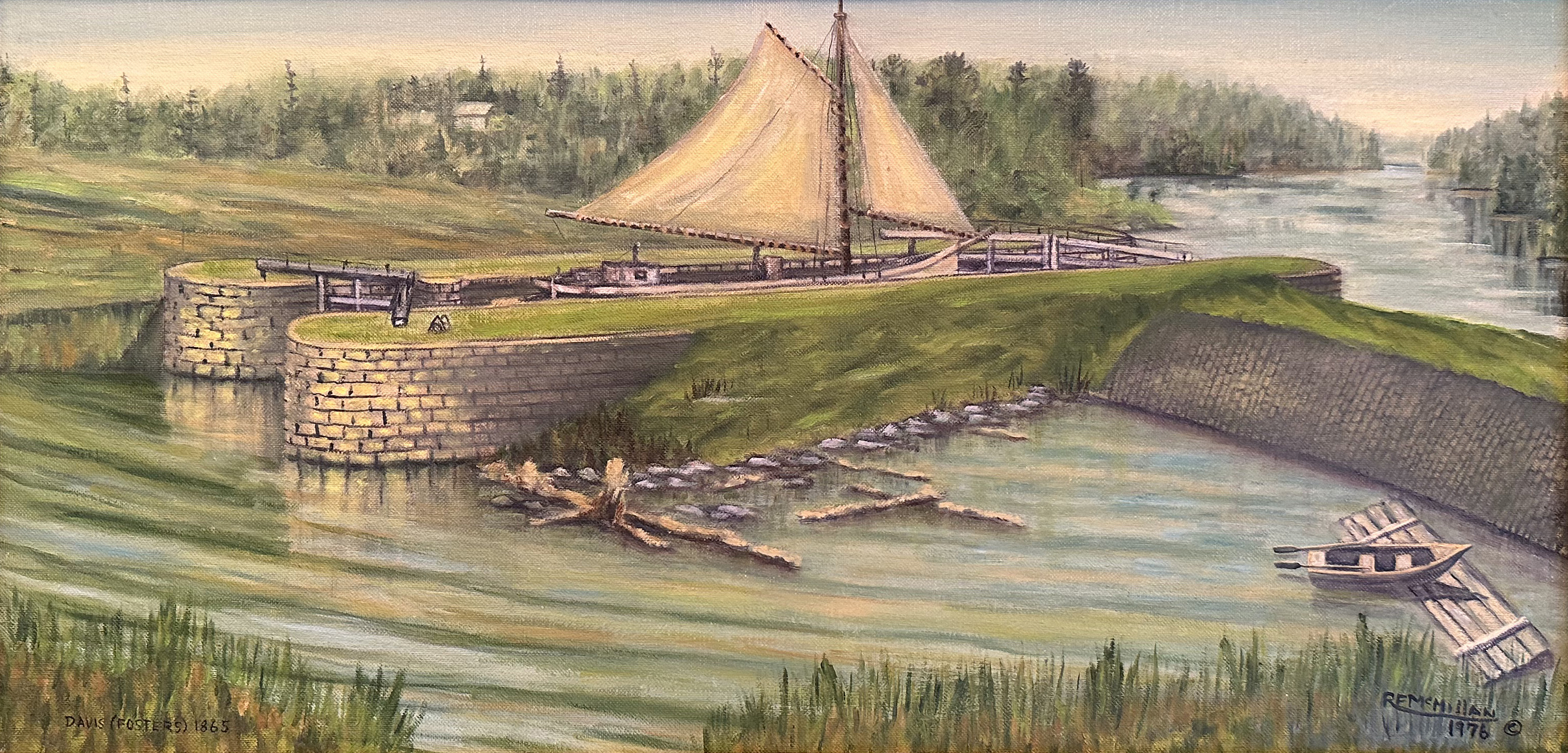 RF McMillan Davis
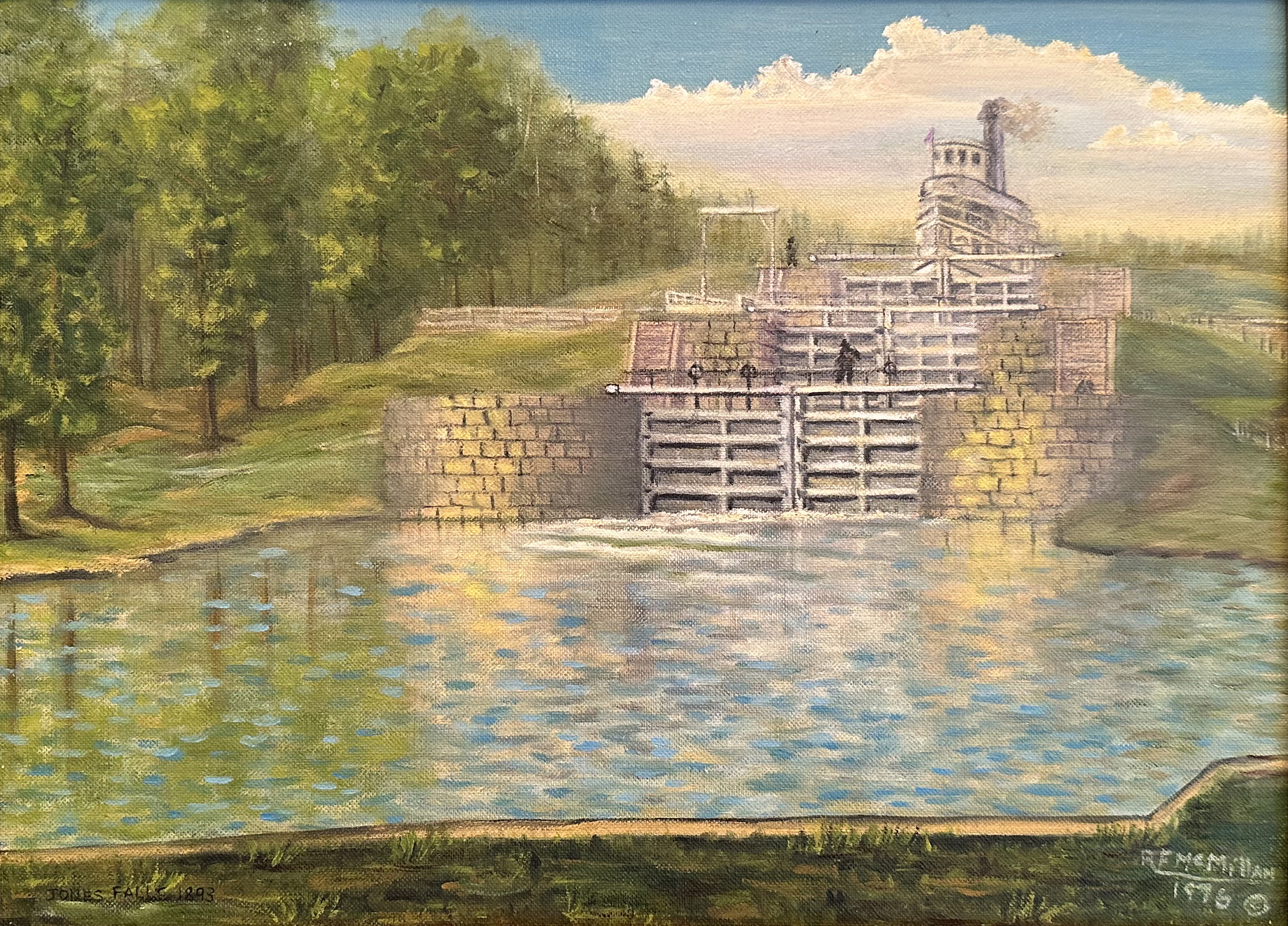 RF McMillan Jones Falls
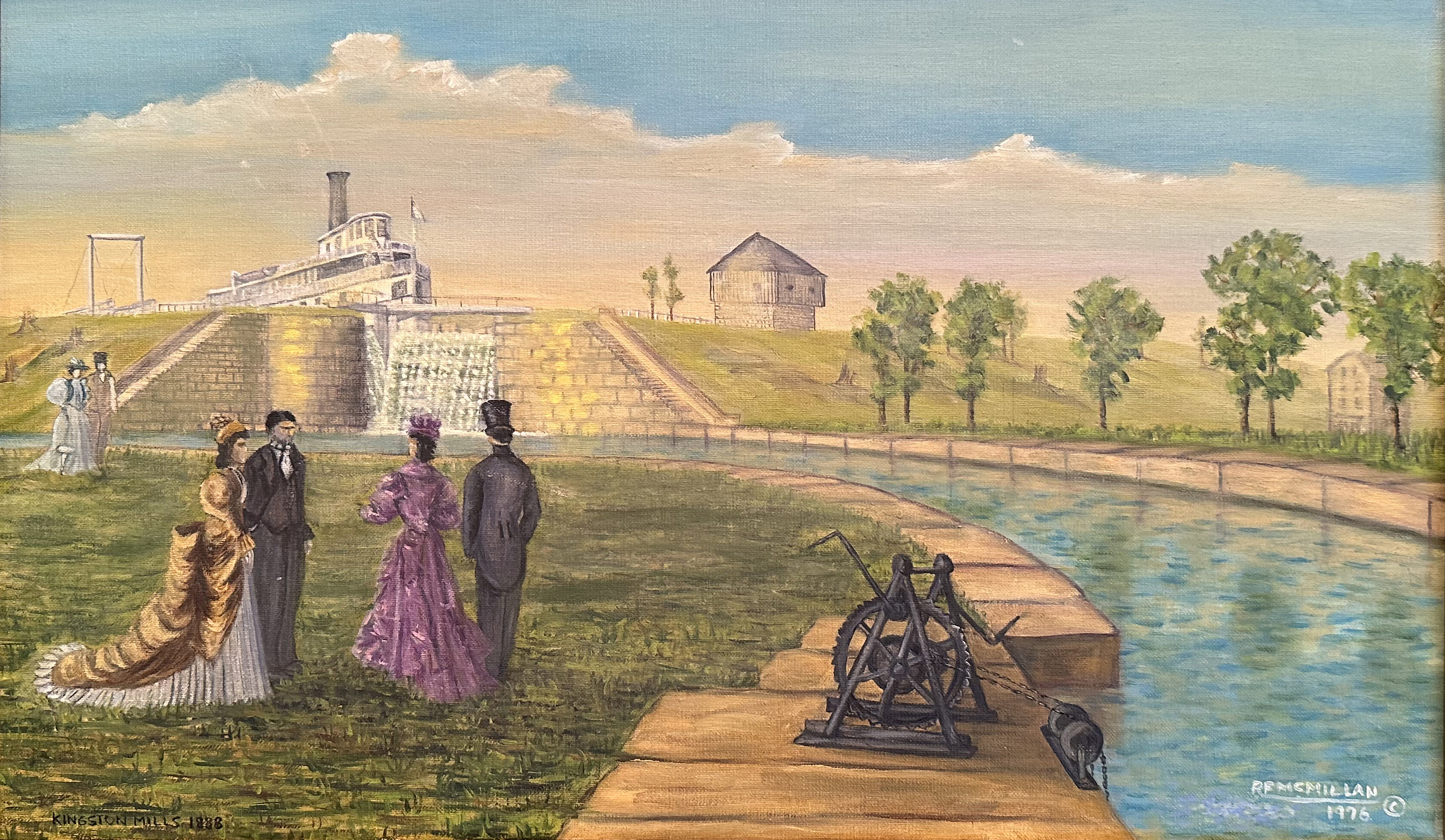 RF McMillan Kingston Mills
Ruth Hall-McMillan’s immense contributions to the Historical Society of Ottawa spanned four decades. Ruth passed away on December 8 2025, at the age of 93.
Inspired by Ottawa’s 150th anniversary in 1976, with the encouragement of HSO, Ruth produced a magnificent series of oil paintings, a collection called “The Rideau Canal Before 1900”. These works, featured in a solo exhibition at Ottawa City Hall, represented a meticulously researched visual record of the canal’s 19th century history.
In 1991, the HSO was honoured to publish a pamphlet by the same name, written by Ruth with narratives accompanying black & white reproductions of each of these wonderful oil paintings. (See Bytown pamphlet #37: The Rideau Canal Before 1900)
With the support of Ruth’s family, we are honoured to offer this digital exhibit of these paintings: Ruth Hall-McMillan - The Rideau Canal before 1900
Ruth’s late father, Bill Hall, had been Curator of the Bytown Museum during the long era when that was all still under the wing of the Historical Society of Ottawa.
Ruth, a lifetime member of the Historical Society of Ottawa, was a prolific painter whose work bridged the gap between fine art and historical preservation. Ruth had studied at Montreal’s Museum of Fine Arts under the tutelage of Group of Seven member Arthur Lismer and later graduated from the Famous Artists’ School in Westport, Connecticut.
A series of 27 oil paintings Ruth created for Canada’s Centennial year, in 1967, remain on display in the public library in Thorold, Ontario.
In addition, is the enduring legacy of Ruth’s contribution to the health and wellness community. Despite her own struggles with MS, Ruth was determined to give back. Upon learning from her neurologist that a support system was needed for those with Parkinson’s, she co-founded the Parkinson’s Disease Society of Ottawa-Carleton.
In 2012, Ruth was awarded the Queen Elizabeth II Diamond Jubilee Medal in recognition for her 35 years’ service to the Parkinson’s community.
Our deepest condolences to Ruth’s family, and thank you Ruth for your life’s legacy and work.
First settled in the early 1830s during the construction of the Rideau Canal, the bustling village of Long Island would, by the mid-1800s, boast multiple streets, churches, general stores and hotels — and its own post office.
Once located near today’s Long Island Locks, Andrew King was perplexed to find nothing now remaining but grassy empty fields and the crumbling ruin of an old farmhouse, and no surviving signs of the once thriving community.
Curious as to how all traces of this “ghost village” north of present-day Manotick could simply disappear, Andrew proceeded to try to track down clues of “The Vanished Village of Long Island”:
ottawarewind.com/2017/11/19/the-vanished-village-of-long-island/
Andrew King is an Ottawa artist and historian and author of the Ottawa Rewind blog.
There was perhaps no greater proponent for construction of the Rideau Canal than Lord Dalhousie, Governor-in-Chief of British North America.
As part of the HSO 2026 Bytown200 Bicentennial Storytelling Challenge, Alastair Sweeny recounts the contributions of Lord (and Lady) Dalhousie to the establishment of the Rideau Canal and Bytown.
Alastair Sweeny, PhD is the author of several books on Canadian history and technology, including George-Étienne Cartier: A Biography, BlackBerry Planet, and Fire Along the Frontier: Great Battles of the War of 1812 and Thomas Mackay: The Laird of Rideau Hall and the Founding of Ottawa.
Dr. Sweeny is based in Ottawa and is a member of the Historical Society of Ottawa.
Read the essay here: Lord Dalhousie
On Saturday March 28, 2026, Allison Margot Smith gave a film-screening of her recent film “Two Wars, Three Watersheds, a Slew of Surveys and a Canal.” The film describes the history of the Rideau Canal, and in particular, the planning of the route of the canal, starting in the 1780s.
The reasons for building the canal changed over time, as did ideas for the route. So, it took more than fifty years to arrive at a plan for the canal. Even the geography of the land mass to be transited by the canal changed due to human activity in this relatively wild country. But by 1826, 200 years ago, a route had been chosen and budget had been allocated by British Parliament. Lieutenant-Colonel John By was sent to start work on this mammoth project, and his encampment – called Bytown – was established, launching what is now our city.
Following her film, Allison gave a short talk on the imagery used to create her film, including the challenges of sourcing archival imagery for historical documentary films. She discussed how archival imagery and archival film footage can, in some cases, act as a kind of citation, offering proof that the assertions in a film reflect the realities of the past. This is important in a historical documentary film, since films, unlike academic papers, don't have traditional citations. And while archival images may be imperfect citations, even traditional citations may not be perfect proof of an assertion.
Allison also talked about questions, raised recently, about the potential inability to trust documentary films, with the emergence of Artificial Intelligence and AI-generated films. Her talk addressed the intent and legitimacy of AI in film-making, and she suggested that these new technologies may not be so different from traditional photography or historical art composition, depending on the intent. Finally, she touched on the use of archival cartoons as a way of illustrating and providing a "citation" for historical social commentary.
One of the perks of being a member of the Historical Society of Ottawa is that we occasionally receive an invitation to a fundraising event for an important heritage cause, to enjoy a delicious meal and some cultural entertainment.
A banquet hosted by the Vietnamese Canadian Centre was held at the Sala San Marco Event Centre on March 28, 2026, to raise funds for the Vietnamese Boat People Museum, to be built at the northeast corner of Preston and Somerset Streets.
The Historical Society of Ottawa has had a special relationship with the Vietnamese Canadian Centre (VCC) since June 2021 when we invited Mike Molloy and Robert Shalka, authors of Running on Empty: Canada and the Indochinese Refugees, 1975-1980, to speak to HSO members about their efforts to rescue people fleeing on small boats from the former South Vietnam, and of Canada’s role in finding new homes for refugees. About 4,000 of these found a renewed life in Ottawa. The highlight of the HSO online presentation that evening was Rivaux Lay; a Cambodian refugee who was a social worker, translator and teacher’s aide at one of the refugee camps in Thailand where Vietnamese evacuees stayed before finding new homes in Australia, France, Germany, Netherlands, UK, USA and, of course Canada.
Guests for the evening included other financial supporters of the proposed museum, including many local businesses in Ottawa’s Chinatown district, Somerset West Community Health Centre and the Dalhousie Community Association. The evening featured music and dance performances by Ngọc Huyền, Thủy Hương, Hồng Nhung, Đào Nguyên, Vũ Mạnh Tuấn, Kim Thoa, Tuấn Hoà, Nghiêm Trần, Carmelle Cachero, the Ottawa community group singers, violinist Kevin Chaves and also the visual art of Anh Thư Nguyên.
Jason Kenney, former Alberta premier and former Canadian minister of Citizenship and Immigration, thanked all attendees and talked of the willingness of Canadians to come to the aid of “boat people”. Kenney spoke especially of the unrelenting efforts of Can Lê – chair of the Vietnamese Boat People Museum – for all that he has done for a decade, and will continue to do, to complete the cultural centre. He came to Canada 13 years before the refugee crisis, and took up the challenge of finding homes and jobs for many of Ottawa’s 4,000.
Dr. Can Lê expressed appreciation to 15 members of the Vietnamese community, including well-known retired immigration officers such as Ian Hamilton and Mike Molloy, as well as representatives of Project 4000 (established by former mayor Marion Dewar), including Barbara Gamble, Eleanor Ryan and author of A Gift of Freedom, Brian Buckley.
This year marks the 50th anniversary of 1976 reunification of Vietnam which in turn precipitated the beginning of the exodus of refugees. In 1979 the City of Ottawa launched Project 4000 – the initiative led by Ottawa mayor Marion Dewar to take half of the 8,000 refugees Canada initially intended to accept. (The number was later raised to 50,000.) Can Lê had hoped to have the museum open in time for this anniversary but a pandemic, a failed legal challenge against his leadership role with the VCC, and a heart attack slowed progress. But fundraising efforts continue, and this evening’s event confirms that there is much support out there.
The museum, with the additional support of the Free Vietnamese Canadian Community of Ottawa, will have permanent exhibits on the challenges of survival for Vietnamese refugees, their successful search for freedom, and the eventual reception they received worldwide. Other exhibitions will showcase contributions made by Vietnamese residents to the countries where they resettled. The museum will also reserve space for revolving exhibitions by Vietnamese artists.
If you'd like to make a contribution to support the future museum, donations can be made by cheque payable to the Vietnamese Community Centre (Memo: Museum Project) and send to Vietnamese Canadian Centre, P.O. Box 62042, Convent Glen, Ottawa, ON, K1C 7H8.
Quick Links
About
Supporting Partners