

Working to preserve Ottawa's past
for future generations.
The weather on that evening, Sunday, December 27th 1942 was miserable. The Ottawa Valley was hit with a mix of snow, sleet, and freezing rain as the local 550 train made its way from Petawawa toward Ottawa. Mist rising from the rivers and the blackout, necessitated by the war added to the darkness.
By contrast, it was a beautiful Saturday afternoon, February 22nd, 2025 when almost 60 of us gathered at the Main Branch of the Ottawa Public Library to hear Jamie Bramburger relate the tragic story of the wreck of train 550 at Almonte on the night of December 27th, 1942. Jamie Bramburger ;was trained as a broadcast journalist and spent 14 years working as a news director, assignment editor, and news reporter in radio and television, before joining Algonquin College’s Pembroke Campus as its Manager of Community and Student Affairs. Jamie is the author of two books, Go Kings Go - A Century of Pembroke Lumber Kings Hockey, and Sudden Impact -The Almonte Train Wreck of 1942.
Jamie told us that the 550 had left Petawawa at 5:35 that afternoon, pulled by a locomotive known by its crews as the “Cantankerous Old Hog”, which had a boiler leak, further diminishing its efficiency. Being at the end of the Christmas holiday, it was pulling 10 wooden coaches, about 3 times its normal length, mainly women and families returning to their government work in Ottawa. It was a “milk run”, stopping at every station along the way for more passengers, arriving in Almonte at 8:32pm to a station crowded with well-wishers saying farewell to their own family members and guests. The sound of Christmas carols filled the night air.
A troop train with13 metal coacheshad left Chalk River shortly after the departure of 550 from Petawawa, Jamie explained, that it had been instructed to get to Ottawa as quickly as possible. Trains travelling along the same track in the same direction were protected from collision by a 20 minute block. This was a forced stop at each station by the following train to ensure that there was a 20 minute gap between the time it left and the preceding train had left. This was enforced at each station along the route that was staffed, and the procedure was followed at Renfrew and again at Arnprior. In Almonte, at 8:38, as the 550 was preparing to leave, the troop train slammed into the back of 550, totally destroying the last 2 coaches and finally coming to rest halfway into the 3rd last coach.
Jamie did his best to describe to us the horror of the scene that unfolded. Many were killed instantly, some were seriously injured, some were thrown from the train and were not found until the next day. Ultimately 38 were killed or died within a few days while over 150 others were injured. Almonte responded heroically, the townsfolk flocking to the crash site to lend assistance, driving their cars to the site to use their headlights to illuminate the wreck and surrounding area. The nearby O’Brien Theatre was turned into a casualty clearing station while the Town Hall became a temporary morgue. The small Rosamond Memorial Hospital and the town’s 3 doctors and few nurses were overwhelmed but worked without stop to treat the injured as other medical help was brought in from the surrounding towns and finally a hospital train arrived from Ottawa.
The soldiers from the troop train also swarmed to action, bringing their blankets and their first aid kits. Though there were no casualties on the troop train, 8 members of the military were killed on 550, making their way back to Ottawa.
Jamie shared with us the stories, accompanied by photos, of a number of the individuals that were involved in the crash. One story was of Jean O’Brien, who survived with serious injuries only to discover that her husband, Harold, and 2 year old son, Jackie, had perished. Another highlighted a nursing Sister, Anne Thorpe, who tore pieces from her own clothing to treat the wounded, took the hospital train back to Ottawa, then went immediately to work for her regular hospital shift. There was also the story of Thomas Lynn, who suffered a serious leg injury in the crash that prevented him from serving in the Armed Forces. He kept the ticket of his trip in his wallet for the rest of his life, unbeknownst to his family. We invite you to check out the filmed presentation to obtain the details of these and many others stories through the link toward the end of this article. Jamie pointed out that the impact of the injuries and of the lives lost lasted throughout the lifetimes of those who survived and continues, through the 80 years that have now passed. It has become an integral part of these families’ history.
Despite the scale of the tragedy, the wreckage was quickly cleared and the rail line was open again the next day. As Jamie explained, there was a war on.
Officials sought to understand the cause of the disaster and Jamie told us that there were 5 separate inquiries. One was conducted by the Canadian Pacific Railway (CPR), one by Canada’s Transportation Commission, one by the Ontario Provincial Police, one by the military and finally there was a Coroner’s Inquest. Using Freedom of Information requests, Jamie was able to obtain details of 4 of these, which included interviews with all of the crew members of both trains. No information seems to have survived from the investigation conducted by the military. The Coroner’s Inquest, held on January 7, 1943, from a jury of 5 business men from Almonte, cleared the crews of both trains of any responsibility for the accident, concluding that the CPR was responsible. Their justification being that the CPR had failed to staff the station in Pakenham and so the troop train was not held at that station to provide the mandatory 20 minute block. Canada’s Transportation Commission disagreed, finding fault with both crews. The Commission found that the troop train was travelling too fast and was not under control of its engineer, Lorne Richardson, while also citing the crew of 550 for not lighting a flare at the back of their train.
There was one more death. Jamie told us about John Howard, who was the conductor on the troop train, and so the one in charge. He had been in the caboose at the time of the crash but had worked tirelessly after. Just prior to the inquest he took his own life.
We were fortunate to be joined in the audience by a daughter of one of the survivors, who generously shared her family’s story. Her mother was thrown from the wreck and not found until the following day. Her injuries were extensive and she was not expected to live, but did so, spending a year in the hospital recovering. She was told that she would not be able to have children, but went on to have 6, and lived into her late 70s, though still suffering from the effects of the crash.
In 1978, the railway station in Almonte was torn down and has since been replaced by the Public Library. In 2012, the tracks themselves were removed. In 2002 two granite markers were erected by the North Lanark Historical Society at the corner of Mill Street and Bridge Street to commemorate the accident.
Jamie’s session was filmed by HSO volunteer Jenny Armina and can be viewed in full on the HSO YouTube channel.
An article by Jamie can be found on the Historical Society of Ottawa blog at: Sudden Impact - The Story of the 1942 Almonte Train Wreck - The Historical Society of Ottawa
We would also encourage you to try and get a copy of Jamie’s book, Sudden Impact -The Almonte Train Wreck of 1942.
Note: It was with great sadness that we learned of the passing of Jamie Bramburger, only weeks after being honoured to have Jamie as guest speaker for our February HSO Speaker Series. Our thoughts remain with Jamie's family and friends, and the Algonquin College and Ottawa Valley communities in which he played such an important role.
A message from Algonquin College: https://algonquintimes.com/college-mourns-sudden-loss-of-jamie-bramburger
We began our speaker session of March 22, 2025 at the Main Branch of the Ottawa Public Library on a somber note as Ben Weiss informed us of the unexpected death of Jamie Bramburger who had been our guest speaker just one month earlier. All of us at the Historical Society of Ottawa extend our condolences to Jamie’s family, friends and colleagues.
As March 7, 2025 marked the 225th anniversary of the arrival of Philemon Wright and his party to this area, we were pleased to welcome Rick Henderson, a direct descendant of Philemon Wright, who gave the 28 of us a brief insight into the vision, achievements and legacy of his famous ancestor. Philemon, who was born in Woburn, Massachusetts, received a land grant of more than14,000 acres from the Crown under the Leaders and Associates Program. The group he led to settle the area consisted of his own family, that of his brother and those of his two sisters-in-law. London Oxford, a free black man also accompanied Philemon, though it is unclear whether London had a family or was alone. A group of 33 axe-men / labourers and 7 slaves also came with them. By 1806, as land was distributed, there were more than 20 partners occupying nearly 4,000 acres, including a French-speaking family, that of François Loizeau. By 1821, there were over 100 partners occupying more than 10,000 acres, including dozens of francophone families.
Rick pointed out that the successful agricultural community grew to include lumbering, quarrying. mills, smiths and all manner of infrastructure. By 1826, when plans were being formalized for the construction of the Rideau Canal, it was this developed infrastructure at Wrightstown that made the project possible. Had Wrightstown not been established and a success, Rick believes that it is doubtful the canal would have been built and without the canal there would have been no Bytown to become Ottawa.
Despite the significance of the event on local history, the City of Gatineau has no plans to mark this anniversary.
There is much more to learn about Philemon Wright and Wrightstown. Please check out Rick’s blog at: Capital Chronicles
Following Rick Henderson’s well-received presentation, we were pleased to welcome Dr. Andrea McCrady, who spoke to us on the history of the Peace Tower Carillon and the five individuals who have served as the Dominion Carillonneur since 1927.
Dr. McCrady started playing the carillon in 1971 at Trinity College in Hartford, Connecticut. She then studied at carillon schools in the Netherlands, Belgium, and France. While studying music at McGill, she played the carillon at St. Joseph’s Oratory then in Toronto at the carillon at the University of Toronto and the Canadian National Exhibition. From 1990 to 2008, she coordinated the carillon program at the Cathedral of St. John the Evangelist in Spokane, Washington, where she also practiced family medicine. In 2008, Andrea received her Bachelor of Music degree from the University of Denver, retired from her family medicine practice and accepted the position of Dominion Carillonneur, there being no qualified Canadian to fill the position. Andrea became a Canadian citizen on July 1st 2017.
Andrea told us a bit about the carillon. The carillon is a musical instrument comprising at least 23 bronze bells, (a chime consisting of 8 – 22 bells). It is manually played through a keyboard with both keys and pedals. The bells are stationary, their clappers being generally of iron and hung to one side within the bell. The bells are tuned when cast and never need retuning unless damaged. Every carillon is unique, as the tower in which it is housed serves as its sound box, giving each a distinct voice.
Andrea explained that when the original Centre Block was destroyed by fire in 1916, it was planned to replace the single bell in the Victoria Tower with a set of 4 bells so it could mimic the Westminster chime. Senator George Bradbury of Manitoba proposed that a carillon be installed in the new Peace Tower as a more fitting tribute to the Canadians who had fallen during the Great War. The Peace Tower carillon is composed of 53 bells, that were cast by Gillett & Johnston in Croydon, England between 1925 and 1927, and has a range of 4 ½ octaves. The largest bell, the Bordon, weighs 10,090 kg, while its clapper weighs 229kg. The tower was built around the largest bells, which have remained in-place through the current Centre Block restoration. The carillon was first played publicly on July 1st 1927, being featured on a nation-wide radio broadcast in celebration of Canada’s 60th anniversary.
Andrea went on to give us a brief history of her four predecessors.
Percival Price was the first Dominion Carillonneur, at age 26, from 1927 to 1939, having previously been the carillonneur at the Metropolitan Church in Toronto and the first carillonneur at the Rockefeller Carillon in New York. His musical program consisted mainly of classical works and folk songs. Over his life he is credited with over 1,000 compositions and arrangements. He was a composer, teacher, carillon architect, campanologist (a person who studies bells and the art of ringing them), author, professor, lecturer, historian and one of the founders of The Guild of Carillonneurs in North America (GCNA) in Ottawa in 1936.
Robert Donnell was the carillonneur of the Cutten Memorial Carillon at St. George’s Church in Guelph before becoming the assistant to Percival Price in1936 and Dominion Carillonneur in 1940. He served with the Royal Canadian Air Force from 1942 to 1945. His programs also consisted chiefly of classical works and folk songs. He was forcibly retired in 1975 having reached the mandatory retirement age of 65. He produced over 2,000 arrangements during his lifetime, but requested that his family burn these upon his death, to which they complied.
Émilien Allard played in the Royal Canadian Air Force’s Central Band as a clarinetist from 1942 to 1945. Following the war, after additional studies and work, in 1955 he was appointed carillonneur at St. Joseph’s Oratory in Montréal and won the International Carillonneurs’ Prize in Mechelen in 1958. He became the Dominion Carillonneur in 1975, introducing French Canadian folk songs to the repertoire along with more complex works featuring the innovative use of unusual scales and rhythmic patterns. He composed 50 works for carillon, made more than 700 transcriptions, and wrote works for chamber ensembles and symphony orchestras. He died in 1976.
Gordon Slater learned to play the carillon at age seven. He had finished second in the competition that led to the appointment of Émilien Allard, so was appointed Dominion Carillonneur upon the death of his predecessor, beginning the role in 1977. Never a composer himself, he is a brilliant improvisational performer who broadened the scope of the materials played. He retired as Dominion Carillonneur in 2008 but continues to perform.
Andrea explained that apart from playing the carillon, she is actively teaching it. This initially involved a group of students from the University of Ottawa, but in 2011 she joined the Carleton University Associate Performance Faculty where she leads the Carillon Studies program. Carleton University now offers a Certificate in Carillon Studies, the only Canadian university to do so.
Andrea shared many clips of recordings during her fabulous presentation, ranging from the formal and somber Last Post to the energetic and always entertaining theme from Star Wars. She has also shared the following links with us:
- Carillon - History, Art and Architecture - Parliament of Canada
- Carillon - Histoire, art et architecture - Parlement du Canada
Though the carillon has been quiet now for the past three years, there are many recordings that can be enjoyed online and it is hoped that the Dominion Carillon will be performing again by July 1st 2027 to celebrate its 100th anniversary.
The Story of Us - The History of the Women’s Canadian Historical Society of Ottawa
Dave KentOn the evening of Wednesday, October 9, 2024, the Historical Society of Ottawa delved into its own past with an exploration of the early decades of the Women’s Canadian Historical Society of Ottawa (WCHSO) and the remarkable women who formed and ran it. We were pleased to again welcome Connie Wren-Gunn, who reprised the session she had presented at our 125th Birthday Bash in the summer of 2023. Connie is a professional historian, being the Director, Content & Interpretative Products for Know History. She holds an M.A. in History from Carleton University and is an accomplished writer and passionate researcher.
Connie explained that the women who founded the WCHSO were primarily women of privilege, from prominent local families, who were also responsible for the formation and operation of many other organizations and charities within Ottawa. Women had few rights in the late 1890s, and a number of organizations were created by women, such as the National Council of Women and the International Order of the Daughters of the Empire, which were focused on improving the position of women in society. Although a number of working women were involved in the formation of the WCHSO, they did not remain active with the organization for long. This may be due, in part, to the WCHSO holding its meetings on weekday afternoons.
Connie pointed out that the women who formed the WCHSO were trailblazers, giving women a voice they had never had before. Although some 20 Historical Societies were formed in Canada between 1869 and 1900, the WCHSO was the only one formed and managed entirely by women. It was also the first Canadian Historical Society to send a delegate to the annual meeting of the American Historical Association, Jenny Simpson, in 1909.
Connie then gave us the story of the founding of the WCHSO starting from June, 1898 when thirty-one women met at the home of Matilda Edgar, the wife of the Speaker of the House of Commons. Their goal was to promote and preserve the history of Ottawa through publications and through the collection of artifacts. This collection eventually grew into the Bytown Museum, which opened in October 1917. The WCHSO was run as a formal organization, with a constitution, bylaws, officers with assigned responsibilities, scheduled meetings and a membership fee, initially 50 cents yearly, which was not raised until the 1930s. They also published a detailed annual report, which they began after about a decade of operation. The formality of the organization was an important point, as they realized that it would be too easy for them to be perceived simply as a group of ladies, sitting around, sipping tea and chatting. They were serious in what they were doing and wanted everyone to understand it.
Connie went on to describe some of the activities undertaken by the WCHSO in their early years. These included fundraising, money always being in short supply, the creation of scrapbooks based on local news clippings, see the link below, the staging of two major exhibitions of local artifacts and the lobbying of governments for the preservation of historic sites and the creation of plaques and monuments to honour significant events, such as Confederation, and individuals, chief among these being Lieutenant-Colonel John By.
She then told us a bit about Transactions, a journal published by the WCHSO, which consisted of 10 volumes appearing between 1901 and 1928, which contained over 130 essays. Most of these papers were written by WCHSO members, and although some were based on archival documents, most were based on previously published books, or recorded the memories of local families. Much of the focus of the papers was on early life in Bytown and the Ottawa valley, reflecting the hardships faced and overcome by the early settlers.
Connie explained that in the early part of the 20th century, universities began introducing mandatory methodologies for historical research for their graduate students requiring original research based solely on written archival documents. This professionalization of history discounted the work of passionate amateurs, such as the women of the WCHSO. Perhaps in response to the growing criticism from professional historians, the WCHSO modified their content of Transactions, reducing them in size and increasing the number of articles written by men. Connie pointed out that in the volume published in 1922, seven of the ten articles were written by men. The WCHSO, perhaps as a further response, shifted its focus away from its writings to the collection and preservation of artifacts in the Bytown Museum.
In 1956 the Women’s Canadian Historical Society of Ottawa became simply the Historical Society of Ottawa.
A full recording of Connie’s session can be viewed at: The Story of Us - The (Women's Canadian) Historical Society of Ottawa Est. 1898.
Connie’s Master’s Thesis can be read in full at: Etd | The Women's Canadian Historical Society of Ottawa: Constructing Public Memory and Preserving History in a Changing City, 1898-1932 | ID: j67314577 | Hyrax
The work performed by the 4th year Digital History class of the University of Ottawa on the scrapbooks created by the WCHSO can be viewed at: Ottawa U Scrapbooking Ottawa History - The Historical Society of Ottawa
The Historical Society of Ottawa has a page on its website dedicated to the WCHSO, which can be viewed at: WCHSO - The Historical Society of Ottawa
Given that our 1st English language presentation of our 2024 / 2025 series fell on September 11, it was most appropriate that our guest that night, Peter McBride, spoke about the contrast between fire fighting in Bytown and early Ottawa, as compared to fire fighting in Ottawa today. Peter is the President of the Bytown Fire Brigade, with whom we were proud to partner for this evening’s presentation. Chief McBride is a 32 year veteran of the Ottawa Fire Department, a registered safety professional, and a passionate advocate of Fire Literacy.
Peter started us at the very beginning of mechanized fire fighting in Bytown by showing us “The Dominion”, the first hand-pumper in Bytown. It was stationed on Barrack Hill with the Royal Engineers, but, pulled by soldiers, made frequent dashes into the town to help fight fires. Its hand-pump, which required a team of 16 men, could force a stream of water up to 3 storeys in height. Miraculously, it survived and is now in the collection of the Bytown Fire Brigade, who, after much restoration, bring it to special events and demonstrate its operation.
Peter explained that in these early days, “fire fighting”, was more a matter of attempting to save as much of the contents of the structures than the successful extinguishing of a fire. There was no water system, so no hydrants. The water was carried to the scene in water carts, or, if it was lucky enough to be beside a pond or river, water could be sucked into the hand-pumper. Most of the work was still done by bucket brigade.
Fire fighting at this time was not a service, it was a business. Peter told us that the money needed to purchase equipment was put up by local businesses or raised from subscriptions. There were no dedicated buildings for the storage of the equipment. He showed us a plaque, or fire mark, that would be displayed on a building to indicate that it had paid for some degree of protection or assistance. Towns were unplanned, thus there were no regulations on the types of buildings or activities that could be located together or regulations regarding the distances between buildings. In a town built primarily of wood, fires spread quickly.
In 1838, Uppertown, the most prosperous area, bought its own hand-pumper, “The Mutual”, likely with financial support from the insurance company. Later it and the fire brigade that used it were renamed as “The Chaudière”. They were a very proficient brigade and won many firefighting championships. Their banner survived, but in a highly deteriorated condition. The Bytown Fire Brigade has recently digitally remastered the banner. The story of this can be read here: Bytown Fire Brigade celebrates a banner year
In 1847, the first Hook and Ladder Company, another hand-pulled apparatus, was paired with “The Alliance”, the hand-pumper in Lowertown. Peter explained that the rivalry and distrust that existed between Uppertown and Lowertown in all things also infected the fire brigades, causing Council, in 1851 to establish a Fire Committee and in 1853 to authorize the building of dedicated engine houses and the purchase of additional engines. In 1867, John Langford was made Ottawa’s first Fire Chief, though firefighting was still performed by the privately run brigades. He was well respected, having come through the Chaudière, as was his Deputy from Lowertown.
In 1870, J. R. Booth purchased the first steam-powered pumper in the city, but this was far from the biggest fire related story of that year. Peter told us of the Great Fire of the Ottawa Valley, started by some railway workers clearing brush between Almonte and Pakenham. Driven by gale-force winds it reached Ottawa two days later. The Council called on all its citizens to fight the blaze and it was only by blowing up of the dam near Dows Lake, that flooded the Preston Street area, and a drop in the winds, that saved the rest of the city. In 1873 another fire on Daly Street destroyed an entire block. Change was needed.
Peter described the changes in fire protection that took place in 1874. The most important of these was the formation of the Ottawa Fire Department, now celebrating its 150th anniversary. This meant paid fire fighters and the phasing out of the volunteer brigades, which disappeared by 1887. The first hose companies were also formed in Ottawa at this time. Along with this, there was the introduction of a water works system and hydrants, though these were temperamental and unreliable. Fire call boxes were also installed to provide a rapid reporting of fires.
Peter explained that, as a lumber town, Ottawa faced extraordinary risks. These erupted in 1900 with the Great Fire that started in Hull and spread to Ottawa fueled by the tremendous piles of stacked lumber. The Historical Society has a pamphlet that provides more information on this fire 009. The Great Fire of Ottawa. By 1903, much of Ottawa had been rebuilt, as had the lumber piles of J.R. Booth. Fire broke out again, consuming much of the same area of Ottawa as it had just three years earlier. More on this now almost forgotten fire can be read in this fine article When the Great fire of 1903 ravaged through Preston. Despite two devastating fires, the lumber barons continued to stack timber within the city, seeming to have an unusual amount of influence over the decisions makers at Council.
Peter recounted a story that demonstrated the cooperative nature of fire fighters in different communities. In 1915 there was a fire in the Village of Russell and a call went out for help. Ottawa’s Silsby steamer was loaded onto a train and taken to save the village. The story has since been retold in a children’s book Silsby Saves the Day.
Peter concluded his look into the past with a reference to the 1916 fire that claimed the Centre Block of the parliament Buildings, and switched his attention to a brief review of the Ottawa Fire Service as it exists today.
The Historical Society of Ottawa has a pamphlet available online that also tells part of this story. 038. The Early Days of Fire Fighting in Ottawa
Peter described the challenges faced at amalgamation in 2001, when multiple fire departments, each with different staffing, training, equipment and expertise had to be merged into a single force. Managing this process was extremely complex and took some time. The Ottawa of today is a very complex city with multiple levels of governments, foreign embassies, heritage buildings and about 1.25 million inhabitants. It is also geographically one of the largest cities in Canada featuring everything from high-rise apartment towers to barns and silos. Naturally then the fire service of today is also large and highly complex.
Peter explained that although the public still think of fire fighters as the people who actually put out the fires, from the 45 current stations, there is now a lot more involved. The department now has divisions dedicated to the training of the crews in the newest techniques and on the newest equipment; to educate and inform the public in our multi-media world as to fire hazards; to enhance the safety of the fire fighters; a sophisticated communications structure to direct resources to and within emergencies; and to perform evidence-based research into the effects of new materials on the risk and spread of fires and how best to deal with these in the different built environments in which the fire service must operate both today and in the future. Apart from this, the fire fighters now respond to all kinds of emergencies, as diverse as medical responses to tornadoes and other climate-driven emergencies.
Peter concluded his presentation with an invitation to anyone who has stories, photos, or memorabilia related to fire fighting in Canada, and especially in our area to please get in touch with the Bytown Fire Brigade. They would love to talk with you.
Peter’s full presentation can be viewed at: The History of FireFighting, Early Bytown to modern Ottawa
The Main Branch of the Ottawa Public Library welcomed us back on Saturday, September 28, a beautiful fall afternoon, for our first in-person English language Speaker Session of the 2024 / 2025 series. We were pleased to partner with the Workers History Museum for this presentation and honoured to have their President, David Dean, on hand to introduce our guest speaker. Brian McDougall describes himself as a “socialist historian”, one who asks different questions and so draws different conclusions than main-stream historians. David Dean described Brian as a former civil servant, educator, author and activist with a dedication to public history. Brian related the stories of two early strikes and how they are now remembered. His audience of 40 was enthralled.
Brian began by giving us some background on the match industry at the turn of the 20th century. Prior to the general electrification of the world, matches were a critical product and the E. B. Eddy factory in Hull was at one time the largest match making factory in the British Commonwealth. The work, which involved men cutting the matches and women making the packaging and packing the matches into the boxes, was not only low paying, as was all industrial work at that time, it was also highly dangerous. Prior to the First World War, matches were made using white phosphorous, a highly flammable and poisonous chemical which resulted in a condition called phosphorus necrosis of the jaw, (aka Phossy Jaw), in which the vapours from the white phosphorous destroyed the bones of the jaw. Fire was another ever-present danger.
The ‘Match Girls’ (les Allumettières) were young, poorly educated, French, Catholic women, forced into the work force by the low wages paid to all members of the working class. Their living conditions were appalling, characterized by large families inadequately housed, with poor sanitation, bad nutrition and rampant disease. Working women held the dual responsibilities of contributing to the family income while also caring for all of its members.
Brian told us, perhaps surprising many, that the women match makers at E.B. Eddy were unionized: l'Union ouvrière féminine de Hull. The women, however, were not permitted to negotiate for themselves, this being done “on their behalf” by male union leaders and the Oblate Fathers, the church being central to all aspects of life in that community. The negotiators believed in a strategy of progress through cooperation and conciliation with the English ownership rather than a strategy of confrontation.
A heavy demand for matches, led the company, in October 1919, to demand that the women work double shifts. The women refused and were locked out. After some discussions with the male leadership, the company offered a shorter work week and an increase in wages, but demanded the right to change work hours as they wished and included a “yellow-dog” clause in the proposed settlement that would ban the women from union membership. The women refused. Shortly thereafter an agreement was reached in which the women would work double shifts for a period of 4 months, would receive a 50% pay increase (little in real terms) and would retain their union membership. This was accepted and work resumed.
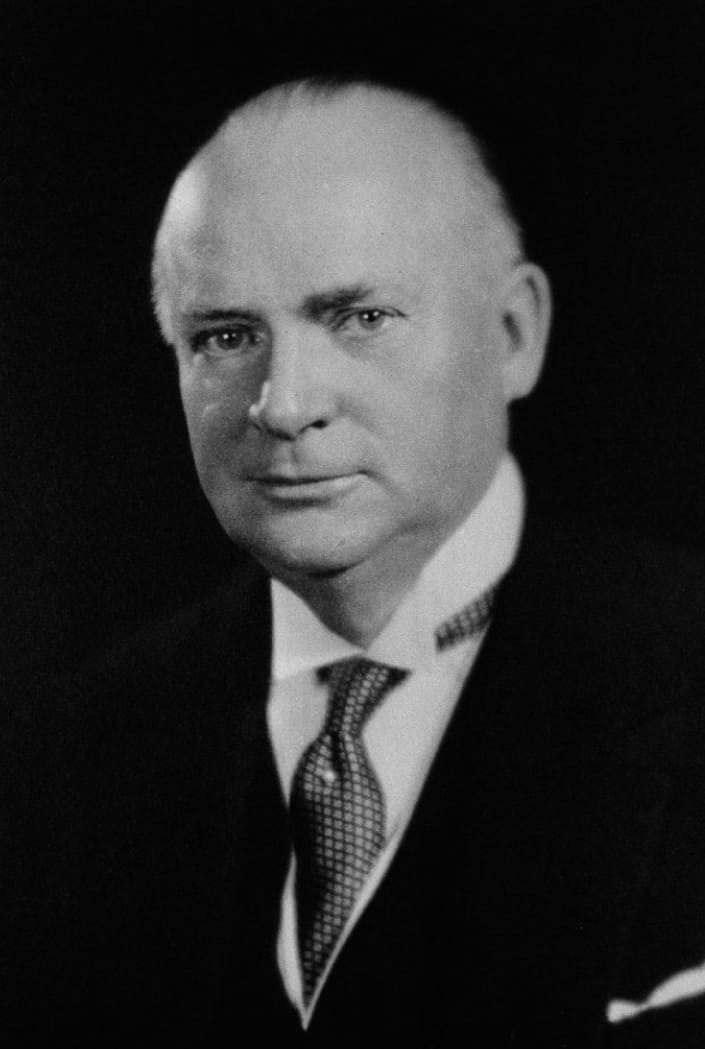 Richard Bedford Bennett, LAC 1930.Brian explained that labour issues came to a head again in September 1924, this time driven by a drop in prices for matches. By now the company had left the control of the Eddy family, with future Prime Minister R. B. Bennett being the principle owner, who held that he was not bound to agreements signed by the previous owner. The company demanded a 50% pay cut and to seize the hiring process from the women supervisors, with the intention to hire non-French Catholics and so break the union. In response, union president, Donalda Charron led the women out on strike. The women picketed, fundraised, held 9 public meetings to explain their position, and so received both financial support and donations of food from the local communities. This included printed support from the French language newspaper Le Droit.
After two months the male negotiators and the company reached a settlement in which the women would return to work at their same hours and rate of pay. The union would remain in place. No improvements in working conditions were achieved. Donalda Charron was not rehired and the women supervisors lost control of the hiring process. The women supervisors were later fired and the union was lost.
The two strikes of 1919 and 1924 were the first by solely women workers in the Province of Quebec and in this area. The match works was sold in 1927 and finally closed in 1933.
Brian went on to tell us of an earlier, larger and more radical strike, which is now less remembered. In the late 19th and early 20th centuries, the lumber industry was the backbone of the local economy. While the lumber barons lived in luxury, Brian explained that their workers did not. Long hours, (11 or 12 hour days, 6 days a week), for poor pay in a hazard-filled work place, where it was commonplace for workers to be maimed or killed, was the norm. As there was no work in the winter, there was no pay. Thus the winters were especially hard on the families already suffering from inadequate housing, poor diet, lack of sanitation and multiple diseases.
In 1891 there was a drop in demand for lumber and a corresponding drop in price. In response, in September, the mill owners, acting collectively, cut worker wages by 50 cents a week, almost a 20% pay cut and refused to honour an earlier promise to reduce the work day to 10 hours. The mill workers were not unionized, though an American-based union, the Knights of Labour, did have some membership in Canada, including 6 members at the Perley & Pattee Lumber Company. On the 14th of September the workers there demanded the reinstatement of their full wages, the mill owner, George Pattee, refused, insisting that he was only following what was being done at all the other mills in the area. The workers walked off the job, an illegal strike as 6 months notice was required. As such, the Knights of Labour did not support the action, preferring arbitration to confrontation. Representatives of the workers soon went to all the other mills and lumber yards, where these workers too put down their tools and joined the strike.
Brian pointed out that the mill owners were powerful. E. B. Eddy, who was also the Mayor of Hull, arranged, on the 16th, to have two companies of the Governor General’s Foot Guards and two companies of the 43rd Battalion called out, armed with live ammunition, to protect the mills. The troops were sent home the next day when workers representatives, among them Napoléon Fateux and J. W. Patterson, convinced Eddy that no damage would be done and established worker teams to safeguard the mills. The owners also tried to break the strike through the use of scab labour, but the strikers blockaded the roads, dissuading the scab workers from reporting.
Brian explained that the call for the 10 hour work day had a broad appeal across the working poor. The 2,500 mill workers were eventually joined by an additional 1,500 workers from other industries, a large block of the workforce at that time. Significantly, however, the more professional workers who had already achieved a reduced work week were generally not supportive. Support for the strikers, in terms of donations of funding and food, and even the creation of striker’s stores to help the families followed, but as time went on the momentum began to fade and the approach of winter caused cracks to develop on both sides of the dispute.
By mid-October, Brian explained, most workers had returned to their jobs, the mill owners having made no concessions. Approximately 1,000 experienced mill workers had left the area during the strike, 600 of those to Michigan. This delayed the return of the industry to full capacity. Shortly after the return to work the mill owners reversed the 50 cent pay cut and several years later a 10 hour work day was implemented.
The Historical Society of Ottawa has another article on the 1891 strike that can be read at: Strike! En Grève! Plus, you can read about more labour strife at the E.B. Eddy plant in the story: The Eddy Lock-out.
Brian pointed out that although both labour actions were ultimately unsuccessful, as a society we now only remember and honour the actions by the women match workers. This can be seen through the naming of a Gatineau library branch for Donalda Charron, the renaming of Boulevard de l’Outaouais, in the Hull section of Gatineau, as Boulevard des Allumettières and by an event organized by the Public Service Alliance of Canada (PSAC) in October 2014 as part of Women’s History Month. There has been no such recognition of the much larger strike of 1891. Perhaps it has simply been forgotten, though Brian speculates that it has more likely been intentionally ignored. No government or organized labour union of today would benefit from honouring a broad-based labour revolt that was led by workers themselves and not by professional leadership.
A record crowd of 130 came to hear Paul Couvrette’s Historical Society of Ottawa presentation on the Karsh brothers which was held at the Main Branch of the Ottawa Public Library on the afternoon of April 27, 2024. Paul, a celebrated Ottawa photographer, was both a professional colleague and family friend of the two Karsh brothers. Paul also has the distinction of having photographed all the Prime Ministers from Trudeau to Trudeau, and of being called upon to give photography lessons to Her Majesty, Queen Elizabeth II, so she could take better pictures of her Corgis.
Yousuf (1908-2002) and Malak (1915-2001) Karsh, with their parents and brother Jamil, fled the Armenian genocide making their way to Aleppo , Syria in 1922. Late in 1923, Yousuf sailed from Beirut to join his uncle George, a photographer, in Sherbrooke , Quebec. Yousuf had little formal education or knowledge of either French or English, but learnt photography from his uncle before apprenticing in Boston between 1928 and 1931. He then moved to Ottawa and worked for John Powis before opening his own studio in 1932.
Paul showed us a number of photos, some by Yousuf, some by Malak and some of his own. He used these to relate stories, sometimes about the photo itself, sometimes about the technique used, and sometimes focussing on a personal memory or incident. He mentioned that like all photographers starting out, Yousuf did passport photos, shot weddings, did commercial and industrial work, and essentially took on whatever work was available at the time. Yousuf was a member of the Ottawa Little Theatre and did many photos for them. Paul explained that this was where Yousuf developed his lighting style that would later become his trademark in his portrait photographs.
Paul showed us the portrait photo known as “The Roaring Lion”. This is the December 30, 1941 photo of then British Prime Minister Sir Winston Churchill. Paul noted that the shoot, which only lasted a few minutes, was arranged by then Canadian Prime Minister Mackenzie King, who was a great supporter of Yousuf Karsh. Paul went on to discuss that story that just prior to the taking of the portrait, Karsh had taken the cigar away from Churchill. He said that he didn’t know if the story is true, but that if it is, it was something that Karsh had likely planned to do, as he researched and spoke with his subjects. This is a technique that Paul learnt from Yousuf and now employs himself. Although it is the best known portrait of Churchill, and is used on the British £5 note, it is not liked by the family. The family remembers Winston as a jovial man, not the scowling bulldog captured by Karsh that day. The photo changed the career and the life of Yousuf Karsh. The Karsh portrait became the “gold standard” and he was now sought out by all persons of importance, and those who believed themselves to be.
Paul then related a humourous side bar to the aforementioned photo. After the theft of a signed print of the photo from the reading room of the Chateau Laurier hotel was announced in August 2022, the Bytown Museum announced, the following April 1st, the anonymous donation to their collection of a similar item. It was a great way for a small museum to garner some press.
Humour is something the public does not associate with Yousuf Karsh, but Paul maintains that he was a very funny man and recounted a couple of stories to illustrate this. On one occasion, Paul encountered Yousuf outside the Chateau Laurier, where he was then living. It was a terrible winter’s day, cold and with driving snow. Paul asked him why he had left the Middle East to come to Canada. Yousuf turned to Paul and replied “the weather”. On another occasion, Paul was talking with Yousuf about a recent portrait the latter had taken. Paul asked if Yousuf had noticed that there was a fly on the back of the chair behind the subject. Yousuf responded that the hardest part of that portrait was to train the fly to sit there while the photo was being taken.
As the fame, demands, and costs of Yousuf Karsh increased, he became unable to meet all the demands that were placed upon him. Paul noted that he was one of the beneficiaries of the referrals that Yousuf was forced to make, one client, a Supreme Court Justice, jokingly referring to Paul as “the poor man’s Karsh”.
In 1937, Malak joined his Uncle George and brother Yousuf in Canada and studied photography with them. Paul told us that although Malak is primarily known for his landscape work, he also did portrait, commercial, and industrial work and showed us examples of each. Malak is, however, best known for his images of Parliament Hill and of tulips. Malak was instrumental in the founding of the Tulip Festival in 1953.
Paul recounted an incident in which he encountered Malak taking a photo of some tulips. Paul remembers that Malak set up and waited for an hour to get exactly the right shot he wanted. Paul explained that in the age of film photography, you took one or perhaps two pictures, unlike the digital age of today when you can take as many pictures as you like and discard the many that are not worth keeping.
Perhaps Malak’s best known photo, (for those of a certain age), was entitled Paper and Politics, It was an unplanned photo taken in 1963 while he was working on a contract for E. B. Eddy and shows a number of logs and logging boats in the Ottawa River below Parliament Hill. The photo served as the inspiration for the engraving on the back of Canada’s last $1 bill. The fascinating story can be read at: Mishap on the dollar .
In 2017 to mark the 150 th anniversary of Confederation and the 25 th anniversary of the establishment of diplomatic relations between Armenia and Canada, the Armenian people donated a bust of Yousuf Karsh to the people of Canada. The bust stands outside the Chateau Laurier at the corner of Rideau Street and Mackenzie Avenue. You can read more on this at: Yousuf Karsh Bust .
Currently, there is no similar monument honouring the career and contributions of Malak Karsh. There is, however, work underway to redress this inequity. You can read the proposal at: Malak Karsh Monument Proposal, and you can get involved or provide your support by contacting Michel Gauthier at: This email address is being protected from spambots. You need JavaScript enabled to view it. .
Paul Lauzon has recorded the presentation, available via the following link: https://historicallyspeakingottawa.blogspot.com/2024/04/take-one-paul-couvrette-friend-and.html
How Immigration Has Shaped Ottawa’s Cultural Mosaic - Part III
Dave KentAnother good crowd gathered at the Sunnyside Branch of the Ottawa Public Library on Saturday, April 20, 2024 to listen to the third and regrettably final installment of Phil Jenkins’ lecture series on four immigrant groups in Ottawa. In this session, Phil completed his discussion of the Chinese community and went on to talk about the role of the Italian community in Ottawa.
Phil highlighted two of the most famous members of Ottawa’s Chinese community before concluding this part with a brief discussion of the community as it exists today.
Adrienne Clarkson was born in Hong Kong in 1939 and moved to Ottawa in 1941 after the Japanese occupation of that territory. She attended public school and Lisgar Collegiate before going on to a very successful University education. Adrienne worked for the Canadian Broadcasting Corporation for some 30 years but achieved her greatest fame when, in 1999, she was appointed as Governor-General, a post she held until 2005. During this time, she led a “Team Canada” of artists and musicians to China to broaden cultural ties and understanding between the two nations. Recently, two members of the Historical Society of Ottawa met with Adrienne Clarkson and presented her with some old newspaper clippings that had come into their possession. This story can be read online: Tea with Adrienne Clarkson.
Denise Chong, a 3 rd generation Chinese-Canadian was born in Vancouver in 1953. After studying economics in Vancouver and Toronto she moved to Ottawa to work in the Department of Finance, eventually becoming a special advisor to Prime Minister Pierre Trudeau. This was remarkable for the time as the world of finance was dominated by white men. She left government work in the mid-1980s to pursue a career in writing and has since published four non-fiction books and edited one collection. Her books include: The Concubine’s Children (1994), The Girl in the Picture: The Kim Phuc Story (1999), Egg on Mao: The Story of an Ordinary Man Who Defaced an Icon and Unmasked a Dictatorship (2009) and Lives of the Family: Stories of Fate and Circumstance (2013). The collection she edited is entitled The Penguin Anthology of Stories by Canadian Women (1997). She still lives in Ottawa with her husband and two children.
The Chinese community in Ottawa remains very active and vibrant with 5 newspapers and many specialized support services. Focussed on Somerset Street West, its most recognizable symbols are the Royal Arch – Ottawa Chinatown that was constructed in 2010 and the annual Dragon Boat Festival.
History suggests that the first Italian to visit what would become Canada was John Cabot (Giovanni Caboto in Italian, Zuan Caboto in Venetian, Jean Cabot in French). Cabot was likely born in Genoa sometime about 1450 later moving to and becoming a citizen of Venice. By the mid-1490s he was in England and with financial support from Italian bankers in London and merchants in Bristol, he received letters patent from Henry VII to undertake expeditions of exploration. Phil read part of this, as follows: “…to find, discover and investigate whatsoever islands, countries, regions or provinces of heathens and infidels, in whatsoever part of the world placed, which before this time were unknown to all Christians.” Phil noted that this can be seen as the start of colonialism in Canada. On June 24, 1497, Cabot landed on the east coast of North America.
Phil explained that Italian craftsmen worked throughout Europe, but as passage across the Atlantic became cheaper than train travel around Europe, they began to come across in the spring, returning home in the fall, thus avoiding the harsh winters, though some stayed and settled. Phil identified two major waves of Italian immigration, the first falling roughly between 1900 and 1914, with the other following the Second World War. The 1911 census recognized around 700 families of Italian origin in Ottawa, clustered mainly in Lowertown, and employed primarily as painters, plasterers, stone masons, bakers, and barbers.
Among the bakers were Frank and Maria Galla who arrived in Ottawa in 1908 and opened their bakery at 597 Somerset Street West in 1920, later moving it to Rochester Street. They had 6 children, 5 sons and a daughter, the boys all working in the bakery with their father and remaining bachelors until the business closed in the late 1960s. As seen with other immigrant community leaders, Frank and Maria were instrumental in welcoming newcomers, the bakery often becoming their first place of employment. The couple was also key to the evolution of recreation and cultural growth, especially with the heart of their community, their church, St. Anthony of Padua on Booth Street.
On June 10, 1940, Italy entered the Second World War on the side of Germany and Prime Minister Mackenzie King responded by authorizing the RCMP to apprehend Italians living in Canada who they perceived as a threat. Phil explained that there were about 150,000 Italians in Canada at that time, about half of which had been born in Canada. This distinction did not matter. Approximately 31,000 Italians were identified as “Enemy Aliens”. They were photographed, finger-printed and required to report to the authorities on a monthly basis. Between 600 – 700 men were placed into internment camps, the largest being Camp 33 in Petawawa, two other camps existing, one in New Brunswick and the other in Alberta. Some of these men were held for as long as 3 years. None were ever charged with any offence. As a community, Italians were shunned by other Canadians and demonized by the press, many losing their jobs. In 1990, Prime Minister Brian Mulroney offered an apology to Italian-Canadians for the internment but it was not until May 27, 2021 that Prime Minister Justin Trudeau formally apologized on behalf of the Canadian Government.
Phil read us an account by Giacomo Moscatelli, a second generation Italian-Canadian that reflects on his own childhood and the transition through the generations from Italian, to Italian-Canadian, to Canadian-Italian, and finally simply to Canadian. It’s a great read: Growing up Italian.
In the late 1950s and 1960s the City of Ottawa undertook several “Urban Renewal” projects. These identified communities where it was felt that houses and other buildings were in poor condition. The area around Rochester and Booth Streets was one of the targets of this policy; large numbers of houses, mostly Italian-owned, were expropriated and demolished. The community was dispersed.
Phil went on to profile two of the best known members of the Italian community in Ottawa. Robert “Bob” Chiarelli, who was born near Preston Street (aka Corso Italia) has served as the Regional Chair, the Mayor of Ottawa, and as a Member of the Provincial Parliament, in which he was a Cabinet Minister. Mario Bernardi became the founding conductor of the National Arts Centre Orchestra in 1969, becoming its Music Director in1971. He is credited with turning his hand-picked orchestra into one of the finest in the world.
One of the many pamphlets produced by the Historical Society of Ottawa is entitled “Growing Up in “La Colonia” and was written by Salvatore Pantalone. It provides more background on early Italian settlement in Ottawa and a collection of family anecdotes that colourfully describe life in “The Village” through the depression and the Second World War, with a special reference to the internment. Like many of the HSO pamphlets, it can be read online: Bytown Pamphlet #89.
Phil ended this session, and the series with his guitar. He performed Michael Bublé’s song "Home" , which was enthusiastically received, as were all aspects of this fantastic lecture series by one of our area’s leading public historians.
The Historical Society of Ottawa would like to thank Phil Jenkins once again for his time, his support, and especially for his passion.
Ottawa is one big graveyard! Cemeteries are peaceful. Some like to stroll among the dearly departed to get away from the noise and chatter of daily life. Historians, on the other hand walk among the graves hoping that the tombstones will tell a story of those below.
I feel the same way when I walk the streets of Centretown, Lowertown, Sandy Hill, and Hintonburg. Old houses are my memorials to the past. Big or small, elaborate or modest, Ottawa’s houses of the 19th and early 20th century tell us how the people who lived in them . . . lived. To me cemeteries are about death. But the homes of those now gone are about the life that they chose or inherited.
For the HSO March 13, 2024, Zoom presentation, I took people on a journey of the residences that were once a place of relaxation after a hard day at the office . . . or store, or operating room, or laboratory, or forest. The unadorned elegance of homes in Lowertown – some of wood, others of stone – reveal the modest lifestyles of Ottawa’s labourers and lower management civil servants.
Brick, on the other hand, was the preferred choice for the upper crust of Upper Town. The streets of Centretown run red with Edwardian masterpieces. These homes hint of a congenial social norm where the women played Whist in the parlor, while their husbands discussed the rising or falling business climate in the sitting room across the hall.
At the southern extremity of the Bank and Elgin streetcar lines, Glebe became the exclusive domain of brokers and bankers. These people could afford the services of local architects like Werner Noffke and William Caven Beattie, who were commissioned to design “revival” homes in colonial and Classical styles, and to avoid, at all costs, the staid British styles of the “old money” families.
Part One of Who Lived Here? can be seen at the HSO YouTube website.
We were excited to gather again at the Sunnyside Branch of the Ottawa Public Library on Saturday, April 13, 2024, to hear the second installment of Phil Jenkins’ lecture series dealing with the contributions of four immigrant communities to Ottawa. In this section, Phil would complete his discussions on the Jewish community and introduce us to the history of the Chinese community in Ottawa.
The audience was delighted when Phil chose to continue his history of the Jewish community in Ottawa with his guitar and a rendition of the Leonard Cohen song Tower Of Song which was greatly appreciated and an excellent reintroduction to the topic of Jewish history in Ottawa.
Phil told us stories of a number of individuals, the first being the remarkable story of Lillian Bilsky Freiman, who was also known as “The Poppy Lady”. At the outbreak of the First World War Lillian arranged to get 30 sewing machines put into her home and organized Red Cross sewing circles to sew blankets and other clothing for the troops overseas. In 1918 she was tasked by the Mayor of Ottawa to organize a volunteer force of some 1,500 to help combat the spread of the Spanish Flu in the city. In 1921, with growing interest in using the poppy as a symbol of remembrance, she crafted Canada’s first poppies in her living room and later became the Chair of Ottawa’s annual Poppy Campaign for much of the rest of her life. She also founded Canadian Hadassah and worked tirelessly for many other charitable organizations including the Ottawa Welfare Bureau, the Protestant Infants Home, the Red Cross Society, and the Salvation Army along with many others. In 1934 she was appointed to the Order of the British Empire (OBE) by King George V, the first Jewish Canadian to be so honoured. Upon her death in 1940, among the many who attended her funeral were Prime Minister Mackenzie King and the Mayor of Ottawa, Stanley Lewis.
As a teenager, David Mirsky, the son of Ottawa's first rabbi, collected empty bottles and returned them to Brading’s Brewery. By 1920, he was filling bottles with spring water from a spring at the base of Nanny Goat Hill and selling them; he founded The Pure Spring Company in 1925 and it would become the largest independently owned soft drink company in Canada. The company remained in the Mirsky family until the mid-1960s when it was purchased by Crush.
Louis Baker was joined by his brother Jake and opened Baker Brothers at the corner of Booth and Duke Streets. It was the largest scrap yard in the area and survived in that location until the general demolition of Lebreton Flats in the mid-1960s. The business remains in operation, now located on Sheffield Road.
Phil then reminded us of the decision of the Canadian government not to offer sanctuary to the passengers of the St. Louis.
Scribe’s Note: The MS St. Louis sailed from Hamburg on May 13, 1939 bound for Havana with 937 passengers on board, mostly German Jews fleeing Nazi persecution. When the ship docked in Havana on May 27, the Cuban authorities only allowed 28 passengers to disembark. Negotiations to allow the others to land in Cuba failed and the ship was ordered out of Cuban waters on June 2, 1939. They were unable to obtain permission to land in the United States, so on June 7 the St. Louis set sail directly back to Europe, not entering Canadian waters. The St. Louis did not contact Canadian authorities requesting permission to disembark its passengers in Canada, but Prime Minister Mackenzie King did receive a petition on the evening of June 7th from a group of prominent Canadians led by historian and professor George Wrong suggesting that sanctuary be offered. At that time, Mackenzie King was on the Royal Train in Niagara and the government was not sitting. He contacted the Undersecretary for External Affairs, Dr. Oscar D. Skelton, to consult with Minister of Justice, Ernest Lapointe, and the Director of Immigration, Frederick Blair, as he “would like to be advised immediately as to powers of government to meet suggestion which communication contains”. Blair informed Skelton that the refugees could be admitted to Canada by having their names listed on an Order-in-Council but advised against so doing. As a result on June 9 Mackenzie King was informed that only people from four specified groups (family, investors, entrepreneurs, and highly-skilled immigrants) could be admitted by Order-in-Council. Thus Mackenzie King was told that the passengers of the St. Louis were inadmissible. Mackenzie King recorded in his diary that the refugees’ plight was “much less our problem than that of the U.S. and Cuba” while Blair wrote “It is manifestly impossible for any country to open its doors wide enough to take in the hundreds of thousands of Jewish people who want to leave Europe: the line must be drawn somewhere.”
The St. Louis returned to Europe and distributed her passengers to four nations, the Netherlands (181), Belgium (214), France (224) and the United Kingdom (288). The Second World War soon erupted and 254 of the former passengers of the St. Louis would die in the Holocaust, while one would die in a German air raid on London.
Source: MS St. Louis in Canadian Context | Canadian Museum of Immigration at Pier 21
Phil then began his history of the Chinese community in Ottawa, with its very early beginnings a half of a continent away. The first 60 Chinese immigrants were brought to Nootka Sound , Vancouver Island in 1788 by British merchants. They built a schooner and what was intended to be a permanent fur trading post. An additional 80 Chinese workers were brought over the following year, but soon after, the post was taken by the Spanish and the fate of the Chinese workers remains unknown. There were two major events which spurred Chinese immigration to British Columbia. The first was the Fraser Canyon Gold Rush of 1858, which initially drew immigrants from California, but then directly from China. The second was the building of the Canadian Pacific Railway between 1880 and 1885. Approximately 17,000 Chinese labourers were employed on the construction of the section through British Columbia. The work was dangerous and conditions hard, resulting in the deaths of between 600 – 700 Chinese workers. The Chinese labourers were cheap and it is likely that the railway would not have been affordable had they not been employed. Although the bulk of the Chinese who remained in Canada stayed in British Columbia, the now completed trans-continental railway served as a means for the eastward migration of the Chinese.
With work on the railway completed, the Chinese workers needed to find another way to make a living. Hand laundry service proved a popular choice as investment was low and the hard work and long hours made it unpopular among white men, though there was some push-back from washer women. The first Chinese Hand Laundry in Toronto seems to have been opened about 1877 with the first in Ottawa being opened on Sparks Street by Wing On in October 1887. The Chinese laundries flourished, 2 more opening in 1889, offering good service at low cost due to the high level of competition. Phil told us that, by 1901, 56 of the 68 laundries in Ottawa were Chinese owned, increasing to 68 of 72 by 1914. They reached their peak at 83 in 1916. Phil explained that those who became successful would often move on to open cafes, which were seen as a higher class of business.
As the number of Chinese immigrants increased, so did the public backlash and the community was subjected to extreme racism and discrimination from the general public and through the press.
The Chinese also fell victim to official racism from the Canadian government with the passing of the Chinese Immigration Act in 1885, which imposed a $50 Head Tax on Chinese immigrants. This was raised to $100 in 1900 and raised again in 1903 to a staggering $500. Those who paid the tax and so gained entry were issued a Certificate which carried their photo and personal information. This applied to children as well as adults. On July 1, 1923, the Canadian government replaced the Chinese Immigration Act with another piece of legislation with the same name, but more commonly known as the Chinese Exclusion Act that denied entry to Canada for all Chinese with the exception of diplomats, merchants, students and special cases. This made it impossible for Chinese men, who usually came to Canada on their own, to bring their wives, children or other family members to join them in Canada. It was not until 1947 that the Act was repealed and in 2006 Prime Minister Stephen Harper officially apologized for the discriminatory legislation and authorized token compensation payments to those who had paid the Head Tax, though not to their children.
Phil related the personal stories of a number of the Chinese immigrants to Ottawa, including that of Shung Joe, who came to Ottawa as a teenager in 1913 to work in the laundry owned by his half-brother. He worked diligently and saved enough to return to China in 1919 to marry and later in 1923, to send for his wife Kai Voon. This was a common practice among those who were successful enough to afford it. Kai Voon arrived just as the Exclusion Act was coming into force and it took the intervention of a church official in Victoria to permit her entry. Shung Joe’s own first laundry was in their home on O’Connor Street, follow by a second location on Slater Street before introducing the new service of Dry Cleaning. The couple had 7 children, one son tragically drowning near the Chateau Laurier. The family home was a welcoming place for new immigrants from China and the family would make weekly drives throughout eastern Ontario, visiting with other Chinese families to spread the news of what was happening in Ottawa and what they had heard from cChina. As a teenager in the 1940s, one of the sons, Bill, began working at two restaurants, the Canton Inn and the Cathay Chop Suey Palace, both on Albert Street. In 1950, Bill took over ownership of the Cathay and in 1958, over the objections of then Mayor Charlotte Whitton, it was granted the first liquor licence to a Chinese restaurant in the city. Bill went on to become one of the most important and influential members of the Chinese community in Ottawa, well respected for his leadership, he was responsible for the formation of the Ottawa Chinese Community Service Centre, and for his philanthropy.
Phil told us that Albert Street was Ottawa’s original Chinatown, the first Chinese restaurant in Ottawa opening at the corner of Albert Street and Metcalfe Street in 1904. By the 1920s many of the restaurants on Albert Streets were Chinese owned, but catered to a white clientele, employing white servers and had names such as Capital Lunch, Boston Café, Ontario Restaurant, and Harry’s, there being no taste yet in Ottawa for Chinese food. As this changed restaurants such as the Cathay and the Canton Inn, opened by Stanley Wong from Montreal, flourished. Often staff of these original Chinese restaurants would move on and open their own places, such as the Golden Palace on Carling Avenue. In the 1970s, higher rents on Albert Street forced most Chinese businesses to close or move. Many moved to Somerset Street West between Bay Street and Preston Street and now include Vietnamese, Korean, and other Asian owned businesses in what is Ottawa’s new Chinatown.
Paupers, Peddlers, Purveyors and Parishioners - Ottawa’s Jewish Community
David MartinIn this presentation to the Ottawa Historical Society, historian David C. Martin takes us back to the real beginnings of Ottawa’s Jewish community.
At the core of David’s thesis is the notion that the immigrant pioneers of Ottawa’s Jewish community ‘conserved’ and ‘adapted’ in equal measure, bringing with them the rituals and traditions of their homelands while simultaneously planting their roots in Ottawa prior to the outbreak of World War I.
Beginning with an overview of the city’s demographics during what he calls the “First Golden Age” of Jewish life in the nation’s capital (c. 1880-1914), David then turns to explore a handful of the community’s most influential personalities before examining some of the institutions they helped to build.
In 1881 there were about 20 self-identified Jews living amongst Ottawa’s 21,545 inhabitants, by 1914, that number had risen to almost 3,000. When compared to the number of Jews residing in the country at large however, it’s clear that despite significant growth, Ottawa was still not a major destination for the period’s Jewish immigrants. Both Montreal and Toronto offered these migrants a more established community, where synagogues, kosher food and Yiddish-speakers were far more accessible.
The vast majority of Jewish migrants to Canada during this period were refugees. Most had fled the Czarist Russian Empire following local pogroms. For survivors, at least for those who could manage, immigration became the best means of escape. Most of the era’s Jewish migrants arrived from Europe with very little. In their home countries, especially in Eastern Europe and the Russian Empire, economic opportunity was severely restricted. In fact, The Russian Empire established what it called the Pale of Settlement, where Jews were forced to live – keeping them outside of the major industrial and economic centres of Russia-proper. Professional jobs, including in the civil service, were essentially off-limits as were most educational opportunities.
To survive in the Pale, many Jews scratched out a living as peddlers, which usually involved the retail sale of wares or trade services and the purchase and re-selling of agricultural produce by traveling salesmen of generally humble means. Peddling was the most common occupation of Jews in the Pale – and indeed for Jewish migrants arriving in Canada. One advantage that Ottawa did offer over Montreal or Toronto was the more favourable cost of a peddling licence, and that alone may have inspired several of the period’s earliest Jewish migrants to arrive in our fair city. By 1939, approximately 43% of Ottawa's hawkers and peddlers were of Jewish descent.
With the scene set, David presents short biographies of some of the city’s earliest Jewish pioneers; those that had some of the greatest impacts on population settlement and community-building including Moses Bilsky, John Dover, Archie and Lillian Freiman, the Rev. Jacob Mirsky, and Casper Caplan.
Having familiarized our audience with some of the key players, David looks at some of the institutions that these pioneers, among others, helped to create. Synagogues like Adas Jeshurun (the city’s very first), Agudath Achim and Machzikei Hadas (which continues to thrive) are followed by others of the community’s most vital institutions like the Bank Street Cemetery, the Hebrew Benevolent Society, and the city’s then-incipient Hebrew schools.
This talk offers a comprehensive look at the roots of the Ottawa Jewish community and is surely a valuable resource for anyone interested in the subject.
You can view the full presentation on the Historical Society of Ottawa's YouTube channel.
Quick Links
About
Supporting Partners