

Working to preserve Ottawa's past
for future generations.
In honour of Black History Month in Canada, both of our guest speakers for February discussed the history of Ottawa's Black community — one that is growing both in numbers and influence in our culturally-diverse city, and of the challenge of confronting prejudice and exclusion in the past.
June Girvan is an award-winning educator, activist and community leader who came to Ottawa from Jamaica almost 70 years ago. June is the president of Black History Ottawa (a non-profit organization dedicated to carrying out research in the history, culture, traditions and achievements of Canadians of African descent) and founder of J’nikara Dinqinesh Education Centre.
In June’s presentation, she shared her personal journey. In June’s own words we heard of the struggles and successes that she and others have seen in their lifetimes..
June also spoke extensively of the challenge for people of African descent to now come to terms with streets signs and tributes in their neighbourhoods, that honour the names of those who held their ancestors as slaves.
We need to better understand and reconcile the co-incidence between the street names of Ottawa, inherited slaveholder family names of Black children, and the names of those who appear in the British Slave legacies database.
June urged that we consider the impact of the of these names in ensuring that Ottawa "is experienced as a safe, friendly community by children of all human colours of the sun".
You can find the conversation with June in the video section of the HSO website.
A Genteel Woman in Need: Emma Maud Lampman
Dianne Brydon tells us about the life of Emma Maud (Playter) Lampman: married young to "Confederation Poet" Archibald Lampman, widowed at age 32, and being among the first women to work in Canada's civil service at the turn of the 20th century.
Media
Additional Info
- Year 1906
- Date April 30
The Barber Family: Our Proud Place in Ottawa's History
Born into slavery in Kentucky, Paul Barber, was one of Ottawa’s earliest Black permanent residents and a renowned horse trainer, founding a family that has made its mark in the capital for over a century. Thomas Barber, Paul Barber's grandson, shares the remarkable story of his family and their important role in Ottawa’s past.
Media
We are the Children
Award-winning educator, activist, and community leader June Girvan discusses the importance of understanding and reconciliation—and the complicated journey we all share in trying to make peace with the past.
Media
Football fans in this town have managed to remain loyal to their home team for 145 years, be it the Rough Riders, or the Renegades, or back again to the Rough Riders, and now the Redblacks. Hockey fans have retained their allegiance to two different Senators teams over 80 seasons, separated a by a 58-year winter when locals were forced to chose between the Leafs, Habs, or other members of the Original Six. But as we learned at our January 26th presentation, Ottawa’s sports history is much more than hockey and football.
Our guest speaker for the January 26, 2022, Virtual Speaker Series was HSO member James Powell, who began his presentation by reminding us that in the late 19th century, watching professional sports was not nearly as popular as participating in amateur pastimes like lacrosse, cricket, and cycling. As James noted, skiing was a popular pastime in Ottawa before devotees could even come to agreement on how to spell the name of their favourite sport.
As always, when it comes to James’ presentations, his history is well researched. During the Q&A session that followed, one participant though he might have stumped James with a question regarding the obscure sport of “hose reel racing” which was held annually in Ottawa a century ago. Suffice to say, James had an answer. I won’t tell you here what hose reel racing is. You’ll find it more entertaining to watch James’ presentation for the answer.
Like all our Virtual Speaker Series presentations, you can find James’ talk at our HSO website. The website is also the place to register for upcoming presentations.
Randy Boswell highlights the opportunity to find deserving figures "other than Victorian-era politicians, government functionaries and members of the British mobility" to name our landmarks after. Randy had been one of the first to propose, in a 2020 Ottawa Citizen column, to rename Ottawa's Prince of Wales Bridge in honour of Chief William Commanda.
Randy, a past member of the HSO Board of Directors, draws attention to the way "the naming of streets, buildings and other places has sometimes memorialized slave owners and other unworthy figures from the past" and suggests replacing implied tributes to "historical figures (Henry Goulbourn, for example) with deeply problematic past and little or no connection to our country".
In other cases, Randy advocates a delicate balance, with figures such as Sir John A. Macdonald, to "find ways to preserve pride in the achievements of Canada's founding prime minister without ignoring his role in shaping the Residential Schools system and other racism-laced policies targeting Indigenous and Chinese people."
(At the start of his presentation, Randy acknowledges that there exist a wide range of views on this topic and invited audience members to join the conversation during the Q&A session following his talk.)
Since the HSO's founding almost 124 years ago with our mission to “increase public knowledge of the history of Ottawa” and “to preserve the history of the peoples of Bytown and Ottawa”, we have frequently been guilty of telling Ottawa's stories from a very narrow cultural perspective.
We can't "erase" the past in terms of erasing what has already been written. But we need now to expand upon what has been written -- and update the record of our past with the important perspectives that thus far have been glaringly missed from our history books.
We need to understand, acknowledge and come to terms with our past -- as historical society, as a city, and as a nation.
Randy, a journalist and Carleton University professor, notes that we should be at liberty to override some of the naming choices made by our Victorian-era forebearers that date back to a very different colonization era.
Randy's presentation recognized the difficult task ahead for Ottawa’s politicians, city planners and community groups (including HSO) in setting new, inclusive standards on how to honour the past, into the future.
Sports Vignettes from Old Ottawa
HSO director James Powell provides a colourful play-by-play of sporting pastimes from Ottawa's early days in the video presentation.
Media
Additional Info
- Year 1897
- Date February 11
Additional Info
- Year 1929
- Date February 2
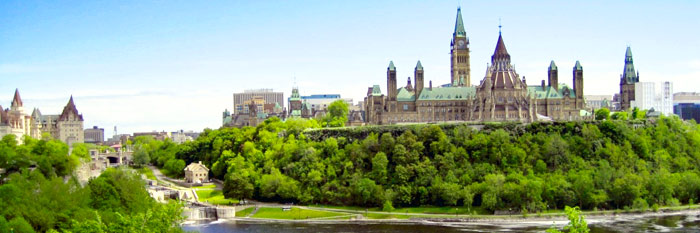
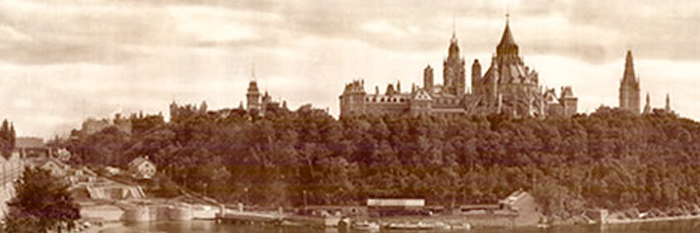
Then & Now
Quick Links
About
Supporting Partners