

Working to preserve Ottawa's past
for future generations.
Hatpins & Defiance: The Battle in Ottawa against Regulation 17
James PowellMembers and guests who attended the October 2022, in-person, HSO presentation at the Auditorium of the Main Branch of the Ottawa Public Library were treated to a tour de force by Jean-François Lozier, Curator at the Canadian Museum of History. Jean-François told a story that, while familiar to Ottawa’s Francophone community, is mostly unknown in the city’s Anglophone community—the “Battle of the Hatpins” or la battaille des épingles. In this David-Goliath struggle, Francophone parents, in particular mothers, fought the Government of Ontario in 1916 to have their primary-aged children attending the Guigues School taught in French.
Jean-François began his account by providing useful background on the French presence in Ontario, noting that many Francophone families had moved to Ontario during the late 19th century, especially to the eastern part of the province, including Ottawa. While wanting their children to learn the language of the English majority, Francophone also parents desired that French be the language of instruction in “bilingual schools.”
Under the British North American Act of 1867, the provinces were assigned responsibility for education, with the proviso that they provide separate schools for Roman Catholics outside of Quebec, and for Protestants in Quebec. Using its constitutional authority, the Ontario Government, under pressure from those worried about the growing French presence in the Province, introduced Regulation 17 in 1912 which forbade the use of French as the language of instruction beyond Grade 2.
This sparked outrage amongst Ontario’s Francophone community, leading to, among other things, the birth of an Ottawa newspaper Le Droit that committed itself to the struggle for linguistic rights.
Jean-François explained the divisions within Ottawa’s Roman Catholic School Board between its French-speaking and English-speaking members over the issue, and how various schools responded both in Ottawa and in other parts of the Province to Regulation 17—a combination of obedience, non-compliance, and defiance.
The issue came to a head in January 1916 at the Guigues School when parents, mainly mothers, escorted two sisters, Béatrice and Diane Desloges, into the school to teach their children in French. This brought the parents into direct confrontation with the police and the government-appointed school board who were determined to block their entry and their occupation of the school. Jean-François noted that the extent to which the mothers used their hatpins to fend off the police is unclear. News reports said that in the Battle of the Hatpins, one constable had his thumb bitten, while another received a black eye.
In the end, calmer heads prevailed, with the issue going all the way to the Judicial Committee of the Privy Council in London to be settled. While the Privy Council ruled in favour of the Ontario Government in its use of English as the language of instruction in “bilingual schools,” it ruled against the government in its treatment of Ottawa’s French-led, Roman Catholic School Board.
French continued to be used at Guigues School as a language of instruction, with the Ontario Government losing its appetite for this divisive language battle in the midst of World War I. In the late 1920s, Ontario stopped trying to enforce Regulation 17, but it remained on the statute books until 1944.
In 2016, Ontario Premier Kathleen Wynne apologized to the province’s Francophone community.
Additional Info
- Year 1861
- Date October 4
A Local Canvas: Paintings from the Bytown Museum Collection
Bytown Museum's Collections and Exhibitions Manager, Grant Vogl, gives a snapshot of the vast collection of art works held within the museum's vault.
Media
Additional Info
- Year 1889
- Date September 17
After four years as our President, the Board of Directors and HSO members would like to thank Karen Lynn Ouellette for a job well done. As former Past President George Neville can attest, the president’s job is a tough one—herding cats at the best of time! Doing it while holding down a full-time job made it all the more challenging for Karen Lynn. And let’s not even talk about the difficulties posed by two years of COVID, and running a virtual organization virtually, so to speak. But she did it with great verve and charm, making the herculean task look easy.
 Karen Lynn OuelletteThe Ouellette years have been great years for the Historical Society of Ottawa. Under her leadership, our virtual speakers’ series is drawing large numbers of participants from across the country. Our Facebook page has been a spectacular success with more than 6,000 followers, and has prompted thousands to comment and debate issues, and to share their own stories of Ottawa history. Our website was modernized and expanded, allowing memberships to be purchased and donations made on line, a considerable advantage and convenience given the cancellation of in-person events. Karen Lynn also effectively reached out to younger demographic groups, including university students and young working people, showing that the love of history is not confined to those of more mature years. She also reached out to local Indigenous communities with some success. As a consequence, our membership is growing despite the pandemic …something that few heritage organizations can boast.
Karen Lynn’s influence was also evident behind the scenes. The organization has become more business-like. Job descriptions have been written, organization charts developed, welcome packages for new directors and officers assembled, and policies and procedures put in place. Such things may not be sexy but they sure are helpful in times of transition. No longer do we have to rely on our memory to recall what and how things should be done, something that is increasingly important as government requirements for non-profits like the Historical Society of Ottawa become more complex.
In sum, thank you Karen Lynn for your years of service to the Society. While we are sad to see you step down, we are delighted that you will continue to play an active role as Past President on the Board with a specific interest in working with young people.
We are also delighted to welcome Emma Kent who was elected President at our June 2022 Annual General Meeting. Congratulations Emma! Emma must be the youngest President the Society has ever had. She brings boundless enthusiasm to the job and lots of new ideas. Building on Karen Lynn’s work, she had informed the Board that she plans to focus on diversity, reaching out to groups whose stories may have been overlooked or not shared widely. In this, Emma, you have the Board’s full support and encouragement. We look forward to working with you over the coming years.
James Powell, June 2022.
A Word from our new President
Hello!
 Emma KentI grew up in Ottawa and have always had a passion for history. In 2016, I completed my BA in History at Carleton University.
Thank you for welcoming me as the new president of the Historical Society of Ottawa. Over the past couple years I have greatly enjoyed my time with HSO. Attending the speaker series and reading the Bytown pamphlets have made me fall in love with our city again. I can’t wait to listen to more of its stories and as we move forward with in-person events. I’m so excited to meet you in person and or seeing you back on Zoom.
You may know me from the two speaker series talks I gave in 2021; one on my old Girl Guide summer camp, Camp Woolsey, and the other on my Grandpa Jack who was a British Home child. Both were incredibly meaningful projects for me and I’m so thankful to HSO for giving me an opportunity to share them.
We have an incredibly strong and gifted board of directors and I always look forward to working with them and learning from them. I would love to personally thank our Past President, Karen Lynn, for getting me involved with HSO and for her many years of leadership. We hope to continue her legacy of emphasizing diversity in our storytelling and activities.
All the best,
Emma Kent (She/Her), June 2022.
Additional Info
- Year 1940
- Date July 2
A Personal History of Laroque's Department Store
Robert Vineberg, son of one of Laroque's co-owners, shares his personal stories and the history of one of Lowertown Ottawa's well-known and well-loved department stores.
Media
Additional Info
- Year 1956
- Date May 15
One early April afternoon, Karen Lynn Ouellette and myself had the honour of attending the last class of Dr. Sarah Templier’s Canadian Digital History course at the University of Ottawa. This was a big day for Dr. Templier’s students who in groups of two or three presented their digital history projects. All the projects were related to the Historical Society of Ottawa. Besides enjoying the wonderful presentations, our job was to help Dr. Templier and PhD candidate, Celeste Dagiovanni, to judge the students’ work, and to select the top three projects. Celeste is the student coordinator of the Venture Initiative Program working with Fahd Alhattab who is in charge of the program as the entrepreneur in residence at the Faculties of Arts, and of Social Sciences.
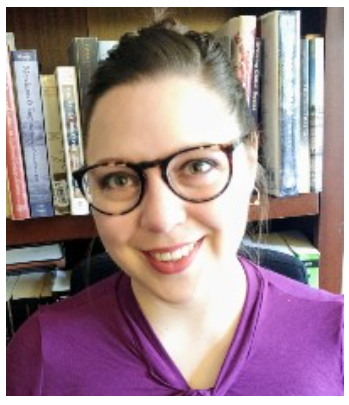 Sarah Templier, University of Ottawa.The idea of partnering with the HSO was the brainchild of Professor Templier. Before the start of the semester, she had contacted Karen Lynn with the idea of involving her fourth-year digital history students with the Society in some fashion. A number of ideas were floated, including going through the Society’s archives held by the City of Ottawa to document and digitize key documents. However, with the City Archives closed owing to Covid, an alternate project was selected under which student teams would develop websites that contributed to the HSO’s mission and online presence in a meaningful way.
In teams of two or three students, five website projects were presented—Epidemics in Ottawa by Jessica Barton and Victoria Pope, Ottawa and the Fur Trade by Danny Bengert and Jordan Johnstone, The Rideau Canal by Charles Wickens, Breanna Campbell and Jameson Holdip, The Murder of Thomas D’Arcy McGee and the Fenian Brotherhood by Jack Lapalme and Thomas Wagner, and The Galloping Gourmet by Rowan Moore and Brenna Roblin. The projects were judged on the basis of how the project contributed to the Society’s on-line presence and mission, the team’s research and ability to reach the target audience, their innovative use of visuals and digital tools that would enhance a reader’s experience, and the ability of each team to effectively “pitch” their project in the allotted time and answer questions.
All five presentations were excellent, making the choice of the top three very challenging. After more than thirty minutes, judges agreed that the top three presentations in order of preference were The Galloping Gourmet, The Rideau Canal, and Ottawa and the Fur Trade. Rowan and Brenna’s winning entry on the television show filmed in Ottawa from 1968 to 1971, styled their presentation in the form of a TV Guide. Their presentation featured recipes, a map of the locations Graham Kerr, a.k.a. the galloping gourmet, visited to inspire his recipes, an interview with a participant who viewed the filming of an episode at the Merivale Road studio, fashion in the 1960s, as well as a section on Graham Kerr’s life after the series ended. Their lively and fun presentation helped to bring to life the late 1960s as well as a little-known part of Ottawa’s television history. It is sure to delight Ottawa history buffs.
In second place, Charles Wickens, Breanna Campbell and Jameson Holdip’s presentation on The Rideau Canal had several innovative features. It was bilingual and acknowledged that the Canal cuts through Indigenous territory. The “then and now” feature was well done. In addition to the usual history of the Canal, the website featured sections on the financing of the canal and what the life of a labourer would have been like. The team noted the importance of the HSO highlighting the significance of the Canal for Ottawa’s upcoming bicentennial.
The third-placed presentation on Ottawa and the Fur Trade by Danny Bengert and Jordan Johnstone provided a useful reminder that life existed along the Ottawa River before the establishment of Bytown by European settlers. It filled a big gap in the HSO’s coverage of Ottawa’s history and heritage, highlighting the contribution of the area’s original Indigenous inhabitants to the fur trade in an engaging and informative fashion.
While the final two presentations on Ottawa pandemics from the early 1800s to the present by Jessica Barton and Victoria Pope, and on the assassination of Thomas D’Arcy McGee by Jack Lapalme and Thomas Wagner did not make the top three, they too treated their subjects well and provided useful insights. We wish we could have provided prizes to all the presenters.
After the students complete their projects, the HSO intends to link the Society’s website to the five student websites so that all those interested in Ottawa history and heritage can benefit from them. As thanks for their hard work on behalf of the Society, each student was given a copy of Controversy, Compromise and Celebration: The History of Canada’s National Flag by Glenn Wright, as well as a one-year membership in the Historical Society of Ottawa. The University also gave cash prizes to the top three projects.
We hope all those who participated in this digital history project learnt a lot about Ottawa’s rich history and had fun in the process. The Society would like to thank Dr. Templier for an excellent initiative and looks forward to future collaboration in the years to come.
James Powell, April 2022.
Thomas Barber is proud of how much the Black community in Ottawa has prospered over time. Thomas tends to look at a darker past not with anger or bitterness. Instead he tends to see Black History in Ottawa as a series of challenges overcome and lessons to be remembered. Understanding the past is key to measuring how far we’ve all come in establishing a more inclusive community, and it’s to our benefit that Thomas relates the past with insight and humour.
Much of Thomas’ presentation highlights his family members' journey confronting prejudice and overcoming these obstacles, but Thomas started his presentation with a history of the many cultures that make up Ottawa, the problems they faced moving here, and how they took on these challenges.
People from all over the world have been coming to Canada for over 200 years, but Thomas focused his attention on why they chose Canada over other places, and (most importantly to Thomas) what these people of such diverse heritage did to make Canada a better place for themselves and for others.
Thomas is the right person to tell this story of his family's achievements. He’s done the research with passion and a dedication to accuracy.
The family of Thomas’ grandfather Paul Barber were one of earliest of African descent to settle in Ottawa. In Thomas’ presentation to the HSO, he talks about how his grandfather had been taught a particular trade by his Kentucky slave-owners and how, after Emancipation, Paul Barber came to Ottawa and earned respect as an expert in this trade as a free man in Canada.
It’s a wonderful story of how one person prospered through adversity, and how Paul Barber passed this tradition of hard work and resilience down through his family.
You can view the full presentation in the video section of the HSO website.
Then & Now
Quick Links
About
Supporting Partners