

Working to preserve Ottawa's past
for future generations.
Randy Boswell highlights the opportunity to find deserving figures "other than Victorian-era politicians, government functionaries and members of the British mobility" to name our landmarks after. Randy had been one of the first to propose, in a 2020 Ottawa Citizen column, to rename Ottawa's Prince of Wales Bridge in honour of Chief William Commanda.
Randy, a past member of the HSO Board of Directors, draws attention to the way "the naming of streets, buildings and other places has sometimes memorialized slave owners and other unworthy figures from the past" and suggests replacing implied tributes to "historical figures (Henry Goulbourn, for example) with deeply problematic past and little or no connection to our country".
In other cases, Randy advocates a delicate balance, with figures such as Sir John A. Macdonald, to "find ways to preserve pride in the achievements of Canada's founding prime minister without ignoring his role in shaping the Residential Schools system and other racism-laced policies targeting Indigenous and Chinese people."
(At the start of his presentation, Randy acknowledges that there exist a wide range of views on this topic and invited audience members to join the conversation during the Q&A session following his talk.)
Since the HSO's founding almost 124 years ago with our mission to “increase public knowledge of the history of Ottawa” and “to preserve the history of the peoples of Bytown and Ottawa”, we have frequently been guilty of telling Ottawa's stories from a very narrow cultural perspective.
We can't "erase" the past in terms of erasing what has already been written. But we need now to expand upon what has been written -- and update the record of our past with the important perspectives that thus far have been glaringly missed from our history books.
We need to understand, acknowledge and come to terms with our past -- as historical society, as a city, and as a nation.
Randy, a journalist and Carleton University professor, notes that we should be at liberty to override some of the naming choices made by our Victorian-era forebearers that date back to a very different colonization era.
Randy's presentation recognized the difficult task ahead for Ottawa’s politicians, city planners and community groups (including HSO) in setting new, inclusive standards on how to honour the past, into the future.
Sports Vignettes from Old Ottawa
HSO director James Powell provides a colourful play-by-play of sporting pastimes from Ottawa's early days in the video presentation.
Media
Additional Info
- Year 1897
- Date February 11
Additional Info
- Year 1929
- Date February 2
A few months ago, I had the honour of taking part in the Historical Society of Ottawa’s Speaker Series and speaking about my Grandpa Jack. My grandpa passed away when I was about 12 or 13 but during the lockdowns in 2020, I had a chance to reconnect with him. At the urging of my mother, he spent the last few months of his life using a tape recorder to record his early memories of coming to Canada as a British Home Child. Hearing his voice again, telling his own stories, has been an amazing gift for my family.
When I first started to work with them, I tried to keep two guiding questions in mind. First, was it possible to rebuild a connection to a family member who had passed away? Second, how can I best honour the recordings and pass them along to the next generation?
Jack Edward Kent was the oldest child born to Edwin and Elsie Kent on June 1, 1911 in Surrey England. He attended the boarding school of King Edward in Witley. Jack was naturally gifted and received awards in Divinity and School Work. Unfortunately, when his father passed away, there was no provision in his will to pay for additional education for Jack or his younger brother Bruce. It was decided that given the problems in post-First World War England, the best thing to do would be to send the two boys to the emigration home, and Jack found himself a few months later at the age of 16 on the Hooker’s family farm in Ormstown, Quebec. He recounts:
“Well, possibly the first thing I should say is how I came to Canada. I was in a boarding school in the south of England. My eyes were bad and I was told to get on the land. So my mother came down to the school and she said there’s nothing in England, maybe you should go to Australia. Well, I said. Bob Christian, my best friend, he’s thinking of going to New Zealand, maybe I should go too. So it was agreed.
The headmaster took me down to London. We filled out all the papers, the time came and I left school and I went to Hadley, the Sally Ann farm in Essex and I’ll have to talk about Hadley. It was a very pleasant place and after a while, we heard the New Zealand rep was coming. Good. I’m happy! Today I’m here; tomorrow I’m going to New Zealand. We line up and he says, I’ll have that one and that one’s o.k. Don’t want him – he wears glasses. They said to me, what do you want to do? Do you want to go home or do you want to go to Canada? I said I’ll go to Canada and that’s just how long it took.”
It is estimated around 100,000 British children were resettled in Canada between 1846 and 1948 under what was called the ‘Assisted Juvenile Emigration Program’ and became what Canadians would call “Home Children”. These children were usually between the ages of 7- 14 but could be anywhere between 6 months and 18 years old. About 70% of these children were settled in Ontario while the other 30% were spread between Quebec, Manitoba, British Columbia, and the Maritime provinces. The goal behind this program was to provide British children whose future was expected to be limited due to poverty, lack of family or other reasons a chance for a new life in Canada. Canada was also trying to increase their population so saw the value of bringing British immigrants over. The attraction to Canadian families who signed up for the program was a way to add children into their families, either as a member or source of labour.
Jack was lucky and had a lot of fond memories of the farm and of the Hooker family. Others, however, were not so fortunate. It’s now recognized that many of these Home Children experienced abuse and slave-like working conditions. Siblings were separated, as were Jack and Bruce, and all had to deal with the hardship of coming into a new life in a country far away from their families and homes.
The program was largely discontinued in the 1930s, but not entirely terminated until the 1970s. In the following decades, research was done to expose the abuse and hardships of the Home Children and their families. 1998 saw the Ontario Heritage Trust added a provincial historical plaque to the Home Children to the St George's Home in Ottawa explaining the history of home children.
I’m still working on finding answers to my guiding questions. However, through hearing Jack tell his own stories I can feel connected to him. I think he would have been excited to know his story was shared with the Historical Society of Ottawa.
You can view Emma's presentation on the HSO YouTube channel.
Additional Info
- Year 1908
- Date January 2
Additional Info
- Year 1904
- Date January 11
From small acorns do mighty oaks grow, the saying goes. And this is certainly true for the HSO Facebook page. It was almost four years ago that Karen Lynn Ouellette, our President, and Jen Seltzer, HSO Director, met to discuss the feasibility of using social media to promote the Historical Society of Ottawa. While our pamphlets, meetings, and website were valuable tools for spreading the word about Ottawa’s rich and fascinating history, they believed that social media had the potential to not only engage with our members, but also to attract a younger demographic and to reach out to the broader heritage community. The two quickly set up the Society’s Facebook page. Starting with only six followers, more quickly signed up as the news of the page spread. With a few months, there were several hundred followers. This rose to 660 by late 2019.
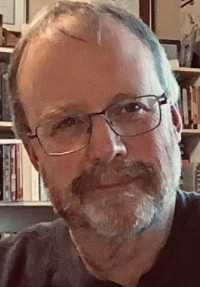 Ben WeissBut it was after the COVID-19 pandemic began in early 2020 that our site came into its own under the guidance and curation of Ben Weiss. With in-person meetings and special events cancelled, Facebook took up the slack, becoming the Society’s primary means for sharing heritage news, events, and stories with others interested in Ottawa-area history. The site’s followers increased rapidly in number, doubling by the end of 2020, with more than 16,000 visits to our page in any given month. Stories were shared, commented on, and discussed within our growing Facebook community.
While these results were fantastic, little did we know what was to come in 2021. The number of followers soared through the year as did the number of views. By late 2021, we had more than 4,400 followers and in a good month we could expect roughly 100,000 visits to our Facebook page—not bad for a small organization with fewer than 250 members!
But these remarkable numbers were blown out of the water by the reception received by a short article that Ben posted in December 2021 on the world’s first nuclear meltdown that occurred in 1952 at the Chalk River Nuclear Power Plant and the heroic roll played by future US president Jimmy Carter in the subsequent clean-up. The story went viral, receiving almost 800,000 visits within three days, with twelve thousand shares, more than three thousand likes, and hundreds of comments. The story was quickly picked up and re-posed by a host of other outlets including on Twitter. Given the social media buzz, Newsweek Magazine summarized the story, noting its HSO origins, and fact-checked it, giving it the magazine’s top “True” rating. CFRB in Toronto and CBC radio interviewed Ben on the story. There were also requests for interviews coming from as far away as Texas!
For those who missed all the excitement, the story centred on the role played by 28-year-old Lieutenant Carter in stabilizing and cleaning up the Chalk River facility which was awash with radioactive water after the accident. Carter, who was a nuclear expert working for the US Navy at the time, was called in to help Canadian and US scientists deal with the disaster. Leading a 24-person team, Carter divided his men into small groups, each working in 90-second shifts to minimize their radiation exposure as they were lowered into the damaged reactor. He and his teams absorbed a year-worth of radiation for every shift. Carter’s urine still tested radioactive six months after the event. His Chalk River experience left a profound impression on Carter’s views on nuclear power and weapons and coloured his decisions when he was in the Oval Office twenty-five years later.
Thank you, Ben, and congratulations for your terrific work on the Society’s Facebook page. Thanks also go to our many contributors and volunteers who have helped over the past four years to make the page what it is today. Thanks also to our Facebook community whose comments and discussions have enriched our knowledge of Ottawa history.
News Flash: As we post this article, the Chalk River/Jimmy Carter story has received just short of one million views.
Additional Info
- Year 1900
- Date December 12
Additional Info
- Year 1939
- Date December 17
Quick Links
About
Supporting Partners