

Working to preserve Ottawa's past
for future generations.
Not rain or snow or windy cold kept nine intrepid members of the Historical Society of Ottawa — and two people who had seen it advertised on our Facebook page — from enjoying a special walking tour of Beechwood Cemetery on November 10th 2018, Nick McCarthy, the cemetery’s director of marketing, communications and community, led us to the main historical sites and told stories of those buried in this well-tended National Cemetery of Canada.
We began at the tomb of Robert Borden (1834-1937), notable because Sir Robert did not want his title, nor his designation as prime minister, used on his monument. However, the cemetery has placed a plaque nearby to remind visitors of his importance to Canada.
Just at that point, the cemetery mascot — a lithe and beautiful red fox — appeared beside Borden’s grave, unafraid of us and apparently intent on catching his dinner.
We saw the sites of many well-known Ottawa families — Bronson, Slater, Perley, Booth and others. Some family plots have a large monument at the highest point, then several rows of graves marking the descending generations.
Among the Canadians commemorated in the cemetery is Sir Sanford Fleming (1827-1915), inventor of our modern-day time zones and designer of our first postage stamp.
A large monument, which honours Hardial Bains (1939-1997), a onetime leader of the Communist Party of Canada, stands alone on a centrally located plot of land, apparently because no one wants to be buried beside him.
As we turned a corner, there was the tomb of Ramon John Hnatyshyn, (1934-2002) Governor General of Canada from 1990 to 1995.
 The cemetery also has monuments honouring people who died elsewhere. The hospital ship Llandovery Castle has been in the news recently because it was sunk 100 years ago on June 27, 1918 on its way from Halifax to Liverpool with a full complement of medical staff. On the ship was Canadian Nursing Sister Minnie Katherine Gallaher (1880 1918), born in Pittsburgh, Ont. Her family laid a stone in her honour in the cemetery.
Our guide told of the how Hungarians, who fled to Canada after the 1956 revolution, erected a monument to their heroes, only to have it ripped off its moorings and taken by Russians. The Hungarians replaced it with a more solid concrete cross firmly attached to a stone.
Like Canada, Beechwood is multicultural. People of many ethnic and faith groups are buried side by side. Several cemeteries within Beechwood’s grounds honour those who have served in the Canadian or Commonwealth Forces, the RCMP and the Ottawa Police.
Notable were the graves of General Henry David Graham Crerar, (1888-1965) who became Chief of the General Staff of the Canadian Army during World War II, and his successor, General Charles Foulkes (1903-1969), who became the first post-war Chief of the General Staff. The Canadian National Military Cemetery, opened in 2001, includes the grave of Nichola K. S. Goddard (1980-2006), the first woman soldier to die in Afghanistan.
We ended the tour with the monument to a teenager who loved elephants; her family erected a little elephant, symbol of family loyalty, on her grave-site.
Thanks to Nick McCarthy, we now have a deeper appreciation of the stories to be found at Beechwood.
A brisk wind greeted us as we stepped onto the roof of the Chats Falls Hydro Power Generating Station situated on the Ottawa River at Fitzroy Harbour, across from Quyon, Que. Twelve HSO members and friends braved the November damp and chill to explore this fascinating and crucial component of our community. Our host was Gary Kowaluk and two of his associates. From the rooftop we could see this long rectangular building stretch across the Ottawa River, straddling the two provinces. The view of the Lac des Chats reservoir was spectacular. Large sections around the dam are fenced off to protect onlookers from falling into the turbulent waters. Gary pointed out how giant sliding gates control the amount of water flowing through the station.
Our tour had begun shortly after 9 a.m., when we passed through a high chain-link gate, driving down a long narrow road through dense woodland and over three bridges. The drive was reminiscent of entering a Cold War facility in post-war Europe. Over the bridges one could look down and see the remnants of what would have been the sides of the Chats Falls, where large boulders rested with only a trickle of water splashing between them. The 35-foot falls were destroyed to accommodate the power station, built 1929-31.
Now in operation for nearly 90 years, the facility provides renewable energy that is 99% free of air pollutants and greenhouse gas emissions. At maximum output, the plant could power nearly 200,000 homes. Output varies upon demand as well as precipitation that affects water levels, which are constantly monitored for environmental balance to minimize any possible damage.
We then viewed a film made during the construction of the dam and station. Grainy black and white images showed many men at work. The hydro village in Fitzroy Harbour was created to accommodate many of the workers who stayed for the duration of the project, bringing considerable activity and revenue to the village.
After the viewing, we started through the plant, which included our rooftop excursion. We saw firsthand the two-storey-high turbines at the heart of the energy-generating process that powers our modern life. We even journeyed beneath to glimpse in the dim light where the power of nature connects to the ingenuity of human machines.
Many thanks to Gary Kowaluk, his staff and the good people who joined us, and especially our past president George Neville, who first suggested it as a part of our fall excursion, as his own father had worked on the construction of the dam.
On Friday, June 14, 2019, eighteen society members took part in the society’s spring excursion to Tucker House, a well-preserved historic estate in rural Clarence-Rockland, just beyond the eastern boundary of the City of Ottawa. The trip was a great success, including a delightful tea and lunch, and an informative presentation from local historian Gilles Chartrand.
 Tucker House
 HSO member, Mary Edwards, at Tucker House
 The HSO gang having lunch at Tucker House after a fascinating presentation by local historian Gilles Chartrand (far left)
Central to the life of The Historical Society of Ottawa is our volunteers. Being 100 per cent volunteer operated, the Society is totally dependent on its member volunteers for all facets of its operations. If you love history and would like to get involved, we have a job for you!
By volunteering with the Society, you will be helping to preserve and share Ottawa’s rich historical heritage. You will also be using your special skills, working with interesting people who share a passion for history.
Possibilities for helping are endless. We need people of diverse backgrounds and abilities for the Society to function effectively.
If you would like to get involved, or would like to find out more about volunteer opportunities with the Society, please contact us at This email address is being protected from spambots. You need JavaScript enabled to view it., or speak to one of the Society’s directors.
We look forward to meeting you!
 Lady Minto
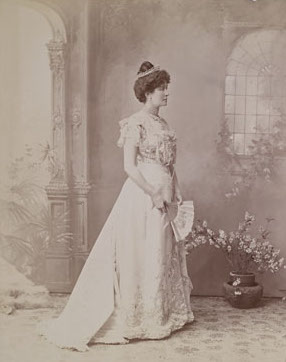
Topley Studio, Library and Archives Canada, 3810248Since the founding of what was then called the Women’s Canadian Historical Society of Ottawa in 1898, the Society has always had a close relationship with Rideau Hall There is a belief that Lady Aberdeen, the wife of the 7th Earl of Aberdeen who was Canada’s Governor General from 1893 to 1898, was the Society’s first patron. However, while we know that she took a close interest in the fledgling organization, her patronage was likely unofficial as she and her husband returned to Britain just a few days after the first regular meeting of the Society.
For certain, Lady Minto, the wife of the 4th Earl of Minto who succeeded Lord Aberdeen, consented to become the patron of the Society in February 1899. For more than fifty years, the wives of succeeding Governors General continued this practice. In more recent decades, Governors General themselves have fulfilled this role, continuing a tradition of more than a hundred and twenty years of vice-regal patronage.
Each year, the Historical Society of Ottawa organizes special outings for members and their guests to places of historical interest in Ottawa or in the Ottawa area. Typically, these outings consist of an animated tour or presentation by a local historian followed by a lunch. Should we be heading out of Ottawa, transportation is typically arranged, usually a tour bus with bathroom facilities.
The cost of the event varies, depending on entrance and other fees, and the cost of a bus if one is hired.
To allow persons on a budget to join the Historical Society of Ottawa and to participate fully in the Society’s activities, a Bursary Fund has been established to reduce membership fees and other expenses. If you are in this position, please contact the Society at This email address is being protected from spambots. You need JavaScript enabled to view it..
These events are not only informative—a way of learning about Ottawa’s history close-up—but is a fun way of socializing with people who share your interest in history.
Recent Special Events
The Historical Society of Ottawa provides speakers on a range of Ottawa-related historical subjects. Our presentations are particularly suited to seniors and youth groups. There is no charge for this service.
Speakers and their areas of expertise include:

James Powell
The history of Bytown and Ottawa, the assassination of Thomas D’Arcy McGee, Lady Aberdeen, Cairine Wilson, Counterfeiting in Canada, Ottawa Women on Ice, Ottawa in the 1930s, Ottawa War Stories, Ottawa the Cold War, Weird and Wacky Ottawa, and several other topics.
George Shirreff
Anything related to the history of film in Ottawa, and the Ottawa Little Theatre.
Speakers may be willing to present on other topics; they have an extensive knowledge of Ottawa history. So, if what you are looking for is not listed, please ask. It’s possible something could be organized.
To arrange for a speaker, please email The Historical Society of Ottawa at This email address is being protected from spambots. You need JavaScript enabled to view it..
On Sunday, Sept. 15th, 2019, forty-two HSO members and their guests boarded a coach and headed out to Vankleek Hill, where they visited the local museum — housed in a recently restored 19th-century general store. Participants were then split into three groups for a leisurely walking tour of Ontario’s “Gingerbread Capital” guided by Denis Séguin, the architect responsible for the restoration, the town’s ex-mayor and a well-informed resident whose family has lived in Vankleek Hill for five generations.
In 1797, Simeon Van Kleeck, an United Empire Loyalist, received a land grant for his services in what is now known as Vankleek Hill.
A mural depicting 19th-century life in the town is painted on buildings on Home Street. Further along this street is the entrance to the Higginson Tower.
Many of the buildings display the craftmanship which is the source of the Gingerbread reputation earned for the town. Several beautiful gardens and trees enhance the beauty of the area.
We had lunch at Herb’s Travel Plaza on the 417, ordered from a preset menu which offered eight choices.
Then we proceeded to the Macdonell-Williamson House located at the Ontario-Quebec border. Also known as Poplar Villa, it is located on the banks of the Ottawa River in the town of PointeFortune.
The afternoon was spent at the historic house, an exceptional example of Georgian architecture in the Palladian style.
We were again split into two groups so half could enjoy their tea and scones in the formal dining room of the 200-year-old house, while the other half were guided through the building, which was expropriated to make way for construction of the Carillon Hydro Electric Dam in 1961-62.
Due to geological anomalies, the location of the dam was moved 200 metres farther upstream and the house was allowed to deteriorate until it was taken over by the Ontario Heritage Trust in 1978 to save it from demolition.
The house was built between 1817 and 1819 by fur trader John Macdonell for his Métis wife, Magdeleine Poitras, and their six children. The family expanded to 12 children but unfortunately few of the children survived to adulthood. Some unique features are a cooking hearth, 12 fireplaces, bed closets and a second floor ballroom. It served as a centre for Macdonell’s milling, general merchandising, warehousing and freight-forwarding business.
According to a plaque erected by the Historic Sites and Monuments Board of Canada, the house’s “impressive stone exterior and exquisitely detailed interior proclaimed Macdonell’s position as a major business and political figure along the Ottawa River.”
The Williamson family purchased the home and property in 1882. Over the years, they made several changes, including the construction of a verandah on three sides of the house.
 Boundary marker placed by surveyor Da- vid Thompson, circa 1823, marking the line between Upper and Lower Canada near Macdonnell-Williamson House.Owner William Williamson ran a general store in the house and later founded the Laurentian Lumber Company.
Under the Heritage Trust, the house was opened to the public in 1995. Work is ongoing to have the site restored as a Cultural Centre for local and early Canadian History.
Just east of the house is a plaque commemorating David Thompson, the surveyor who, circa 1823, marked the boundaries between Upper Canada (now Ontario) and Lower Canada (now Quebec).
Thompson (1770-1857) is described as “The Greatest Map Maker of North America” on a plaque near the site, which was erected in 2007 by the Friends of the Macdonnell-Williamson House.
 The Vankleek Hill museum, left, and historic mural on Home Street depicting scenes from 19th-century life are among the attractions in the “Gingerbread Capital” of Ontario.
Photo by Evelyn Burke
Most of our meetings don’t start with a sing-along, but then the guest speaker for our November 2019 meeting is no ordinary presenter.
Phil Jenkins is an author and historian but he’s also a musician who, in addition to his own songs, performs songs by the Beatles — which is fitting considering that most of Phil’s life not lived in Ottawa was spent in Liverpool.
In Phil’s own words, he lived in Ottawa in two shifts. His first was as a child, from 1952 to 1962. He returned to the city in 1978, and has lived in the Ottawa area ever since.
After welcoming the audience, Phil picked up his guitar and started the show by singing a song about the first voyage on the Rideau Canal in 1832, as seen through the eyes of Colonel John By’s 11 year-old daughter, Harriet.
Childhood was the theme of Phil’s presentation. He remembers downtown Ottawa in the 1950s when trains still stopped at the station across from the Château Laurier, and the tallest building was the Peace Tower.
Phil remembers when Rideau Street was “alive with action”. Now he laments that Rideau, after a period as a failed transit mall, has become “homogenized”. The buildings used to have their own individuality. Now they all look the same.
 Author and musician, Phil Jenkins was the HSO's guest speaker on November 14, 2019.
Penguin Random House Canada.Sparks Street has met a similar fate. Phil remembers when it was first turned into an innovative pedestrian mall, when he was a child. When Phil returned to Ottawa in his late 20s, the mall had lost its vitality.
Not that he dwells on the negative. He does comment on how we could have done better, and warns us not to repeat past mistakes, but his presentation was very much a positive one.
One change for the better is Ottawa’s growing diversity. Phil observed “Ottawa was very British” when he was young. Now, judging by the variety of restaurants alone, Ottawa has become a better place because of its diversity.
But diversity is not new. Phil reminded us that Ottawa has always been more than just English and French, but that we lost diversity along the way. To emphasize this point, he told us of an Algonguin hunter, Constant Penency, who in his later years had to plead to retain hunting lands sold without his consent. The story is told in more detail in Phil’s book An Acre of Time.
On a more recent topic, Phil took a wry look at our recently-opened Confederation Line and its short, troubled history. Light Rail Transit is not Ottawa’s first streetcar line, he noted. Phil remembers riding the orange-hued streetcars, and told the story of the time as a young lad when he thought he was boarding the trolley back to LeBreton Flats only to wind up in New Edinburgh.
We won’t tell too many of Phil’s stories here. Better to read them in Phil’s own words in his books. In addition to An Acre of Time, Phil has published Beneath My Feet, Fields of Vision, and River Song.
Phil’s history is really a collection of memories of life. An Acre of Time focuses on his recollections of Ottawa; some good, like the aqueduct at LeBreton Flats where he played as a young boy, and some not so good, like the demolition of many historic buildings and the uninspired towers that are now replacing them.
Phil has a skill for conjuring memories. Many hands were raised when he asked how many people remember riding the streetcars, or going to Rasputin’s on Bronson Avenue. The coffee house was the best place in the capital to enjoy folk music.
A lover of folk music, Phil ended the evening with another song; this time about the Great Fire of 1900. The song is not about the details of the event. It’s more about how the fire affected the families in LeBreton Flats and how they rose, so to speak, from the fire’s ashes.
Phil’s songs and stories are a reminder that even in Ottawa, people make history, not politicians.
The Historical Society of Ottawa’s October 9, 2020 meeting was our first evening gathering at the main branch of the Ottawa library. We had many first-time attendees. Maybe the new time and location are the attraction. Or it may have been our guest speaker, who is well known in Ottawa for his passion for history.
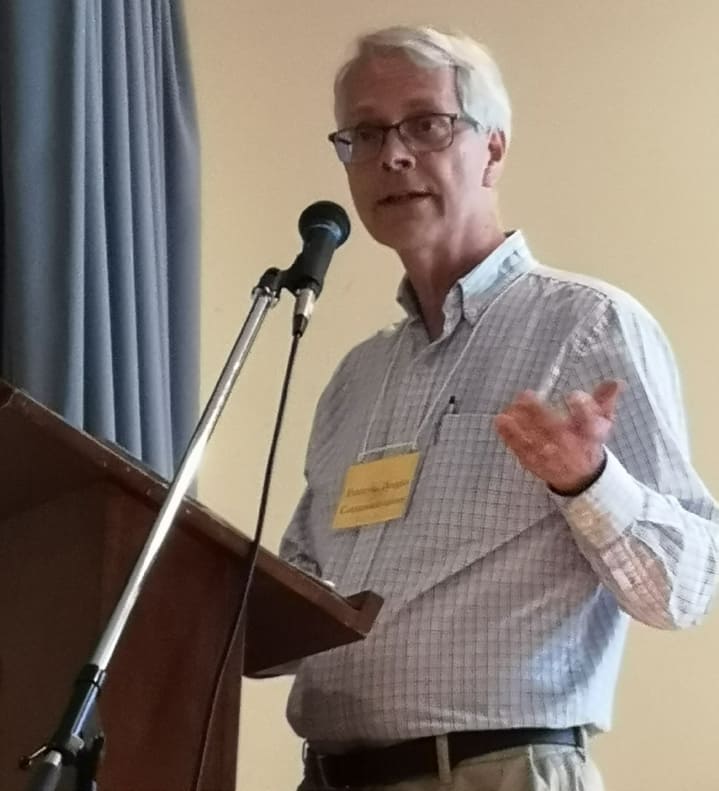 Neighbourhood historian François Bregha, described many prime ministerial homes during his Oct. 9 evening presentation.Sandy Hill is more than just a passing interest for François Bregha. He has lived in Sandy Hill for 34 years. In this time, François has undertaken research on ten prime ministers who have lived in his community, in over a dozen different homes. Many of these homes are still standing, and have become regular stops on François’ community walking tours.
Some of Sandy Hill’s prime ministerial homes are well known, like Stadacona, the Strathcona Apartments and Glensmere. The last of these three was the home of Canada’s eight prime minister, Sir Robert Borden. Built in 1894 for Indian Affairs superintendent Hayter Reed, Borden moved into the home in 1907, giving it the name Glensmere.
After prime minister Borden’s third son, Henry Clifford Borden, moved out in 1941, the home served for 27 years as the Chinese legation, back when the Canadian government considered Taiwan to be “China”. When the much bigger China came to be recognized as the proper “China” in 1972, they established an embassy at the former Our Lady of Charity of the Good Shepherd convent and Glensmere, suddenly empty, was demolished.
Sad, but everyone in attendance for François’ talk at least got a good laugh at the photo he showed of the towering monstrosity that replaced Borden’s elegant abode. Fortunately, Stadacona (Sir John A. Macdonald’s third Sandy Hill home) and the Strathcona Apartments continue to provide architectural dignity on Laurier Avenue East.
Probably the best-known home is Laurier House, built in 1878. Canada’s seventh and tenth prime ministers lived here, although it’s probably less well known that the museum that now honours Sir Wilfrid Laurier and William Lyon Mackenzie King was originally named Kininvie by the home’s first owner, jeweler John Leslie. Leslie named his Sandy Hill home after Kininvie Manor in Banffshire.
This Scottish castle has been in the possession of the Leslie clan since 1521. King renamed the home Laurier House in honour of his mentor, in 1923.
François did some considerable research to dig up information on the many less well-known homes in Sandy Hill. The 13th prime minister, John Diefenbaker not only lived in the Strathcona Apartments, he later rented a small apartment in a house on Wilbrod Street. Our 15th prime minister, Pierre Trudeau, rented an apartment on Besserer Street in the early 1950s, in a home built in 1896 for broker A.M. Sutherland. The home had just been converted to apartments when Trudeau moved in.
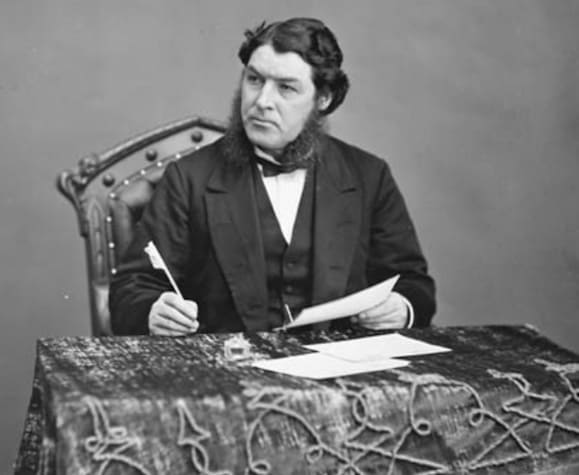 Future prime minister Charles Tupper lived at 274 Daly Ave. in 1872
Source: Library and Archives CanadaTrudeau’s predecessor, Lester Pearson, seems to have had a particular penchant for Sandy Hill. He lived in three homes in the neighbourhood. Sadly the last of these – the apartment he was living in when he won the Nobel Peace Prize – is slated for demolition. The Ugandan High Commission, which has occupied the building since 1985 has allowed the historic landmark to fall into disrepair.
During the Q&A session with François, special attention was drawn to Canada’s sixth prime minister Sir Charles Tupper who, while on his morning walk to the office at Parliament Hill took a daily diversion to meet up with a lady-friend on Chapel Street. François had hoped to exercise some discretion concerning the affair but was cajoled by the audience to offer some details.
Tupper is unique in having lived in two homes that had also been the home of other prime ministers.
Tupper’s 1872 home at 274 Daly Avenue was converted into apartments in 1982.
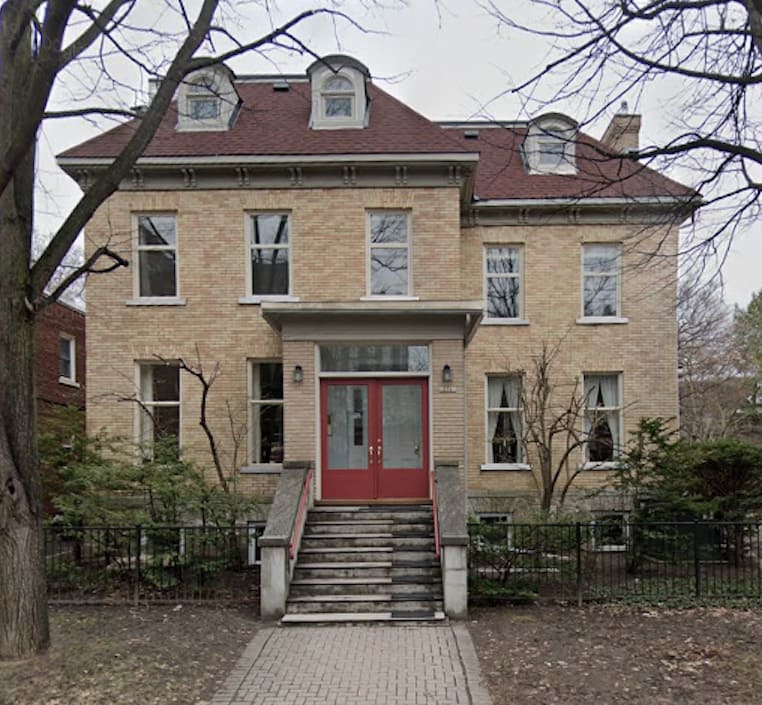 More than a century later, the home was converted into apartments and another future prime minister, Paul Martin, lived there from 1994 to 2003.Paul Martin (our 21st prime minister) lived in one of these units from 1994 until 2003, when he was able to move into 24 Sussex Drive.
As for Sir Charles, he later moved to a home named Cliffside, just west of the Parliament Buildings.
This same residence had earlier been the home of Canada’s second prime minister, Alexander Mackenzie. Cliffside was demolished in 1929.
If you’re interested to learn more about Sandy Hill’s many magnificent historic homes, visit the Sandy Hill History website. Here François has more stories, not just of prime ministers, but of business people, war heroes, architects and artists who called Sandy Hill home.
Quick Links
About
Supporting Partners